Looking for a portable sleep solution for a one-year-old that travels well, stores easily, and keeps little sleepers safe and comfy? This guide covers five top travel beds that suit busy families, grandparents’ houses, camping trips, and hotel stays. Each option offers a distinct balance of portability, safety features, and ease of setup, so you can pick the right fit for your child’s needs. The selections below focus on beds that work well for toddlers around 12–36 months while still accommodating younger siblings or quieter nap-time when traveling.
| Product | Best For |
|---|---|
| QPAU Lightweight Blow Up Kids Air Mattress With Tent | Young travelers who want an all-in-one tent and mattress for shade and airflow |
| Intex Kids Travel Air Mattress | Simple, lightweight travel bed for naps and sleepovers |
| liftoza Toddler Travel Bed Sandwich Style | Secure rails and foldable design for frequent travelers |
| OGERY Inflatable Toddler Travel Bed With Tent | Cordless pumping and built-in privacy tent |
| Hiccapop Inflatable Toddler Travel Bed | 4-sided bumpers and durability for active toddlers |
QPAU Lightweight Blow Up Kids Air Mattress With Tent

Best for: Families who want an all-in-one travel setup. This bed combines a soft mattress with a pop-up tent that has dual zippered doors and a sunshade panel, plus four-sided mesh for airflow and visibility. It’s suited for vacations, hotel stays, backyard play, and visits to grandparents.
- Soft flocked top and roomy dimensions (52.7”L × 32.6”W) for comfortable space.
- Includes a tent area to provide shade and a gated play space.
Caution: Best for children aged 3+ as listed; younger toddlers may require closely supervised use due to combined tent structure.
Intex Kids Travel Air Mattress
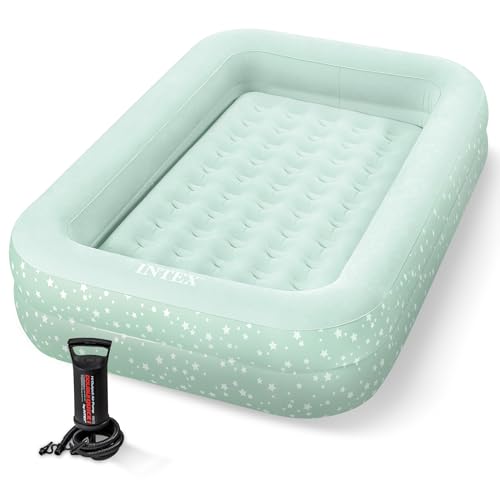
Best for: Quick setup on the go and easy transport for sleepovers and camping. It features a plush surface and a double support structure, with a hand pump for fast inflation.
- Designed with raised sides for added safety during naps and night time.
- Includes a lightweight, removable inner mattress for compact packing.
Limitation: For longer-term use, a full-size kid-friendly solution may be preferred as the child grows taller than the bed’s interior height.
liftoza Toddler Travel Bed Sandwich Style
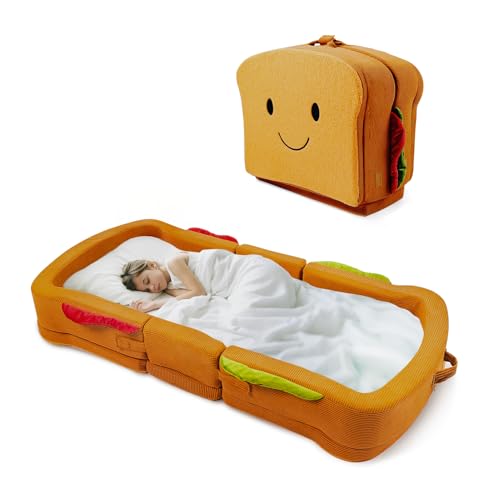
Best for: Parents seeking a safe, non-inflatable option with built-in rails for added security during travel. The sandwich design provides a firmer bed surface than many inflatables.
- Non-toxic high-density foam and built-in rails to prevent rolling.
- Durable, stain-resistant exterior and foldable for easy transport.
Limitation: Foam-based beds may be bulkier to carry than inflatable alternatives, depending on travel needs.
OGERY Inflatable Toddler Travel Bed With Tent

Best for: Parents who want cordless inflation and a built-in privacy tent for travel or camping. The tent canopy helps shield from sun and pests while allowing ventilation.
- Cordless one-touch inflation, inflating in about 45 seconds.
- 4-sided safety bumpers and attached tent for privacy and protection outdoors.
Limitation: Built-in mattress and tent increase setup complexity compared to simpler inflatables.
Hiccapop Inflatable Toddler Travel Bed

Best for: Families needing a durable, safe bed with four sturdy bumpers and a responsive design that lasts through multiple trips.
- 4-sided bumpers and reinforced vinyl for safety and durability.
- XL travel bag and included electric turbo pump for quick setup.
Limitation: Some users may prefer foam or non-inflatable options for extended use with very young toddlers.
Buying Guide: Key Decisions For Your Travel Bed Choice
What age is appropriate for these travel beds?
Most travel beds are designed for toddlers around 12 months and older, with many models recommended for ages 18 months to 3 years. Always check the manufacturer’s age guidance and height recommendations to ensure a proper fit and safe sleep space.
Inflation method: inflatables vs non-inflatable foam?
Inflatable beds offer compact packing and quick setup, often with included pumps. Foam or “sandwich” style beds provide firmer support and built-in rails but can be bulkier to carry. Consider your travel mode and how much weight you’re willing to transport.
Safety features to prioritize
- Four-sided bumpers or rails help prevent roll-offs for younger toddlers.
- Breathable mesh sides improve airflow and visibility.
- Tent structures or privacy enclosures can protect from bugs and sun, especially outdoors.
Portability and setup time
Short trips benefit from quick-inflate beds. If you travel with limited space, prioritize compact models with simple packing and minimal setup steps. For frequent travelers, cordless pumps and integrated tents can save time.
Durability and cleaning considerations
Look for washable covers or materials that resist stains and wear. Foam-based beds with durable covers tend to clean easily, while vinyl inflatables require gentle cleaning to avoid punctures.
Best for whom and why
- Best for travel-friendly families: lightweight inflatables with quick setup and portability.
- Better for safety-conscious parents: beds with built-in rails and ventilated designs.
- Choose this if you need an all-in-one tent and mattress solution for outdoor trips.
- Avoid this if your child moves aggressively at night and may roll out of a shallow sleeping surface.
FAQ
- Are these beds suitable for use at Grandma’s house? Yes, several models are designed for travel and sleepovers, with compact storage and easy setup.
- Do they require electricity? Many inflatables use a hand pump or cordless pump; some models include a built-in pump. Check each product’s pumping method.
- Can toddlers outgrow these beds quickly? Some beds are best for ages 12–36 months; larger toddlers may outgrow them as they approach three years or taller heights.
- Is a tent necessary? A tent or canopy can be beneficial for sun protection, bugs, and privacy, especially outdoors or in unfamiliar spaces.
- How do I clean these beds? Most inflatables have removable, washable covers or quilted tops. Foam-style beds should be spot-cleaned and aired out.
- Which is the most durable? Beds with reinforced seams and bumpers tend to last longer under rough handling or frequent travel.