Finding safe, non toxic finger paints for babies means prioritizing skin-friendly formulas, easy cleanup, and vibrant colors that support early creativity. This guide highlights five top picks suited for little artists, from infants starting with handprints to toddlers exploring color mixing. Each product is evaluated for safety, usability, and mess management, with clear notes on who will benefit most. Use this overview to compare options and choose paints that align with your child’s age, sensitivity, and art goals.
Summary of selected products for quick reference:
- Jar Melo Washable Finger Paints for Toddlers — best overall for wide color variety and large capacity.
- Honeysticks Non Toxic Finger Paint — best for clean hands and gentle, cream-texture color.
- Jar Melo Washable Finger Paints Powder — best for parents who want DIY paint consistency and compact storage.
- TinyGeeks Washable Finger Paint — best for a large color set and easy cleanup on skin and fabrics.
- Crayola Washable Finger Paints (6ct) — best for classroom-like kits and easy accessibility.
Jar Melo Washable Finger Paints For Toddlers

Best for: families seeking a ready-to-use, non toxic finger paint set with a high color variety. This kit includes 10 colors in large 2.1 fl oz tubes, designed to keep little hands engaged for extended art sessions. The colors are described as vivid and stimulating for sensory development, with an emphasis on safe, child-friendly ingredients.
Why selected: the large capacity reduces the frequency of re-application during messy play and supports both freeform art and structured activities. The set’s emphasis on safety—non toxic pigments and glycerin—makes it suitable for babies starting textures and for toddlers who explore with multiple fingers and hands.
Best use case: ideal for at-home art time with toddlers or as a preschool classroom starter set. It’s also a practical gift for birthdays or holidays, providing immediate engagement without prep work. A potential limitation is that the full 10-color spectrum may require a separate palette for color mixing if you want precise shades.
Honeysticks Non Toxic Finger Paint

Best for: parents who want washable, skin-friendly paints with a thick, creamy texture that’s easy for small hands to manage. The kit includes six bright colors and uses cosmetic-grade colorings, emphasizing safety and gentle use on young skin.
Why selected: this set prioritizes clean-up with washability and a texture designed for better control, which helps reduce spills and smudges. It’s well-suited for early color exploration and the attention to skin safety makes it a strong pick for babies and toddlers with sensitive skin.
Best use: great for finger-painting sessions that emphasize neat hands and quick cleanup. If you’re worried about staining or if your child is especially fussy about cleanup, this option offers a balanced approach. Limitation: color variety is smaller than some larger sets, which may require extra purchases for broader palettes.
Jar Melo Washable Finger Paints Powder For Toddlers

Best for: parents who prefer a customizable paint experience, where you mix the powder with water to achieve desired consistency and color intensity. This set uses natural vegetable powders and food-grade thickeners, prioritizing safety for babies and young children.
Why selected: the 60 g bags yield about 260 ml of paint, offering flexibility for large art projects or multiple sessions. The included mixing tools simplify preparation, which is helpful for caregivers who want quick, mess-controlled setups.
Caution: paint made from powder requires careful mixing and can stain porous fabrics or wood if not sealed or treated properly. It’s best used on paper, canvas, or non-porous surfaces to minimize cleanup challenges.
TinyGeeks Washable Finger Paint

Best for: large color sets with easy cleanup, making it a strong option for classrooms, daycare centers, or households with multiple young artists. The kit offers 12 vibrant, creamy colors designed to flow smoothly and wash off skin and most fabrics.
Why selected: the wide palette supports color mixing experiments and color recognition activities. The non-toxic formulation aligns with safety-focused households, and the washability feature reduces staining concerns for parents and teachers.
Limitation: while washable, porous fabrics or untreated wood may still absorb color, requiring pre-testing or protective coverings for fabrics and furniture. Suitable for paper-based art and crafts sessions to minimize this risk.
Crayola Washable Finger Paints (6ct)
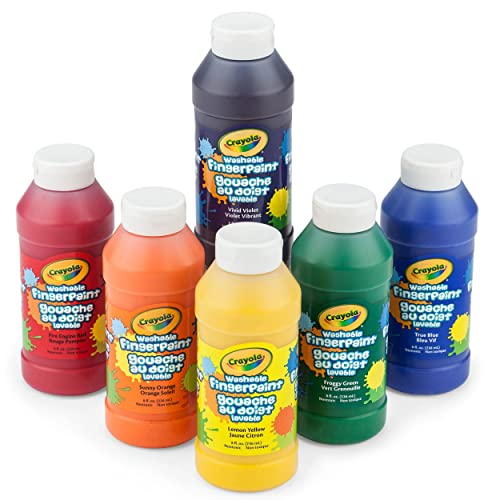
Best for: early learners and classroom-like sets that favor reliability and accessibility. This Crayola kit includes six colors in 8 oz bottles and emphasizes washable performance, making cleanup easier after creative sessions.
Why selected: Crayola is a familiar, widely available option in many homes and schools. The EZ Squeeze bottles and flip-top caps are designed to reduce mess and waste, supporting longer art opportunities for babies and toddlers alike.
Limitation: the set is smaller in color variety than some bigger kits, and some users may prefer thicker textures for finger painting. It’s a solid, traditional choice for basic color exploration and structured activities.
Buying Guide
What matters most when choosing non toxic finger paints for babies and toddlers?
Safety first: non-toxic and skin-friendly formulas
Look for paints labeled non-toxic with clear ASTM or equivalent safety statements. For babies, choose water-based, skin-safe ingredients with minimal strong fragrances or irritants.
Texture and control
Thicker textures can improve grip for small hands, while smoother formulas may be easier to spread. Consider whether your child prefers thick blobs for stamping or smooth swirls for blending.
Cleanup expectations
Washability matters for busy caregivers. Check if paints wash off skin easily and whether fabrics and surfaces are easily cleanable. Some sets include protective sheets or washable components to reduce mess.
Color variety and future use
More colors enable color-m mixing lessons and expressive artwork. If you’re balancing budget with learning goals, choose sets with a broad palette or plan to expand gradually.
Age and sensory considerations
For babies, choose gentle hues and fragrance-free options. For toddlers, brighter colors and bolder textures can support sensory exploration and fine motor skills development.
FAQ
- Q: Are these finger paints safe for babies with sensitive skin?
A: Most options on this list are non-toxic and water-based. Always test a small skin patch and follow product guidelines for age suitability. - Q: Will finger paints stain clothing or furniture?
A: Many are washable from skin and fabrics, but porous surfaces or untreated fabrics may stain. Use protective coverings when needed. - Q: How do I clean up after a painting session?
A: Use mild soap and water for skin, and launder fabrics as soon as possible. Some paints wipe off non-porous surfaces with a damp cloth. - Q: Is color mixing possible with these sets?
A: Yes, most sets offer multiple colors that can be mixed on paper. Powdered paints also allow adjustable dilution for custom shades. - Q: Which option is best for a classroom?
A: Kits with many colors and easy cleanup, like the 12-color TinyGeeks set or Crayola classroom-friendly packs, are well-suited for group activities. - Q: Do these paints require special storage?
A: Most come in standard tubes or bottles; store them in a cool, dry place away from direct sunlight to preserve color and consistency.