When choosing a tiny cup for a baby, look for safe, easy-to-grip open cups designed for early drinking, teething and healthy oral development. This guide highlights five practical options that help transition from bottle to cup, with clear indications of who each is best for. The top picks span soft silicone cups and weighted-base designs to minimize spills and support baby-led weaning milestones. The buyer’s intent is to find a safe, developmentally appropriate training cup that suits small hands and growing mouths. A quick summary table of the selected products follows to compare core features at a glance.
| Product | Best For | Key Benefit |
|---|---|---|
| ezpz Tiny Cup Sage | Babies starting cups | Non-slip grip; angled interior for even flow |
| ezpz Tiny Cup Pewter | Babies transitioning from bottle | Weighted base; designed by pediatric feeding specialist |
| SAMiGO Silicone Baby Cups (2 oz) | Lightweight, small sips | Compact size; spill-resistant design |
| PandaEar 2 Pack Tiny Silicone Cups | Budget and rotation of cups | Non-slip bumps; durable silicone |
| Seposeve Silicone Baby Cups (2 oz) | Learning mouth shape | Mouth-like design; capacity markings |
ezpz Tiny Cup Sage
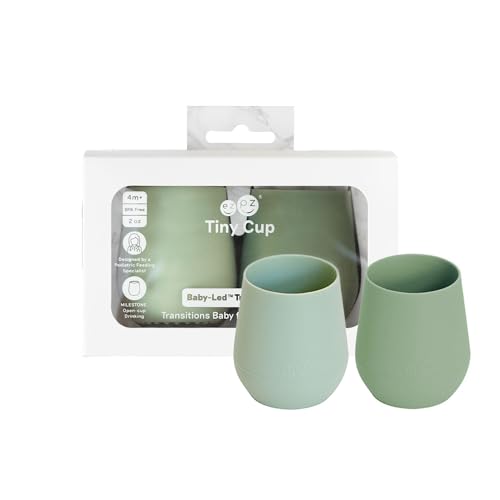
The Tiny Cup from ezpz is designed for 4 months and up. It fits baby’s mouth and hands with a non-slip silicone grip to aid the mouth-to-cup transition. Its interior angle promotes an even flow for safe drinking. A weighted base and tactile bumps provide topple resistance, making it a practical choice for early sips. Best for caregivers seeking a clinically informed design that supports milestone-oriented feeding, especially during baby-led weaning.
Who it’s best for: parents seeking a silicone cup that helps move babies away from bottles while supporting safe swallow patterns. Why selected: ezpz products are designed by pediatric feeding specialists to guide milestone progress. Caution: expect some spills if the baby is learning to tilt and sip aggressively.
ezpz Tiny Cup Pewter

This Pewter variant shares the same thoughtful design as the Sage version. It fits tiny hands, uses a non-slip grip, and channels liquid with an interior angle for even flow. The weighted base reduces tipping, and tactile bumps add stability during initial sips. Best for families who want a consistent ezpz design across colors for a coordinated nursery setup.
Who it’s best for: households already invested in ezpz feeding systems or those wanting a color-coordinated kit. Why selected: same pediatric-tested framework, now with a different color option. Caution: color preference should not override fit and performance considerations for early sip training.
SAMiGO Silicone Baby Cups (2 oz)

SAMiGO’s 2-ounce silicone cups are built for tiny hands and open-cup practice. The design shortens the learning curve while providing a baby-approved size for measured sips. A weighted, textured bottom helps reduce tipping, and the compact form makes it easy for caregivers to guide early drinking. Best for caregivers who want a dedicated 2 oz size that minimizes spills during the transition from bottle to open cup.
Who it’s best for: parents prioritizing a compact, lightweight option with spill-reduction features. Why selected: the 2 oz capacity aligns with natural baby sipping amounts. Caution: spills are still possible as the baby learns tilt-and-sip coordination.
PandaEar 2 Pack Tiny Silicone Cups

This PandaEar 2-pack provides a budget-friendly set of 3.5-ounce silicone cups designed for little mouths. The non-slip bumps ensure a secure grip, and the cups are marked as durable for everyday indoor and outdoor use. Best for families needing a cost-effective option with multiple cups for rotation and easy cleaning.
Who it’s best for: budget-conscious shoppers needing reliable silicone cups in a pack. Why selected: durable silicone and a design that emphasizes grip and stability. Caution: capacity is larger than some 2 oz open-cup options, which may require more controlled pours for very young drinkers.
Seposeve Silicone Baby Cups (2 oz)

Seposeve offers a mouth-like cup design aimed at easing liquids into the baby’s mouth. It includes capacity markings (15-30 ml) to help caregivers pace drinks. The 2-ounce size and tapered form with a weighted base improve stability during training. Best for parents who want a cup that highlights a baby-friendly mouth shape and measurable portions.
Who it’s best for: caregivers who want capacity guidance and a baby-tailored mouth design. Why selected: capacity markings and mouth-imitating shape support early swallowing development. Caution: the ergonomic fit may vary with individual baby mouth shapes, so observe how your child adapts over time.
Buying Guide: Key Purchase Considerations
- Open-cup vs. sippy transition: Open cups encourage better oral motor development and swallowing coordination. Choose this if your goal is early sippy-to-open-cup transition.
- Size and grip: Look for 2 oz or similar baby-friendly volumes and non-slip textures to support tiny hands and reduce spills during learning.
- Weight and stability: A weighted base or textured bottom helps topple resistance, a key feature for new drinkers.
- Material: Food-grade silicone is common; ensure BPA-free and easy-to-clean surfaces for daily use and dishwashing.
- Design for milestones: Cups designed by pediatric feeding specialists may better align with safe swallowing and teething considerations.
- Durability and care: Determine whether cups are top-rack dishwasher safe and resistant to staining or odors for long-term use.
FAQ
- What age should I start using a tiny cup? Start around 4 months and older, as the infant progresses toward sipping and open-cup practice under caregiver supervision.
- Are all tiny cups the same for teething? No. Some cups emphasize grip and stability, while others focus on mouth-like shapes to support swallowing development.
- Is a weighted base necessary? A weighted base helps reduce tipping, which is beneficial during early practice with liquids.
- Can these cups prevent tooth decay? Open-cup practice can support healthy swallowing and teething; brushing and limiting sipping duration also contribute to dental health.
- Which cup should I choose if I want multiple colors? Many brands, like ezpz, offer multiple color options; select based on grip, stability, and your baby’s preferences.
- Do these cups work for practical travel use? Yes, silicone cups are typically durable and travel-friendly, but ensure the cup remains upright to minimize spills during transit.