Finding a carrier that fits an 18-month-old and your lifestyle is essential for hands-free parenting. This guide highlights five versatile options suited for toddlers who are more mobile yet still enjoy close contact. Each pick targets specific needs, from extended hip-seat support to lightweight everyday wear. The top picks are best for active parents, travel, and quick errands, with guidance on who should choose each one and why. The summary table below helps compare core features at a glance.
| Product | Best For | Key Benefit |
|---|---|---|
| MOMTORY 6-in-1 Baby Carrier | Families seeking multiple carrying positions | Versatile in 6 positions including hip-seat |
| Momcozy Baby Carrier (Khaki) | Daily wearers prioritizing lumbar support | Ergonomic with enhanced lumbar support |
| yemyig Baby Sling Carrier | Compact, lightweight use on the go | Soft fabric, adjustable for growing toddler |
| Momcozy Hip Seat Carrier | Long walks and active outings | 2-in-1 forward-facing and hip-seat |
| Infantino Flip Luxe 4-in-1 | Budget-friendly versatility | Four carrying positions with ergonomic support |
MOMTORY 6-in-1 Baby Carrier

Best for: Families needing multiple carrying positions in one carrier. This model transitions from newborn to toddler and offers six carrying positions, including a baby hip seat for sitting or lying down. It uses adjustable shoulder straps and a waist stool to fit different body types, making it adaptable for both parents and caregivers.
Why selected: The 6-in-1 design supports growth from infancy through early toddlerhood, aligning with an 18-month-old’s mobility. The hip-seat option can reduce leg fatigue and improve sitting comfort for long outings. It emphasizes skin-friendly fabric and seamless comfort to keep you and baby close.
Caution: Some users may require practice to master all positions; read the setup instructions carefully to ensure proper alignment for each carry.
Momcozy Baby Carrier (Khaki)

Best for: Parents who value hands-free comfort in daily use and travel. This carrier is adjustable across sizes, promoting a safe M-position for hip development and ergonomic support with padded shoulders and waist straps.
Why selected: It scales with a growing toddler and emphasizes back comfort via a built-in EVA waist support. The three sizing positions help accommodate different caregivers, which is helpful for households with more than one person sharing duties.
Limitation: Its effectiveness depends on a correct fit; improper adjustment may affect support and comfort during longer wear times.
yemyig Baby Sling Carrier

Best for: Parents wanting a lightweight, portable option for quick trips or shopping outings. This sling supports babies from 10 to 30 pounds and adapts as your child grows, with padded shoulders for comfort.
Why selected: The design emphasizes one-handed safety and simple adjustments, making it easier to use for short durations. It provides a breathable fabric choice suitable for warmer days and quick errands.
Limitation: The sling’s fit may require more manual adjustment to achieve a secure ride for an 18-month-old, compared with more structured carriers.
Momcozy Hip Seat Carrier

Best for: Active toddlers and parents who want forward-facing options combined with a hip-seat for stability on long walks. It supports up to 44 pounds and fits waist sizes up to 45 inches, offering flexible wearing positions.
Why selected: The 6-way, 360° configuration gives a broad range of carry modes, including hip-seat and forward-facing. The 10mm cushion adds comfort and reduces impact during movement.
Caution: For babies closer to 40+ pounds, you may reach the carrier’s weight limit sooner; monitor weight progression during use.
Infantino Flip Luxe 4-in-1
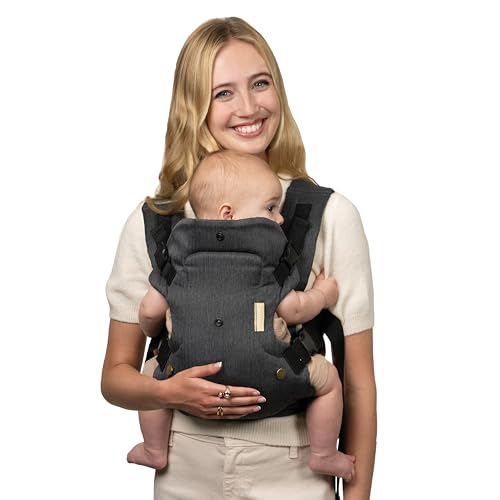
Best for: Budget-conscious families seeking four carrying positions without sacrificing ergonomic support. This carrier supports newborns to toddlers up to 35 pounds in a flexible design.
Why selected: The four-position design covers in-to-out, narrow-to-wide, back carry, and facing-in, offering versatility for varied activity levels. It emphasizes even weight distribution to reduce strain.
Limitation: Less premium fabric than high-end models; may show wear sooner with daily heavy use.
Buying Guide: Key Considerations For An 18-Month-Old
- Weight and growth range. Check the carrier’s tested weight range; 18 months often falls around 24–28 pounds depending on the child and growth. Ensure the model can accommodate up to at least 35 pounds if possible.
- Carrying positions. Toddlers may prefer facing in for comfort, or outward-facing for curiosity. Look for carriers offering multiple positions and easy transitions without disturbing the child.
- Fit and comfort for caregiver. Padded shoulder straps, a supportive waist belt, and proper weight distribution reduce back and shoulder strain during longer wear times.
- Hip and spine safety. A natural M-position seating for the child supports hip and spine development. Verify seat width and leg openings suit your child’s size.
- Materials and seasonality. Skin-friendly fabrics with breathable construction help keep both parent and baby comfortable in different weather conditions.
- Durability and maintenance. Look for machine-washable fabrics or easy spot-clean options for busy households with toddlers.
- Adjustability for caregivers. If more than one adult uses the carrier, choose models with adjustable sizing or multiple divisions to fit different body types.
Frequently Asked Questions
- What is the best carrier for an 18-month-old? The best option balances weight support, multiple carrying positions, and caregiver comfort. A hip-seat or 4-in-1 convertible design often works well for toddlers who are mobile and curious.
- Is an outward-facing carry appropriate for toddlers? Yes, when the child expresses curiosity and has adequate neck control. Ensure the seat supports the legs and hips safely.
- How long can I wear a toddler in a carrier? Start with short periods and gradually increase as both you and your child adapt. Look for cushioned straps and a supportive waist belt to ease fatigue.
- Does fabric choice matter for sensitive skin? Yes. Choose breathable, skin-friendly materials and washable fabrics that resist pilling and irritation.
- When should I switch from carrier to stroller? When longer walks cause discomfort or the toddler wants more freedom, a stroller or carrier with hiking-friendly features can complement wearing time.
- Are all carriers safe for hip development? A carrier that supports a natural, ergonomic seat and a secure leg opening minimizes hip pressure and promotes healthy hip growth.