Answering a buyer’s search for safe, comfortable baby play mats, this guide highlights five top picks designed for tummy time, crawling, and floor play. Each pick favors soft cushioning, non-slip backing, and kid-friendly materials, with clear notes on who benefits most. Ideal buyers include new parents building a safe tummy-time area, caregivers creating a playpen setup, and families seeking washable, durable mats for busy homes.
Summary of selected products:
| Product | Size | Best For |
|---|---|---|
| Huloo Sleep Ultra Soft Baby Play Mat | 50 x 50 inches | Toddlers and infants needing extra thickness and noise reduction |
| Infantino Foldable Soft Foam Play Mat | 57 x 57 inches | Simplified setup, portable use, reversible design |
| Blissful Diary 50×50 Earth Tones Play Mat | 50 x 50 inches | Versatile use in tents, playrooms, or indoors/outdoors |
| SEPARO Thick Baby Play Mat | 50 x 50 inches | Soft, secure space with non-slip backing |
| XVISHX Baby Play Mat 50×50 | 50 x 50 inches | Double-sided patterns and portable design |
Huloo Sleep Ultra Soft Baby Play Mat
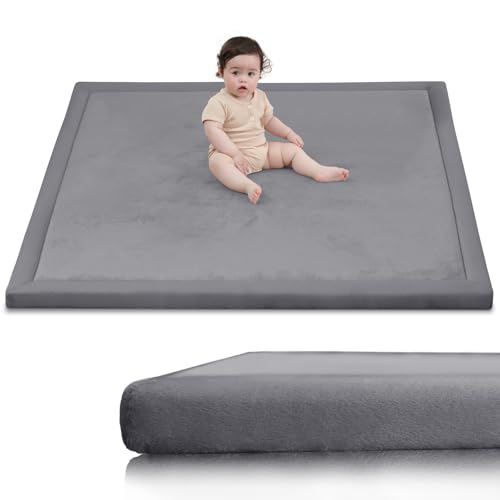
Size and padding: 50×50 inches with a 1.3-inch thickness, offering plush cushioning for crawling, tummy time, and floor play. This mat uses slow-rebound memory foam and a 100% non-shedding fabric surface, designed to minimize floor impact and noise on hardwood. Best for babies who spend long sessions on the floor and families who want a quiet, cushioned play area.
Safety and materials: OEKO-TEX certified and CPSIA/ASTM compliant, reducing concerns about harmful substances. This makes it suitable for infants and young toddlers who explore with hands and knees.
Who it’s best for: Parents seeking a larger, thicker mat with a quiet surface that protects floors and mutes footsteps. Choose this if you need a sturdy, non-toxic option that doubles as a nursery rug.
Limitations: Heavier and bulkier than some portable mats, which may affect storage or travel, especially in smaller spaces.
Infantino Foldable Soft Foam Play Mat

2-in-1 design provides flat space for sitting and crawling, plus four soft walls to create a contained play area. Quick, tool-free setup uses folding corners into a triangle and buckling. This makes it easier to move between rooms or stash for travel.
Support for milestones: Cushioned foam supports rolling, sitting, reading, and ball play, with a breathable, reversible color scheme for style flexibility. Best for caregivers who want a portable, adaptable play space.
Best use: Ideal for homes that need a portable option for playtime, naps, or travel. It’s a strong pick for smaller living areas where space and flexibility matter.
Limitations: Some users may prefer higher side walls for toddlers learning to stand and cruise, as walls are modest in height.
Blissful Diary Earth Tones Play Mat

Size and thickness: 50×50 inches with thick padding consisting of foam and a fabric top layer for a soft, cushioned surface. Non-slip backing helps keep the mat in place on various floor types, reducing movement during active play.
Care and durability: The mat is machine washable for easy cleaning, though frequent machine washing can reduce durability. Spot cleaning can extend its life. Best for families who value a washable mat with a robust thickness.
Best for spaces with playpens: The mat aligns with standard playpen inside dimensions, supporting babies through rolling, crawling, and early walking.
Limitations: Heavier than ultra-portable options, which may affect transport between rooms or storage in tight spaces.
SEPARO Thick Baby Play Mat

Padding and composition: 1.2 inches of memory foam with a soft, luxe-feel fabric surface. The mat is designed to be non-slip on the back, helping keep the mat stationary during floor play and tummy time.
Size compatibility: Measures 50×50 inches, pairing well with standard playpens and many room layouts. Best for babies aged 6-12 months who are learning to crawl and explore with confidence.
Best use: A solid choice for families prioritizing a secure, quiet play area for early mobility. Use in playrooms and living spaces where a non-slip base matters.
Limitations: The surface is plush and may accumulate pet hair or dust—spot cleaning or regular maintenance recommended for best cleanliness.
XVISHX Baby Play Mat 50×50

Material and safety: Crafted from high-density, scratch-resistant XPE foam, BPA-free, non-toxic, and odorless. The mat is designed to cushion falls and protect joints during crawling and learning to walk.
Double-sided design: Features two distinct patterns on each side, providing visual variety to stimulate curiosity and extend playtime without needing a new mat. Best for households that want flexible aesthetics.
Portability: Compact enough for storage and travel, yet large enough for playpen use in most rooms. Choose this if you want a budget-friendly, versatile, double-sided option.
Caution: The thickness is moderate (0.4 inches) for XVISHX, which may be less cushioned than thicker mats for very young crawlers needing maximal impact absorption.
Buying Guide: Key Considerations For Choosing Baby Play Mats
- Thickness and cushioning: Thicker mats provide more protection against falls but can be heavier and less portable. For very young crawlers, prioritize at least 1.0–1.3 inches of padding.
- Non-slip backing: Ensure the mat stays in place on hardwood or tile floors to prevent slips during tummy time and crawling.
- Size compatibility: Match the mat size to your playpen, tent, or room dimensions. A 50×50 inch mat fits most standard playpens and many spaces.
- Materials and safety: Look for BPA-free, non-toxic foams, and certifications such as OEKO-TEX or CPC compliance to minimize chemical exposure.
- Portability and care: If you move mats between rooms or travel, consider foldable designs and ease of cleaning (machine washable vs spot cleaning).
- Double-sided or reversible designs: Provide visual variety without extra toys or mats, useful for rooms shared by siblings.
- Durability and maintenance: Heavier mats may be sturdier and longer-lasting, but require more storage. Lighter mats are easier to transport but may wear faster with heavy use.
Frequently Asked Questions
- What thickness is best for a baby play mat?
Most parents prefer 1.0 to 1.3 inches for solid cushioning that protects against bumps during crawling and tummy time.
- Are water- or wipeable mats better for cleanup?
Yes. Mats labeled as wipeable or machine washable offer easier cleanup for spills and accidents common with babies and toddlers.
- Is a larger mat always better?
A larger mat provides more space for movement, but requires more storage. Choose based on your space and playpen size.
- Should mats have a non-slip backing?
Yes. Non-slip backing helps keep the mat in place on slick floors, reducing the risk of slips during crawling and tummy time.
- Are double-sided mats worth it?
Double-sided mats offer visual variety and longer usability as children grow, without needing to buy another mat.
- What safety certifications should I look for?
Look for OEKO-TEX, CPC, CPSIA, and ASTM compliance to ensure materials are non-toxic and safe for infants.