Yes—these pacifiers are designed to support babies aged 6 to 12 months with comfortable, orthodontic shapes and gentle textures. This guide highlights five top options that balance jaw-friendly design, skin comfort, and practical features for caregivers. Each choice targets a slightly different need, whether you want glow-in-the-dark visibility, ultra-light design, or a baby-friendly one-piece build. The quick reference table below summarizes the key points to consider before you buy.
| Product | Best For | Highlight |
|---|---|---|
| Philips Avent Ultra Soft Pacifiers (6-18 Months) | Orthodontic support with skin-friendly shield | Flexible shield and symmetrical nipple |
| Dr. Brown’s Advantage Glow-in-The-Dark Pacifier | Nighttime visibility and easy acceptance | Reversible design, glow-in-the-dark |
| Tommee Tippee Ultra-Light StayPut Pacifier | Lightweight, stays in mouth | One-piece silicone design |
| MAM Air Pacifier (6-16 Months) | Better skin comfort for sensitive skin | Extra air flow, glow-in-the-dark |
| Philips Avent Soothie Pacifiers (3-18 Months) | Pure medical-grade silicone, newborn-friendly range | One-piece, durable design |
Philips Avent Ultra Soft Pacifiers – Orthodontic Design

The Philips Avent Ultra Soft Pacifiers for 6-18 months feature a soft, flexible shield designed to follow the natural curves of a baby’s face, reducing skin marks and irritation. The round shield minimizes cheek pressure for gentleness, while the symmetrical silicone nipple with a narrow neck helps reduce pressure on teeth and gums. This design aims for high acceptance, with many parents reporting positive responses from babies. Best for caregivers seeking a comfortable, orthodontic option with added skin protection.
Who it’s best for: Parents wanting an orthodontic, skin-friendly pacifier that fits babies transitioning from infancy to toddlerhood. Why selected: strong emphasis on gentle contact, proven likelihood of acceptance, and a complete set that includes sterilizing cases for easy cleaning.
Cautions: Some babies may prefer a different nipple shape or size; ensure the shield size is appropriate for your baby’s face to prevent irritation.
Dr. Brown’s Advantage Glow-in-The-Dark Pacifier

Dr. Brown’s Advantage Glow-in-The-Dark Pacifier offers a fully symmetrical, reversible design, allowing insertion in either direction. The silicone bulb is soft yet durable with a natural feel that supports the baby’s suckling reflex. The glow-in-the-dark feature helps caregivers locate the pacifier at night. Best for parents who value orientation flexibility and nighttime visibility. Why selected: simple, forgiving insert orientation plus a glow feature for nighttime use.
Who it’s best for: Families needing an easy-to-find pacifier for night-time soothing. Why chosen: reversible design reduces frustration during placement, with a durable silicone bulb and glow-in-the-dark aid.
Cautions: Glow-in-the-dark elements may wear over time; verify cleaning instructions to maintain the glow feature.
Tommee Tippee Ultra-Light StayPut Pacifier

Tommee Tippee’s Ultra-Light StayPut Pacifier emphasizes minimal weight to keep the pacifier in a baby’s mouth and reduce ground falls. It features a symmetrical silicone nipple for easy placement and air holes to support skin breathing, helping prevent irritation and rash. Best for caregivers seeking a lightweight option that helps minimize germ exposure from dropped pacifiers. Why selected: low-profile weight with a design that stays in place and protects the skin.
Who it’s best for: Parents prioritizing a lightweight, stay-put design that reduces the risk of dropping. Why chosen: practical stay-in-mouth design and skin-friendly air hole protection.
Cautions: Some babies may prefer a slightly larger nipple; check fit if your baby is near the upper age range.
MAM Air Pacifier – Extra Air Flow
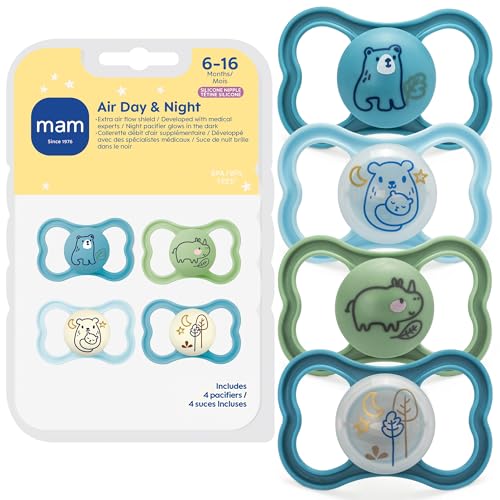
MAM Air Pacifier for babies 6-16 months features extra air flow to help sensitive skin stay cooler and reduce moisture buildup. The 3-pack uses a SkinSoft silicone nipple designed by orthodontists and pediatric dentists to promote a familiar latch. It glows in the dark for nighttime visibility. Best for babies with sensitive skin or caregivers who want frequent air circulation around the mouth. Why selected: combination of airflow, skin-friendly material, and glow-in-the-dark convenience.
Who it’s best for: Families prioritizing skin comfort and nighttime visibility. Why chosen: advanced airflow and medical-expert input for development-friendly design.
Cautions: Glow features can fade with use; ensure proper cleaning to maintain silicone integrity.
Philips Avent Soothie Pacifiers – 100% Silicone

The Philips Avent Soothie Pacifiers use 100% medical-grade silicone, and come in a one-piece design that’s durable and easy to clean. The nipple shape is designed to support natural suckling and help establish feeding routines, which can be beneficial as babies transition between feeds. This option is aligned with guidelines aimed at safe, newborn-friendly use while remaining suitable for older infants up to 18 months. Best for caregivers who want a straightforward, one-piece silicone pacifier with a clinical-grade build.
Who it’s best for: Families seeking a simple, durable pacifier that supports natural sucking patterns. Why chosen: strong focus on medical-grade silicone and developmental support.
Cautions: Some babies may prefer a different texture or more complex shield design; ensure the shield fits properly to prevent skin irritation.
Buying Guide: Key Purchase Considerations
- Age range and development: Look for pacifiers labeled for 6-18 months or a similar window to cover your baby’s current stage and transitions.
- Orthodontic vs. symmetrical nipple: Orthodontic designs aim to reduce tooth and jaw pressure, while symmetrical nipples offer flexibility in insertion and comfort for babies who switch sides.
- Material safety: Prefer BPA-free, medical-grade silicone or natural rubber; consider skin sensitivity if your baby has a history of irritation.
- Shield design: Shield shape influences skin contact; a flexible shield reduces cheek pressure and the chance of marks.
- Ventilation and air flow: Pacifiers with air holes can help keep the baby’s skin breathing and reduce rash risk.
- Weight and stay-put features: Lightweight designs may stay in the mouth better for older infants but verify comfort if your child is active.
- Nighttime usability: Glow-in-the-dark or brightly colored designs help locate the pacifier in low light.
- Cleaning and sterilization: Some sets include sterilizing cases; ensure you can easily clean and sanitize the pacifier between uses.
Frequently Asked Questions
- What makes an orthodontic pacifier different for a 6-12 month old?
Orthodontic pacifiers have a curved shield and nipple shape designed to reduce pressure on developing teeth and gums while comforting the baby.
- Are glow-in-the-dark pacifiers safe for nighttime use?
Yes, as long as the item is BPA-free and the materials meet safety standards; use nighttime visibility to locate the pacifier rather than leaving it in the crib.
- Should I choose a one-piece design or a two-piece design?
One-piece designs reduce choking risk and simplify cleaning; two-piece designs can offer more nipple customization but require extra assembly.
- How can I prevent skin irritation from pacifiers?
Choose shields with soft, flexible edges and ensure the shield size fits your baby’s face; clean regularly and inspect for signs of irritation.
- Is glow-in-the-dark safe for repeated use?
Yes, provided the pacifier is made from non-toxic materials and cleaned properly to maintain its surface quality.
- Can pacifier use affect breastfeeding?
Most guidelines indicate appropriate use after establishing breastfeeding and avoiding prolonged use that might affect latch; individual advice may vary.