Answering the search for sturdy, engaging activity tables that support babies as they pull up and explore, this guide highlights five top options. Each pick is best for toddlers ready to stand, cruise, and engage in hands-on play. Whether you’re seeking bilingual learning, musical play, or Montessori-inspired textures, these tables help develop fine motor skills, shape and color recognition, and cause-and-effect understanding. The buyer-friendly table suggestions below cover a range of ages from around 12 months to 3 years, with clear reasons why each stands out.
| Product | Best For | Why It Stands Out | Limitations |
|---|---|---|---|
| VTech Magic Star Learning Table (Frustration Free Packaging), Yellow | First tabletop explorers; language and motor skill builders | Six bilingual activities in English and Spanish; light-up buttons; steering wheel and gears for fine motor development | Music and activities may be repetitive for older toddlers |
| VTech Buzz and Learn Activity Table with Seven Interactive Play Zones, Blue | Growing toddlers who transition from floor to standing play | Seven zones; movement between activities; cause-and-effect play with popping elements | Novelty may wane after extended use |
| LeapFrog Little Office Learning Center (Frustration Free Packaging), Green | Imaginative role-play and early literacy | Laptop, phone, globe and 27 touch points; Explore, Learn and Music modes | Primarily a desk-style setup; less traditional “table” surface |
| HEYLANDU Activity Table, 7-in-1 Wooden Montessori | Montessori-style hands-on discovery | Seven games in one; natural wood; non-toxic paint; supports fine motor, cognitive, and creativity | Wood construction may be heavier to move |
| WEYARIXA Baby Toy—Engaging Musical Activity Center | Busy infants and toddlers who love music and color | Colorful lights, classic music, multiple modes for learning songs, numbers, shapes, colors | Music-focused features may be less structured for some toddlers |
VTech Magic Star Learning Table (Frustration Free Packaging), Yellow
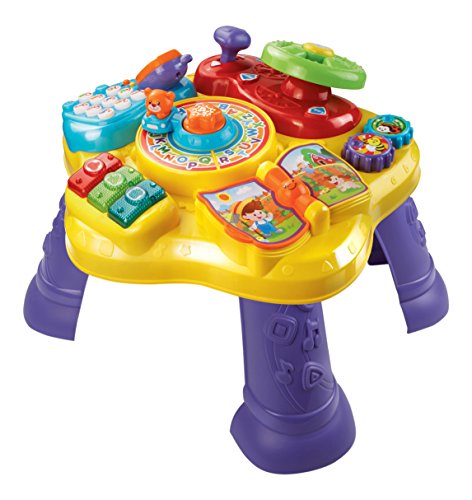
Features include six bilingual activities in English and Spanish, a steering wheel to drive a bear around the table, a flip-book page to hear nursery rhymes, gears to strengthen fine motor skills, and light-up music buttons to teach colors. This table is best for curious infants and toddlers who benefit from bilingual exposure or need a sturdy surface to pull up on while exploring cause-and-effect play. Caution: the activity prompts can be repetitive, which may reduce long-term engagement for children who crave more varied stimuli.
VTech Buzz and Learn Activity Table with Seven Interactive Play Zones, Blue
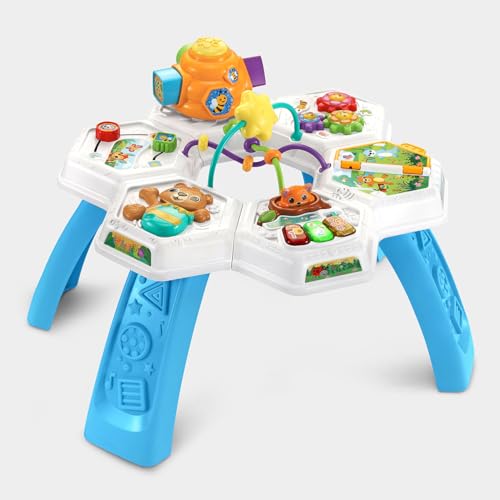
This table expands play with seven zones and evolves as a child grows—from floor play to standing play. Features include a pop-up Fox and light-up buttons that introduce colors and numbers, a book page that reveals animals, and shape-block sorting. It’s best for toddlers who enjoy moving between activities and exploring cause-and-effect. Limitation: the variety can be overwhelming for very young beginners who prefer a single, focused activity at start.
LeapFrog Little Office Learning Center (Frustration Free Packaging), Green
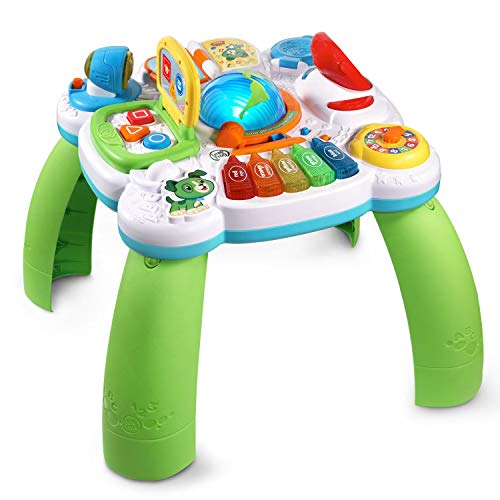
This desk-like play center provides a laptop, phone, globe, and 27 electronic touch points, with Explore, Learn, and Music modes for language exposure and world awareness. Best for: imaginative role-play and early literacy, as it supports pretend conversations and interactive screen-like experiences. Caution: the desk format may not suit every room layout if floor space is preferred over a standing surface.
HEYLANDU 7-in-1 Montessori Activity Table

This wooden Montessori-inspired table combines seven activities, including a bead maze, shape matching, a shape sorter, a carrot harvest game, fishing game, spinning gears, and an animal maze. It’s designed for ages 1–6 and emphasizes fine motor skills, hand-eye coordination, and cognitive development. Best for parents seeking a durable, multi-game tabletop that supports varied play styles. Limitation: wood construction means it’s heavier and may require more storage space when not in use.
WEYARIXA Baby Toy—Engaging Musical Activity Center
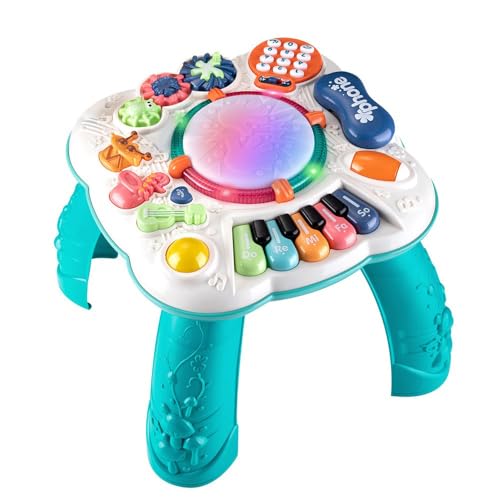
Designed for infants 6–18 months, this activity center emphasizes safe, engaging musical play with lights and various modes. It supports early exposure to rhythm, numbers, shapes, colors, and letters, helping fine motor skills through press, pull, spin, and slap actions. Best for: parents prioritizing musical learning and sensory feedback in a compact setup. Caution: may become less engaging after repeated sessions for some toddlers who prefer more structured tasks.
Buying Guide
What should you consider when choosing an activity table for a baby who’s pulling up?
- Age and developmental stage: Look for age-appropriate activities that promote standing balance and fine motor skills without overwhelming free-play moments.
- Versatility and longevity: Tables with multiple play modes or expandable features can grow with the child, delaying the need for a new toy.
- Safety and durability: Choose sturdy bases, rounded edges, and non-toxic materials. Wood tables require careful placement; plastic tables tend to be lighter but may wear faster.
- Language and sound features: Bilingual options expand early language exposure; music and sound effects should be adjustable to avoid overstimulation.
- Floor vs. stand-up play: Some designs cater to floor exploration while others become standing tables. Consider your space and the child’s primary play style.
Key purchase considerations
- Transition readiness: If your child is close to walking, an upright or standing-ready table can be more motivating.
- Cleaning and maintenance: Removable parts and wipe-clean surfaces save time with toddlers who explore everything.
- Space and storage: Larger wooden tables offer durability but require more room; compact designs fit smaller spaces.
FAQ
- Q: What age is best for starting with an activity table? A: Generally around 12 months to 18 months, when babies begin standing and cruising, though some younger infants can engage with floor-based options.
- Q: Are bilingual features beneficial for toddlers? A: Yes, responding to multiple languages early can support language development and listening skills.
- Q: Should I prioritize music or cognitive games? A: A balanced mix is ideal; music helps rhythm and auditory development, while cognitive games foster problem-solving and fine motor skills.
- Q: How do I assess safety for wooden vs plastic tables? A: Check for non-toxic finishes, smooth surfaces, no sharp edges, and a stable base to prevent tipping during movement.
- Q: Can these tables be used for older toddlers? A: Yes, many include features that grow with the child, such as adjustable play zones and task complexity.
- Q: Are these tables good for shared play? A: Some models offer multiple play zones that allow more than one child to engage simultaneously, but supervision is recommended.