Finding the right adaptive stroller for autism helps children stay safe, comfortable, and engaged during outings. This guide highlights five practical options that balance support, durability, and ease of use for families and caregivers. Best for active families, older children, and teens who need sturdy seating and reliable maneuverability. Below is a quick comparison table to help you compare essentials at a glance.
| Product | Best For | Key Benefit | Weight Capacity |
|---|---|---|---|
| Smilez Special Needs Stroller | Older kids up to 250 lbs | Customizable seat widths and reclining options | Up to 250 lbs |
| Coche XL Special Needs Stroller (Black) | Large kids needing space | Sturdy aluminum frame with easy folding | Up to 110 lbs |
| Sylvan Adaptive Urban Rider (Teens) | Teens & young adults requiring headrest | High weight capacity with portable design | Up to 250 lbs |
| Circle Specialty Strive Adaptive Stroller | Travel-friendly users needing positioning support | Adjustable seat depth and full-body support | Not specified in data |
| Baby Jogger Advance Mobility Freedom Stroller | All-terrain users with higher weight tolerance | All-terrain wheels and reclining seat | Up to 200 lbs |
Smilez Special Needs Stroller for Big Kids
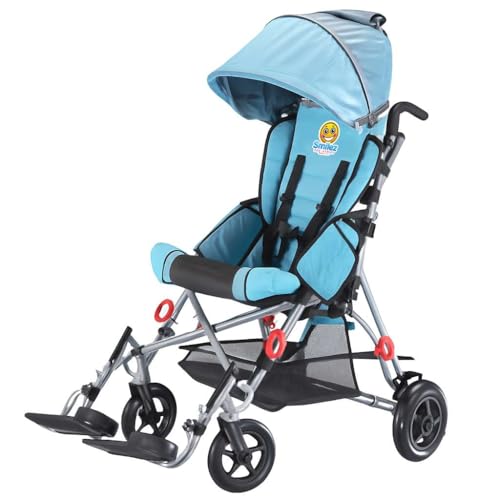
This Smilez adaptive stroller targets older children with special needs, autism, or mobility challenges. It serves as a secure, supportive alternative to a pediatric wheelchair. Best for families seeking a customizable, age-appropriate seating option that still fits within a stroller form factor.
- Customizable seat width options: 12″, 14″, 16″, or 18″ to fit growing children.
- Adjustable recline and a 5-point harness for added security.
- Removable upholstery for easier cleaning.
Best for: families needing a scalable seating solution that grows with the child. Caution: check overall foot clearance and whether the seat width meets your child’s exact measurements for long-term use.
Coche XL Special Needs Stroller (Black)

The Coche XL is designed for larger, older kids who require a robust yet lightweight pushchair. It combines a sturdy aluminum frame with ample seating space and easy folding, making it suitable for long days out and travel.
- Seating: 15″ wide, 10″ depth; supports up to 110 lbs and height up to 48″.
- 360-degree front swivel wheels and puncture-free tires for smooth maneuverability.
- Easy-fold umbrella style design for transport and storage.
Best for: families needing a roomy, durable option that remains relatively light for its size. Caution: weight capacity is lower than some larger setups, so verify your child’s current and projected weight.
Adaptive Urban Rider Stroller by Sylvan (Teens)
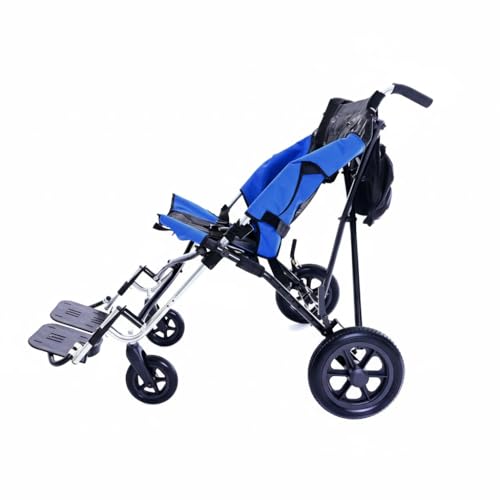
The Sylvan Adaptive Urban Rider is built for teens and young adults who need a heavy-duty, portable folding wheelchair-style stroller. It emphasizes breathability and safety with a 250 lb capacity and a pull-up frame that prepares quickly for use.
- Alloy steel frame provides strength with relatively light weight.
- 12- or 17-inch seating options with a focus on comfort and ventilation.
- Safety belt and easy setup without tools.
Best for: families who prioritize rapid readiness and high weight tolerance. Caution: ensure the model chosen fits the user’s torso length and seating posture needs, especially for longer outings.
Adaptive Urban Rider Stroller (Sylvan) with Headrest

This Sylvan model expands on the previous by including a headrest for additional neck support, which can be beneficial for teens with posture needs. It remains portable and easy to set up, preserving the brand’s focus on durable, heavy-duty design.
- Headrest included for enhanced comfort and alignment.
- Adjustable height foot support and rear wheel brakes for varied terrains.
- Portable, tool-free installation for quick transitions.
Best for: teens requiring extra head and neck support during travel. Caution: consider whether the added headrest affects overall width for aisle accessibility in crowded venues.
Maclaren Major Elite Disability Pushchair

The Maclaren Major Elite is a long-standing option for older children up to 110 lbs and 48 inches tall. It uses a lightweight aluminum frame and a compact umbrella fold, making it ideal for caregivers who need portability without sacrificing basic support.
- Weight capacity up to 110 lbs and height guidance up to 48 inches.
- Lightweight, 16.5 lb frame with easy lifting and maneuverability.
- Umbrella folding for convenient storage and transport.
Best for: families seeking a light, compact option that’s easy to transport. Caution: weight capacity is lower than some larger models, so verify ongoing growth needs before purchase.
Buying Guide
Key considerations when choosing an adaptive stroller for autism include weight capacity, seating width and depth, recline range, and maneuverability. Consider the child’s growth trajectory and whether the stroller will be used primarily at home, school, or on travels.
- Weight Capacity: Ensure the stroller supports the child’s current weight and projected growth. Higher capacities reduce the need to replace as growth occurs.
- Seat Width and Depth: Measure hip width and seating depth to avoid pressure points and ensure proper posture.
- Adjustability: Look for reclining positions, foot support, and head or neck support options that align with comfort and safety.
- Maneuverability: Check wheel type, turning radius, and whether the frame accommodates uneven surfaces or curbs.
- Portability: If frequent travel is part of usage, prioritize lightweight frames and easy folding mechanisms.
- Maintenance: Removable upholstery and washable fabrics ease care, especially for daily use.
FAQ
- What should I measure before buying an adaptive stroller for autism?
Measure seating width and depth, torso length, and leg length to ensure a comfortable fit. Also check door widths and vehicle compatibility for daily use.
- Is a higher weight capacity always better?
Not always. A higher capacity is beneficial for growth, but it may add weight and size. Balance capacity with portability and everyday practicality.
- Should I prioritize headrest support?
Yes, headrest can improve neck alignment and comfort for teens, especially during longer outings or for those with limited head control.
- Can these strollers be used as both a wheelchair alternative and child stroller?
Many models function as a stroller alternative with seating that resembles a wheelchair. Check each model’s seating system and safety harness to confirm suitability for your setting.
- What maintenance tips help longevity?
Regularly inspect tires or wheels, tighten loose fittings, wash upholstery as recommended by the manufacturer, and store in a dry, ventilated area.