Discover the best wheelchair lap trays that stabilize meals, reading, and small tasks on the go. These options are ideal for caregivers, seniors, and individuals with limited mobility seeking a stable, accessible work or dining surface. Each product below targets a specific need—whether lightweight handling, easy installation, or enhanced safety—so you can choose the right tray for daily routines, therapy sessions, or home care.
| Product | Best For | Key Benefit |
|---|---|---|
| Vive Wheelchair Tray | Care settings or home use | Spacious surface with secure non-slip design |
| Windiboo Wheelchair Tray | Active daily living | Built-in cup holder; easy strap-on installation |
| The Aftermarket Group Half Lap Tray | Left-handed users | Left-side, padded vinyl, flip-up hardware |
| TYYIHUA Foldable Tray | Travel and multiple settings | Foldable, fits 16–20″ seats; versatile use |
| POWYS Lap Tray Cushion | Posture support and comfort | Padded, high-support foam; anti-slip design |
Vive Wheelchair Tray for Adults

Best for: Care settings, home use, or on-the-go tasks. This tray offers a spacious surface for meals, reading, or writing, making it easy to manage daily activities without leaving the chair. The lightweight, durable design supports reliable daily use while remaining easy to reposition. A secure non-slip design with raised edges helps keep plates, cups, and personal items in place, reducing spills and noise for caregivers and patients alike.
Why selected: The combination of a large, stable surface and a simple, tool-free setup makes this tray suitable for both temporary care and long-term daily routines. It balances stability with portability—vital for wheelchairs used in multiple environments.
Caution: The surface is best used with standard dining items; oversized dishes may need careful placement to avoid tipping.
Windiboo Wheelchair Tray Table
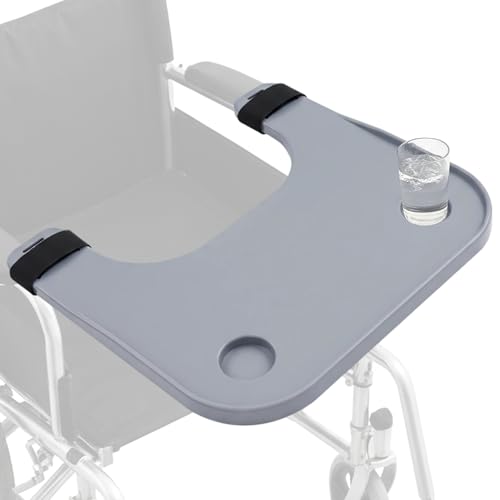
Best for: Daily activities at home or in care settings. This tray includes a built-in cup holder to reduce spills and an easy strap-on design that attaches to most standard wheelchairs without tools. Its adjustable straps accommodate users with varying hand strength, making installation quicker for caregivers and safer for end users.
Why selected: The integrated cup holder and tool-free installation offer practical benefits for caregivers while maintaining user independence. The strap-on approach supports mobility by allowing easy transfers between chairs.
Caution: Proper strap adjustment is essential to prevent tray movement; assistance may be needed for users with limited hand strength during initial setup.
The Aftermarket Group Half Lap Tray (Left)

Best for: Left-side use on standard padded armpads. This black padded vinyl half-lap tray slides onto a padded armpad with flip-up hardware, offering a compact, space-efficient surface for meals, writing, or small tasks. It’s a good fit for users who primarily operate from one side or require a lighter alternative to full-lap trays.
Why selected: The left-side configuration supports specific user ergonomics and caregiver workflows, enabling easier access for left-handed actions and single-arm use.
Caution: Fits standard padded armpads; verify your chair’s armpad dimensions before purchase to ensure compatibility.
TYYIHUA Foldable Wheelchair Tray Table

Best for: Travel, home, and clinical settings where a portable surface is needed. This foldable tray is suitable for 16–20″ seat widths and supports a variety of activities, including eating, reading, writing, or resting. Bamboo wood finish adds a warm, natural aesthetic while maintaining sturdy use.
Why selected: Foldability and broad compatibility with standard wheelchairs make it a versatile choice for users who switch between environments or require a compact transport option.
Caution: Suitable for many but not all wheelchairs; confirm seat width and armrest geometry to ensure a flush fit.
The Aftermarket Group Half Lap Tray (Right)

Best for: Right-side use on standard padded armpads. This black padded vinyl half-lap tray slides onto a padded armpad with flip-up hardware designed for right-handed users or for individuals who prefer a tray on the right side for access or comfort.
Why selected: Complementary to the left-side option, it provides flexibility depending on user preference and caregiver workflow, enabling symmetry in multi-user environments.
Caution: Ensure compatibility with your chair’s armpad dimensions and flip-up hardware before purchase.
POWYS Lap Tray Cushion

Best for: Posture support and comfort during long wheelchair sessions. This cushion-style lap tray combines a padded surface with a leather-like finish, offering improved ergonomics, easier cleaning, and increased comfort for elderly users or patients with limited mobility.
Why selected: The cushion design helps prevent forward leaning and reduces muscle tension while seated, supporting long-term sitting stability. The waterproof finish makes maintenance straightforward for caregivers.
Caution: Cushion padding may compress with use; allow time for the foam to settle after unboxing for optimal support.
Buying Guide: Key Considerations For Choosing A Lap Tray
- Fit and compatibility: Check wheelchairs’ seat width (commonly 16–20 inches) and armrest configuration. Some trays are side-specific (left or right) or require armpad compatibility.
- Surface size and shape: Consider the intended activities. A larger surface is better for meals and laptops; smaller trays may suit quick tasks or compact chairs.
- Installation effort: Tool-free, strap-on designs are easier for caregivers and users with limited hand strength. Metal or push-fit trays may require more effort.
- Stability and safety: Non-slip surfaces, raised edges, and secure straps reduce spills and movement. Look for locking mechanisms or sturdy attachment points.
- Materials and cleaning: Waterproof or easy-to-clean surfaces reduce maintenance needs in daily use and clinical settings.
- Portability vs. stability: Foldable trays save space and travel well; rigid trays offer steady work surfaces for heavier tasks.
- Durability and weight capacity: Verify weight limits and construction quality to ensure reliable use in daily activities and care routines.
FAQ
- What is the main purpose of a wheelchair lap tray?
A wheelchair lap tray provides a stable surface for meals, reading, writing, using devices, and other daily tasks, increasing independence for users and efficiency for caregivers.
- How do I know if a tray fits my wheelchair?
Check seat width (typically 16–20 inches), armpad type, and whether the tray attaches to armrests or armpads. Some trays are side-specific (left or right) and require compatible hardware.
- Are foldable trays as stable as fixed ones?
Foldable trays offer portability while maintaining strength, especially when secured with straps and reinforced edges, but may feel less rigid than fixed trays in heavy-use scenarios.
- Can trays be used in care settings or only at home?
Most trays are designed for both home and care environments. Consider cleaning needs, ease of sanitization, and installation ease for clinical use.
- What materials are best for durability and cleaning?
Waterproof or vinyl surfaces with wipe-clean coatings and wood or ABS constructions balance durability, comfort, and ease of maintenance.
- Do trays support heavy items like laptops?
Weight capacity varies (some trays advertise support around 110 pounds). Verify the tray’s stated weight limit and ensure the surface area accommodates your items.