Answering the question: these booster seats provide safer belt positioning for kids who have outgrown forward-facing harnesses but aren’t ready for adult seats. They’re best for families seeking lightweight, easy-to-move options or seats that grow with a child. The top picks below are suited for big kids ages roughly 4–10, or older kids who need a simple backless or highback solution. A quick summary table follows to compare key points at a glance.
| Product | Best For | Weight/Height Range | Key Benefit |
|---|---|---|---|
| Graco TurboBooster 2.0 Backless Denton | Active families needing lightweight, portable booster | 40–100 lb; up to 57″ tall | Backless design with strong safety testing |
| Graco TurboBooster 2.0 Highback Declan | Kids needing more head/neck support | 40–100 lb; up to 57″ tall | 2-in-1 highback to backless |
| Cosco Topside Leo | Travel-friendly, budget-conscious | 40–100 lb; 43.4″–57″ | Lightweight, compact, easy transport |
| Graco Affix Latch Rio | Easy installation with LATCH | 40–100 lb; 43–57″ | Front-adjust LATCH; proper belt fit |
| Chicco GoFit ClearTex Plus | Go-to belt-positioning booster | 40–110 lb; 44″–57″ | Latch attachment, quick-release removal |
Graco TurboBooster 2.0 Backless Denton

This backless booster is designed for big kids ages 4–10, weighing 40–100 pounds and up to 57 inches tall. It complements vehicles with lower seat backs by elevating the child for proper lap-and-shoulder belt positioning. Best for families seeking a lightweight, easy-to-carry option when swapping between cars or traveling. A caution: lacks headrest support, so choose this if your primary need is portability and you have strong headrest options in your vehicle.
Graco TurboBooster 2.0 Highback Declan

This 2-in-1 booster transitions from highback to backless, accommodating growing children from 40–100 pounds and up to 57 inches tall. It includes Graco ProtectPlus Engineered for rigorous crash testing and better overall protection. Best for kids needing extra neck and head support during longer rides. If you frequently switch vehicles, consider the highback mode for added security; switch to backless when the child is older and belt fit is reliable.
Cosco Topside Backless Booster Leo

Cosco Topside Leo is a lightweight, compact booster for kids 40–100 pounds and 43.4″–57″ tall. It’s easy to move between vehicles and ideal for families that need a portable traveling booster. Best for budget-conscious buyers who want a straightforward, travel-friendly option. Limitation: backless only, so head and neck support depends on the vehicle’s headrest position.
Graco® TurboBooster® LX Backless Rio

Rio is a backless booster with a front-adjust LATCH system for quick installation and a belt-positioning design that helps provide a proper fit for kids weighing 40–100 pounds and 43″–57″ tall. Best for families prioritizing simple, secure attachment and easy belt alignment. Caution: backless design may offer less support on longer trips compared with a highback option.
Graco® Tranzitions 3-in-1 Harness Booster

This 3-in-1 seat grows with your child from forward-facing harness (26.5–65 lb) to highback booster (40–100 lb) and backless booster (40–100 lb). It features No-Rethread Simply Safe Adjust Harness and headrest that move together in one motion. Best for families needing a seat that can adapt to a child’s changing size without upgrading to a new product. Note: weight minimum for harness mode has increased to 40 lb.
Chicco GoFit ClearTex Plus
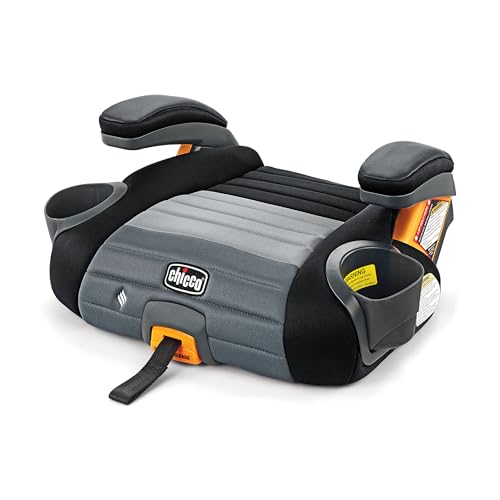
GoFit ClearTex Plus is a backless booster with LATCH to stabilize the seat and a quick-release design for one-hand removal. It provides belt-positioning with integrated guides and a shoulder belt clip for proper fit. Ideal for families needing a quick, portable, and easy-to-use booster with added stability. Caution: while highly portable, it may offer less head/torso support than higher-back options on long trips.
Buying Guide: Key Considerations When Choosing A Booster Seat
- Age, weight, and height range: Ensure the booster supports your child’s current size and accommodates growth.
- Back vs. backless design: Highback boosters offer head and neck support; backless are lighter and more portable but provide less support in some vehicles.
- Installation method: LATCH compatibility simplifies secure attachment; vehicles with weaker belt routing may benefit from models with built-in LATCH.
- Belt-positioning accuracy: Look for models with guides or clips to align the seat belt correctly over the lap and shoulder.
- Portability: If you switch cars often or travel, a lighter, compact booster may be advantageous.
- Durability and materials: Chest and armrest padding add comfort for longer rides; consider fabrics that are easy to clean.
- Money-saving versatility: 2-in-1 or 3-in-1 seats can reduce the need for future replacements as a child grows.
Frequently Asked Questions
- What age should a child start using a booster seat? Generally after outgrowing a forward-facing harness, typically around 4 years old, and meeting weight/height limits.
- Is a highback booster better than backless? A highback provides head/neck support and can be safer in cars without strong headrests; backless is lighter and easier to move.
- How do I know if a booster is installed correctly? Ensure the belt lies flat across the upper thighs, not the belly, and that the lap belt sits low on the hips while the shoulder belt crosses the chest and shoulder.
- Can booster seats be used in rental cars or after-market vehicles? Yes, as long as the seat belt and headrests are compatible and the seat is properly installed with the booster height within the target range.
- Should I choose a booster with LATCH? LATCH can simplify secure installation, but verify compatibility with your vehicle’s LATCH anchors and weight limits for the best fit.
- Will these boosters fit in small cars? Yes, many backless boosters are compact and lightweight, though highback models may be bulkier depending on seat dimensions.