Found the right trainer cup for your little one? This guide highlights top options that support early drinking skills, reduce mess, and promote healthy mouth development. Best for new caregivers seeking spoutless or easy-grip designs, these picks aim to simplify the switch from bottle to cup for babies 6 months and up. Below, compare five well-suited choices, who they’re best for, and practical considerations to help you decide.
Summary of selected products
| Product | Best For | Why It Stands Out |
|---|---|---|
| Munchkin Miracle 360 Sippy Cup (Blue/Green) | Mess-prone households, toddlers learning to sip | Spill-proof 360 edge; spoutless design supports mouth muscle development |
| Dr. Brown’s Milestones Straw Cup | Babies transitioning to straw drinking | Weighted straw for sip-from-any-direction; easy-grip handles |
| Reflo Smart Cup (Clear 1-Pack) | Gentle transition with controlled flow | Three-stage 360° rim; slow-flow, non-spill learning |
| Philips Avent Natural Trainer Cup | Bottle-to-cup transition with familiar feel | Natural Response nipple option; rubberized, non-slip handles |
| Moonkie Silicone 3‑Stage Cup | Multi-stage development from sippy to straw | Three-in-one design; BPA-free silicone |
Munchkin Miracle 360 Sippy Cup (Blue/Green) 7 oz
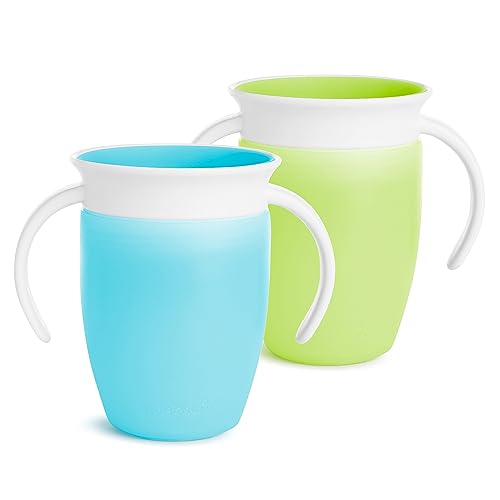
The Munchkin Miracle 360 Sippy Cup uses a 360-degree drinking edge, allowing sipping from anywhere around the rim. Best for toddlers who tend to spill, this cup seals automatically when drinking ends, reducing messes at home and on the go. The spoutless design supports natural mouth muscle development by mimicking a regular cup. The two-pack offers a practical option for households needing a spare cup or two for travel. Best for parents seeking a simple, all-around spill-reduction solution. Caution: ensure the lid is fully closed between uses to maintain spill-proof performance.
Dr. Brown’s Milestones Straw Cup 9 oz

Dr. Brown’s Milestones offers a weighted straw that moves with liquid, enabling sipping in any direction. Side-grip handles simplify grasping for little hands, and the contoured cup plus removable handles support ongoing skill development as baby’s grip improves. This cup is ideal for babies advancing to straw drinks and parents seeking a long-term, multi-use trainer. Caution: weighted straws may require extra cleaning to remove buildup from the bendy sections.
Reflo Smart Cup Clear 1-Pack

Reflo’s trainer cup emphasizes a slow-flow, spill-resistant experience without valves. Its 360° rim design delivers steady flow from any side, supporting confident self-feeding while reducing mess. The unbreakable Zylar material is BPA-free and designed to meet safety standards. Best for parents who want a durable cup that encourages independent sipping without fast-flow pressure. Limitation: it is not truly spill-proof—there is a controlled-flow system rather than a full seal after drinking ends.
Philips Avent Natural Trainer Cup

This trainer kit eases baby’s transition by starting with the familiar bottle shape and moving toward a sippy cup. It includes the Natural Response nipple and, as the baby grows, a soft silicone spout. Handles are rubberized for grip and non-slip control, helping toddlers drink independently. Best for caregivers who want a progressive transition with a familiar feel. Caution: switches between nipple and spout may require a brief adjustment period for some babies.
Moonkie Silicone 3-Stage Cup
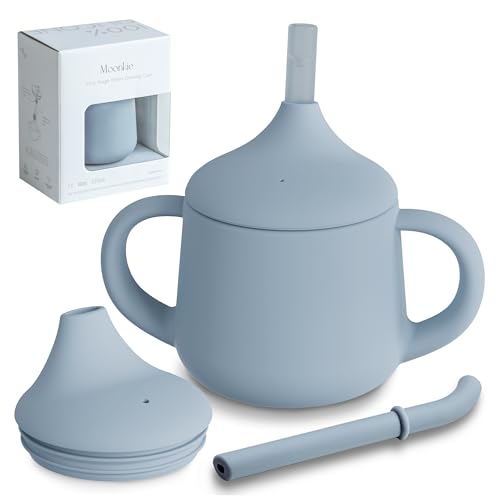
Moonkie’s silicone cup progresses through three stages: sippy, straw, and open cup. Made from 100% food-grade silicone, it’s BPA-free and free from harmful additives. The three-in-one design supports lip closure, speech development, and safe swallowing while encouraging a gradual transition away from bottles. Best for families seeking a single cup that grows with a child’s drinking skills. Caution: some children may prefer a more distinct separation between stages to avoid confusion.
Buying Guide: How to Choose the Right Trainer Cup
- Age and development stage: Start with a cup designed for babies 6 months and up; move to straw cups or open cups as teeth and coordination develop.
- Spill vs. slow-flow design: If mess reduction is your priority, choose a spill-proof or 360-degree rim cup. For guided practice, opt for slow-flow without valves.
- Grip and weight: Look for easy-grip handles and a comfortable weight to support early independence and reduced wrist strain for small hands.
- Materials and safety: Prefer BPA-free, phthalate-free, and durable plastics or medical-grade silicone. Consider unbreakable options for families on the go.
- Transition strategy: Some cups offer multiple modes (sippy, straw, open) to grow with your child. Decide whether you want a single multi-stage cup or separate stages.
- Cleaning and maintenance: Fewer parts mean easier cleaning. Check whether parts are dishwasher-safe and whether the cup requires frequent disassembly for proper cleaning.
Frequently Asked Questions
- What age should I start using a trainer cup?
Typically around 6 months, when a baby begins practicing mouth movements more like an adult drinking pattern. - Are spoutless cups better for development?
Spoutless designs encourage natural mouth muscle development and can promote smoother transition to regular cups. - Is a spill-proof cup always best?
Spill-proof cups reduce mess but may limit practice with real sipping. Slow-flow options provide controlled learning without overwhelming the child. - How important are handles on trainer cups?
Handles aid grip and independence, especially for toddlers still developing motor skills. - Which material is safest for baby cups?
Materials labeled BPA-free, phthalate-free, and free of heavy metals are generally safest for infants and toddlers. - Should I switch to a straw cup eventually?
Yes, many babies benefit from straw cups as their oral muscles mature and they learn new drinking styles.