When caregivers look for easy sippy cups for babies, the goal is a spill-proof, comfortable transition from bottles to cups. This guide highlights five reliable options that fit common needs: gentle transition cups for babies, soft-spout or straw designs for toddlers, and anti-slip handles for little hands. Each pick targets a different phase of growing confidence, from early 4 months to 2 years. The buyer intent is clear: find cups that minimize mess, promote independent drinking, and suit growing grips.
Summary table of chosen products:
- Munchkin Gentle Transition Baby Sippy Cup (4 oz) – Best for early bottle-to-cup transition
- NUK Learner Cup 10 Oz (2-pack) – Best for steady long-term practice
- Dr. Brown’s Milestones Straw Cup (9 oz) – Best for straw transition
- NUK Learner Cup 5 Oz (2-pack) – Best for younger infants starting cups
- The First Years Squeeze & Sip (7 oz, 3-pack) – Best for squeezable straw training
Munchkin Gentle Transition Baby Sippy Cup
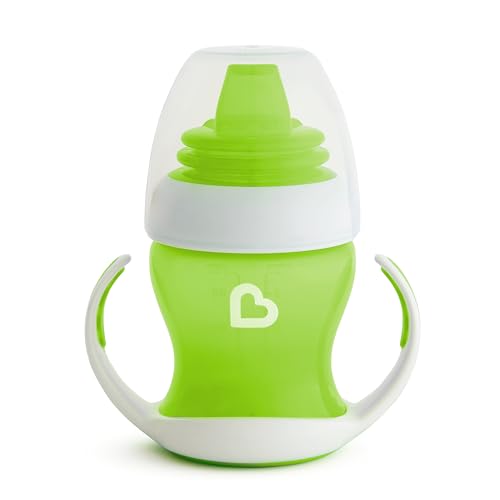
Brand: Munchkin. Features include leak-proof design, removable anti-slip training handles, and BPA-free materials. This 4-ounce cup is designed to help babies transition from bottle to cup with minimal mess. Best for babies around 4 months and up who need a compact, easy-to-hold cup.
Who it’s best for and why: Best for caregivers seeking a compact, beginner-friendly transition cup with stable handles. The removable training aids support early motor skills, and the durable construction withstands typical drops. A limitation: is a small size that may require frequent refilling for older babies accustomed to bigger drinks.
NUK Learner Cup 10 Oz (Pooh Bear) – Soft Spout

Brand: NUK. Features include an easy-grip design, removable anti-slip handles, and a spill-proof soft spout. This 10-ounce capacity supports longer practice sessions, making it suitable for toddlers transitioning from bottles or breast to a cup. BPA free and designed for gentle gum contact.
Who it’s best for and why: Best for toddlers who need a comfortably sized cup with a soft spout and stable handles. The two-pack option provides consistent sizing as hands grow. Caution: the larger 10 oz capacity may be too much for very young babies still developing grip strength.
Dr. Brown’s Milestones Straw Cup – Weighted Straw

Brand: Dr. Brown’s. Features include a weighted silicone straw that moves with liquid, side-grip handles, and a contoured body with removable handles. This 9-ounce cup supports the bottle-to-cup transition while allowing drinkers to sip from any angle. BPA-free and designed for ongoing use as skills develop.
Who it’s best for and why: Best for babies and toddlers who benefit from straw-assisted sipping and dynamic liquid flow. The weighted straw helps maintain drinkability when tilted. Limitation: weighted straw may require extra cleaning attention to ensure no buildup inside the straw.
NUK Learner Cup 6+ Months – 5 Oz (2-Pack)
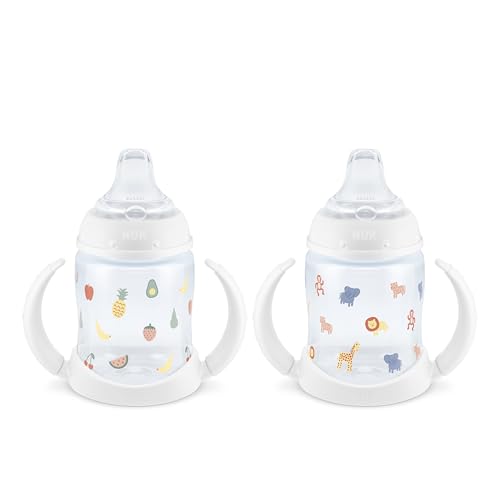
Brand: NUK. Features include an easy-grip design, removable anti-slip handles, and a spill-proof soft spout. The smaller 5-ounce cups are ideal for younger infants and early cup training, with two-pack convenience for growing toddlers.
Who it’s best for and why: Best for younger infants starting cup use, or families who want extra cups at different locations. A caution: smaller capacity may necessitate more frequent fills as drinking volume increases with age.
NUK First Choice Large Learner Cup 2.0 – 10 Oz

Brand: NUK. Features include an easy-grip, anti-slip handle, and a leak-proof soft straw system. The 10-ounce capacity supports longer drink sessions, with a design aimed at growing toddlers. BPA-free and dishwasher-safe parts simplify cleaning.
Who it’s best for and why: Best for families seeking a larger-capacity option that remains easy to hold and clean. Limitation: some toddlers might prefer cups with more robust straw valves for heavy sipping.
The First Years Squeeze & Sip Toddler Straw Cups
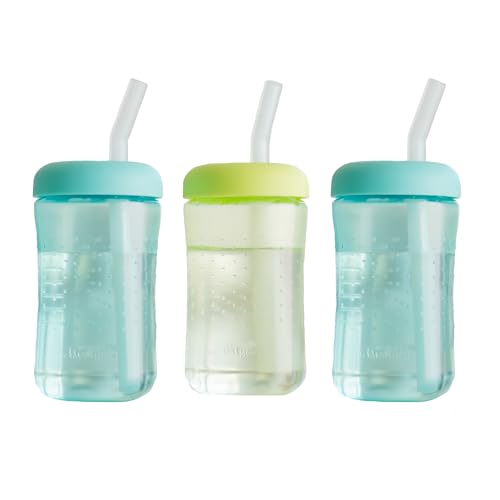
Brand: The First Years. Features include a squeezable design that releases beverage through a silicone straw with a flow-control valve. The 7-ounce capacity is suitable for toddlers, and the cups are designed for easy handling and frequent use. BPA-free, with a focus on controlled spilling and mess reduction.
Who it’s best for and why: Best for toddlers who respond well to a squeeze-and-sip approach, encouraging independent drinking. Limitation: the squeeze mechanism may require practice to achieve consistent flow for newer sipters.
Buying Guide
- What cup size is right for my child? Start with smaller capacities (4–5 oz) for beginners and move up to 9–10 oz as hand strength and endurance grow.
- What spout or straw design fits my child’s comfort? Soft spouts are gentler on gums; weighted straws help sipping from various angles; squeezy designs aid early straw use.
- How important are handles? Anti-slip, easy-grip handles help early learners stabilize the cup and build motor skills.
- Is the cup easy to clean and assemble? Look for simple disassembly, dishwasher-safe parts, and BPA-free materials to support daily use.
- What is the transition strategy? For a smooth transition, pair a gradual phase-out of bottle feeding with consistent practice sessions and mess-friendly designs.
- Are multiple cups worth it? A two-pack or three-pack can ensure you have a backup at home, in the car, and at daycare.
FAQ
What is the best first sippy cup?
The best first sippy cup is compact (around 4 oz), with easy-to-hold handles and a leak-proof design to minimize mess during bottle-to-cup transition.
When can my child start using a straw cup?
Most children can begin straw cups around 9–12 months, once they show better lip control and hand coordination.
Are spill-proof cups truly spill-proof?
No cup is completely spill-proof. Look for valves and seals designed to minimize leakage when tipped or squeezed.
How many sippy cups should I own?
Having two to three cups in rotation is practical for different locations and cleaning schedules.
Can these cups go in the dishwasher?
Many are labeled as dishwasher-safe for the top rack, but always follow the manufacturer’s cleaning instructions.
Are these cups BPA-free?
All listed products are BPA-free, aligning with common safety expectations for baby feeding gear.