Choosing the right walker stroller can support early walking, pretend play, and motor skill development. The selections below feature wooden and plastic designs with engaging activities, safety considerations, and age-appropriate use. Each option encourages balance, coordination, and imaginative play while keeping floors protected and playtime engaging. The list includes wood walkers, 2-in-1 push-pull models, and 4-in-1 activity walkers designed for toddlers learning to stand and walk. Read on to compare features, durability, and suitability for your child’s stage of development.
| Product | Brand | Key Benefit |
|---|---|---|
| labebe Wooden Baby Walker | labebe | Multifunction walker with activity center and doll storage |
| Asweets 2 in 1 Wooden Baby Walker | Asweets | Large toy box; wooden design with pretend shopping cart |
| labebe Baby Push Walker Doll Stroller | labebe | 2-in-1 walker and toy storage with broad base |
| LOVEVERY The Buddy Stroller | Lovevery | Balanced wood stroller for pretend play and motor development |
| Skip Hop Baby Walker 4-in-1 | Skip Hop | Four play modes: seated, cruising, shopping cart, stroller |
labebe Wooden Baby Walker With Activity Center

The labebe wooden walker is designed as a multifunctional learning tool. It combines a walker, a doll stroller, and an activity center into a single unit. The design supports early walking practice while letting toddlers push with their favorite dolls, promoting balance and coordination. The included activities—such as a word flipper, spinning gear, sun buttons, clock, shape sorter, tracing game, and dining-related pieces—offer varied play patterns to stimulate imagination and fine motor skills. The adjustable rear wheels allow parents to tailor the pace as a child grows, encouraging confidence at different walking stages.
Safety and material considerations appear in the design with rounded edges and a stable base, reducing tipping risk during early steps. The wheels are rubber to minimize floor wear and noise, suitable for indoor use on various floor types. The product emphasizes durability with a sturdy wooden frame and non-toxic finishes. It’s appropriate for children around 18 months and up as a learning-to-walk toy that can evolve into a storage-friendly activity station as the child explores new skills.
What to consider: If your child loves pretend play, this walker’s doll-station feature adds a unique twist to typical walkers. Check the weight and size to ensure it fits your space, and verify that the assembly process is straightforward for quick setup. The combination of push mobility and an engaging toy center can help maintain a child’s interest during practice sessions and independent play.
Asweets 2 in 1 Wooden Walker And Cart

Asweets offers a 2-in-1 wooden walker with a large toy box, functioning as both a walking aid and a pretend shopping cart. The design supports early walking practice while encouraging toddlers to carry their favorite toys on the go. ASTM F963-17 certification indicates compliance with current safety standards for children’s products, and the birch plywood construction provides a sturdy, durable frame. The rubber-wrapped wheels provide a smooth ride and floor protection, reducing scuffs on hard surfaces and carpet alike.
Asweets emphasizes pretend play as a core benefit, with the shopping-cart form letting children push and collect toys as they move. The product’s natural wood finish and rubberized wheels target smooth movement and floor safety, while the simple assembly helps caregivers set up quickly. The included wheel design reduces slip risk, and the broad base supports balance as kids practice stepping and standing. This model is well-suited for toddlers who enjoy role-play alongside walking practice.
Considerations include ensuring adult supervision during initial use, verifying the weight capacity for your child, and evaluating how the cart’s storage aligns with your space. For households prioritizing natural materials and traditional play patterns, this option blends durability with classic design.
labebe Baby Push Walker Doll Stroller

This 2-in-1 walker and toy storage solution is designed for early walkers who are starting to stand and push. The larger size accommodates dolls or toys, creating a realistic shopping or transporting experience for toddlers. The broad base and rubber ring help protect floors and support stable movement, which is important when children are learning to coordinate steps. The design aims to be enjoyable for both boys and girls, with kid-friendly aesthetics and a structure that promotes independent mobility.
Key features include: a walkable stand-to-push transition, the option to transport toys, and a built-in storage component that doubles as a pretend play station. The product prioritizes safety through rounded edges and a low center of gravity to minimize tipping. It’s a suitable option for growing walkers who require more control and balance as they learn to move independently.
Practical considerations involve checking weight limits, ensuring proper supervision, and noting the ease of moving the walker on carpet or hard floors. This model is a strong pick for households seeking a durable, wheeled wooden walker that supports imaginative play while aiding physical development.
LOVEVERY The Buddy Stroller
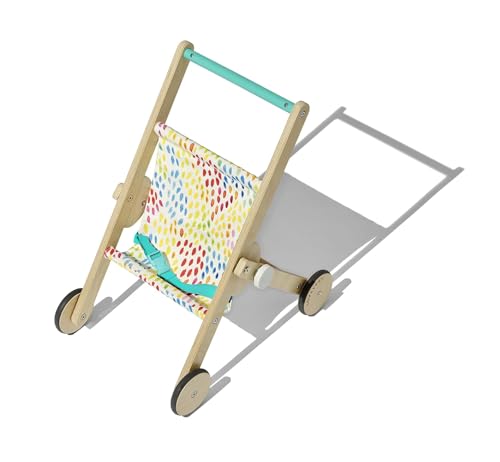
The Buddy Stroller from Lovevery is a wooden toy stroller designed for pretend play and motor development. The construction prioritizes balanced handling and a height suitable for toddlers, with sustainably sourced wood and child-friendly textiles. This stroller supports early walking and pushing activities, providing a natural extension for children who enjoy driving a little cart and transporting dolls or soft toys.
What sets this option apart is its emphasis on development-appropriate design. The stroller is crafted to be comfortable for little hands to grip and push, encouraging walking practice as part of everyday play. Its materials align with standards for safe, durable toys, and the piece complements other Lovevery learning systems for a cohesive developmental approach. It serves as a practical bridge between free play and structured developmental milestones.
Considerations include ensuring the height suits your child, evaluating the aesthetics if coordinating with other toys, and checking that the wood finish is non-toxic. For families focusing on sustainable materials and thoughtfully designed toys, this Buddy Stroller offers a reliable option for daily pretend play and movement practice.
Skip Hop 4-in-1 Sit-To-Stand Walker

The Skip Hop 4-in-1 Sit-To-Stand Walker offers four distinct modes—seated, cruising, shopping cart, and stroller. This versatility supports a broad range of developmental stages, from passive sitting to independent cruising and pushing. With more than 40 play features, including songs, sounds, and lights, the walker engages a child’s senses while promoting balance, mobility, and fine motor skills. The light-up keyboard introduces basic shapes and numbers, enriching early cognitive development through interactive play.
From a safety perspective, the design emphasizes stability and gradual progression through play modes, helping parents tailor it to a child’s pace. The walking surface is designed to be non-slip, and the transition between modes is intended to be intuitive for toddlers. The musical and interactive elements foster cause-and-effect learning, while the rotating play features help with hand-eye coordination and sensory development.
When selecting a walker, consider the child’s current walking ability, the space available for active play, and your family’s preference for activity-based toys. The Skip Hop option is well-suited for households seeking a feature-rich walker that grows with a child’s abilities and curiosity.
Buying Guide: Key Purchase Considerations And Comparisons
- Age and developmental stage: Look for models clearly labeled for early walkers (roughly 12–18 months) and adaptable designs for growing toddlers.
- Material and durability: Wooden walkers are sturdy and offer timeless aesthetics, while plastic variants may be lighter and feature-rich. Check for non-toxic finishes and rounded edges for safety.
- Movement and floor protection: Rubber tires or wheels that glide quietly reduce floor wear and provide smoother pushing on different surfaces.
- Stability and safety features: A broad base, low center of gravity, and safety brakes or locks add stability during practice.
- Storage and play features: Built-in toy storage, activity centers, and pretend-play elements can boost engagement and encourage longer play sessions.
- Versatility and growth: 4-in-1 or 2-in-1 designs offer multiple play modes that align with evolving motor skills and imaginative play.
- Portability and space: Consider compact or foldable designs if you have limited space or need portability between rooms or outdoors.
- Maintenance and safety standards: Look for certifications such as ASTM F963-17 and materials that are easy to clean and maintain.
- Price versus value: Higher-quality wood walkers may be more durable and longer-lasting, but ensure features align with your child’s needs and your budget.
- Caregiver involvement: Select a model that allows caregivers to guide early practice while enabling independent play as confidence grows.
In summary, when choosing a walker stroller, prioritize safety, age-appropriateness, and the balance between learning features and independent mobility. Wooden designs offer durability and a classic look, while 4-in-1 walkers provide broader engagement across growing stages. Review each product’s activity centers, wheel design, and storage options to find the model that best fits your child’s preferences and your living space.