Yes—soft, breast-like pacifiers can help ease a breastfed baby into pacifier use while supporting natural oral development. This guide highlights five top options, focusing on models that closely resemble the feel of a mother’s breast and are easy to clean. Each product is chosen for babies who are primarily breastfed, but also suitable for occasional bottle feeding. The top picks vary by design, material, and value to help parents decide which pacifier best fits their baby’s needs and daily routine.
| Product | Brand | Why It Stands Out | Best For |
|---|---|---|---|
| Dr. Brown’s HappyPaci | Dr. Brown’s | Contoured shield and 100% silicone for a familiar latch | Breastfed babies needing a familiar feel |
| Tommee Tippee Breast-Like Pacifier | Tommee Tippee | Natural latch with a soft, breast-like nipple | Babies transitioning from nursing to pacifier |
| NANOBÉBÉ 0–3 Month Pacifiers | NANOBÉBÉ | One-piece silicone, orthodontic shape, breastfeeding-friendly | Newborns who need gentle contouring |
| MAM Original Start 0–3 Months | MAM | SkinSoft nipple and orthodontic shape designed for smaller mouths | Very small newborn mouths |
| Comfy Cubs 5 Pack | Comfy Cubs | Food-grade silicone with safety air holes and varied colors | Parents wanting variety and multiple backups |
Dr. Brown’s HappyPaci 100% Silicone Pacifier

SILICONE PACIFIER: Lightweight and soft 100% silicone, designed for babies 0–6 months. The material is gentle on gums and durable for chewing.
BREAST-LIKE SHAPE: Features a familiar shape and a textured nipple intended to mimic the feel of a breastfeeding mother, aiding natural soothing reflexes.
ONE-PIECE DESIGN: The single-piece construction reduces choking hazards and eases cleaning and sterilization.
BEST FOR: Parents seeking a trusted, easy-to-clean option with a breast-like latch that aligns with breastfeeding routines.
LIMITATION: The 4-pack sizing may reduce the variety of shapes if you want to compare multiple textures for novelty or preference.
Tommee Tippee Breast-Like Pacifier

SILICONE PACIFIER: Lightweight, one-piece silicone design with a symmetric nipple for a comfortable latch. Suitable for 0–6 months.
TRANSITION-FRIENDLY: The shape mirrors Dr. Brown’s bottle nipple, helping babies transfer smoothly between nursing and pacifier use.
SKIN-FRIENDLY SHIELD: The shield is contoured to reduce pressure on the nose and cheeks, with venting to protect delicate skin.
BEST FOR: Families wanting a pacifier that supports a natural latch during the nursing-to-pacifier transition.
LIMITATION: Some babies may prefer a slightly different texture; try if the first option isn’t immediately accepted.
NANOBÉBÉ 0–3 Month Pacifiers
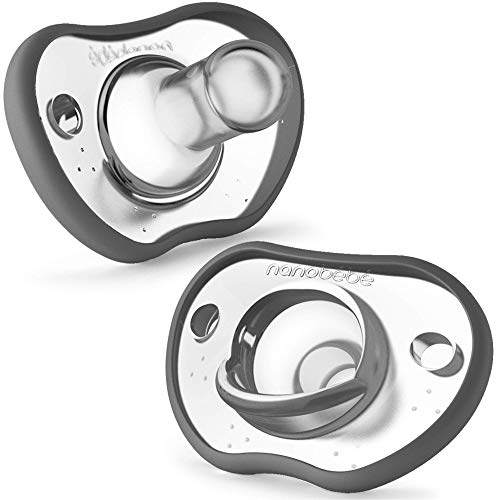
ONE-PIECE, BPA-FREE: 100% silicone, seamless design recommended by pediatricians and aligned with American Academy of Pediatrics safety guidelines.
ORTHODONTIC SHAPE: Curves to fit the baby’s face, with a design intended to minimize nipple confusion.
AWARD-WINNING: Marketed for breastfeeding babies and recognized for its gentle fit.
BEST FOR: Parents seeking a silicone, one-piece pacifier with an orthodontic shape to support early oral development.
LIMITATION: May be smaller in volume; verify if your baby prefers a fuller nipple.
Comfy Cubs 5 Pack Pacifiers

100% FOOD-GRADE SILICONE: BPA, PVC, phthalates, and latex-free for sensitive skin.
AIR HOLES: Strategically placed to allow air circulation and reduce irritation risk during use.
VARIETY OF COLORS: Multicolor set designed to appeal to newborns and ease rotation.
BEST FOR: Parents who want a durable, safe pack with multiple backups for busy days.
LIMITATION: The silicone texture and color variety may be distracting for some babies at first use.
Buying Guide: How to Choose a Soft Pacifier for a Breastfed Baby
What matters most: silicone vs silicone-free materials?
Most breastfed-friendly pacifiers are 100% silicone. Silicone is durable, easy to clean, and gentle on gums. Look for BPA-free listings and a one-piece design to reduce choking hazards.
Is the size and shape appropriate for a newborn?
Newborns have smaller mouths; pick pacifiers labeled for 0–3 months or 0–6 months with a slim, breast-like nipple. An orthodontic or skin-soft design can support natural oral development.
How important is the shield design?
A well-ventilated shield that curves away from the nose and cheeks helps prevent skin irritation and rash. A compact shield reduces interference with nursing and facial movements.
What about safety and cleaning?
Choose a single-piece pacifier if possible. It simplifies cleaning, reduces crevices where bacteria can hide, and lowers choking risk. Always follow cleaning instructions recommended by the manufacturer.
Value and longevity considerations
Multi-pack sets provide backups for busy days and trips, while single-packs may offer a preferred shape or texture to test. Consider whether your baby’s preferences may change as they grow.
Summary of selection criteria
- Breast-like feel to ease the transition from nursing
- One-piece silicone design for safety and cleanliness
- Appropriate size for newborns and young babies
- Skin-friendly shield design to protect delicate skin
- Value options (single vs multi-pack) for ongoing use
FAQ
- Are soft pacifiers safe for breastfed babies?
Yes. Choose BPA-free, silicone, one-piece designs with breathable shields to reduce skin irritation and choking risks.
- What age range should I consider for a breast-like pacifier?
Most options target 0–6 months. Some brands offer 0–3 months as a smaller size for very young newborns.
- Can a pacifier affect breastfeeding?
Using a properly designed, breast-like pacifier in the early weeks is generally considered compatible with breastfeeding when introduced after establishing nursing patterns, but consult a pediatrician if there are concerns.
- How often should I replace pacifiers?
Inspect for wear, tears, or discoloration regularly. Replace immediately if damaged, and follow the manufacturer’s cleaning schedule.
- Should I use a pacifier with multiple baby experiences (nursing, bottle, sleep)?
Look for a nipple shape and texture that resembles a mother’s breast to minimize nipple confusion and support soothing cues across routines.
- What is the best option for travel?
Consider a 1-piece design with a compact shield and a single cleanable nipple to simplify packing and sterilization on the go.