Answering the search for the best straw cups for babies, this guide highlights options that support a smooth bottle-to-cup transition, ease of use, and mess containment. Each pick is suitable for different levels of a child’s development and different caregiver preferences. Best for toddlers ready to begin straw drinking, best for on-the-go use, and best for gentle transitions are all covered. The top five products below are chosen for reliability, design, and practical benefits such as weighted straws, spill-proof seals, and easy-hold handles. This summary helps you compare at a glance and then dive into detailed product facts.
| Product | Best For | Key Benefit |
|---|---|---|
| Dr. Brown’s Milestones Baby’s First Straw Cup | Early straw learners | Weighted straw for flexible sipping |
| Munchkin Any Angle Sippy Cups | Drinking from any angle | Weighted straw with twist-lock seal |
| NUK Learner Straw Cup | Gentle transition to straw | Soft weighted straw; easy handles |
| The First Years Squeeze & Sip | Squeezable trainer-to-straw | Valve-controlled flow for mess reduction |
| Moonkie Silicone Baby Sippy Cups | Three-in-one transition cup | Versatile design: straw, spout, or open cup |
Dr. Brown’s Milestones Baby’s First Straw Cup

The Dr. Brown’s Milestones straw cup is designed for babies beginning straw use. It features a weighted silicone straw that follows the liquid, enabling sipping in multiple directions. Side-grip handles help small hands hold the cup securely. The contoured shape and removable handles allow growth with the child’s developing skills. Best for parents seeking a gradual bottle-to-cup transition and a cup that adapts as a child’s grip improves. Caution: check for any loose parts during cleaning to avoid small pieces being ingested.
The First Years Squeeze & Sip Toddler Straw Cups (3 Count)

The First Years Squeeze & Sip set offers a squeezable transition to straw drinking with a silicone straw and valve-controlled flow. It comes in a bright color trio that kids love. The 7 oz size is suitable for small hands, and the design supports extended use beyond the trainer stage. Best for households wanting a disposable-friendly, easy-to-clean option. Choose this if you want a simple path from trainer cups to regular straw cups. Limitation: the valve mechanism may require occasional cleaning to prevent flow issues.
Munchkin Any Angle Sippy Cups (2 Pack)
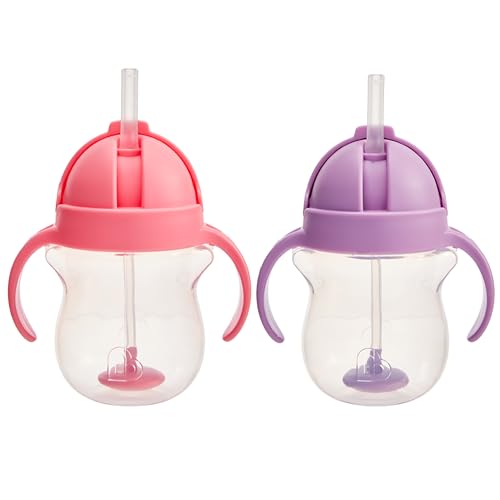
These Munchkin cups are designed to sip from any angle thanks to a weighted straw base. The patented Click Lock technology seals the cup to prevent leaks, making them a strong choice for travel and mess reduction. Best for toddlers who tilt cups while sipping and for families who want a reliable leak-proof design. Caution: ensure the lid is fully aligned to hear the click before use to maximize the seal.
NUK Learner Straw Cup (2-Pack)

NUK’s Learner Straw Cup emphasizes a gentle, supportive transition to straw drinking with a 100% soft silicone weighted straw. Easy-grip, anti-slip handles are removable as the child grows. Best for parents seeking a lightweight, beginner-friendly cup that still supports upright lip closure. Limitation: the two-pack option may be more cups than some households need at this stage.
Moonkie Silicone Baby Sippy Cup (4 Oz, 1 Pack)
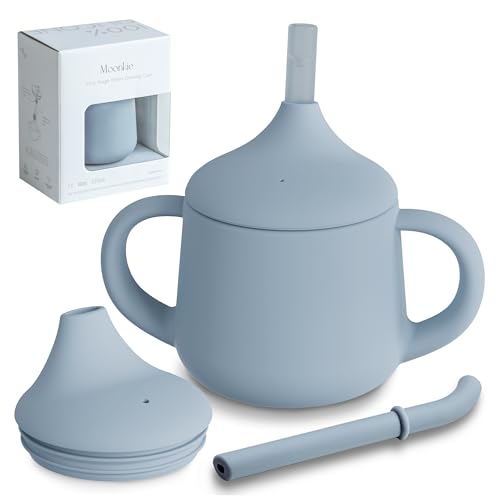
Moonkie offers a versatile three-in-one design: straw, spout, or open cup. The cups are made from 100% food-grade silicone and are BPA-free, with a soft yet durable feel suitable for teething gums. Best for families who want one cup that grows with the child through multiple drinking stages. Caution: the open-cup option may increase spill risk if used on unstable surfaces.
Buying Guide: How To Choose The Right Baby Straw Cup
- Age and developmental stage: For newborn-to-toddler transition, prioritize weighted straws and soft silicone to reduce gagging and gum sensitivity.
- Leak resistance: Look for valve systems or anti-leak lids, especially for travel or car use.
- Grip and ergonomics: Removable, easy-grip handles help small hands learn to hold and tilt the cup.
- Durability and cleaning: Dishwasher-safe parts and simple assembly reduce cleaning effort and ensure hygiene.
- Versatility: A three-in-one or convertible cup can support longer use as a child’s drinking skills evolve.
- Material safety: Choose BPA-free, food-grade silicone or similar materials designed for babies and toddlers.
- Portability: Consider cup size, weight, and lid design for on-the-go use with strollers or car seats.
Practical Comparison Questions
- Which cup is best for early straw learners? Dr. Brown’s Milestones or NUK Learner Straw Cup are strong options due to weighted straws and beginner-friendly design.
- What’s best for travel and mess reduction? The First Years Squeeze & Sip and Munchkin Any Angle provide secure seals and easy cleaning.
- Which cup grows with my child? Moonkie’s three-in-one design supports transitioning from straw to open cup.
Frequently Asked Questions
- Are weighted straws better for beginners? Yes, they help maintain sipping as the cup tilts in different directions.
- When should I switch from a sippy to a straw cup? Many families introduce straw cups around 6 months to 12 months, depending on the child’s grip and interest.
- Are straw cups easier to clean than traditional sippy cups? Not always; it depends on the number of parts. Look for fewer pieces and dishwasher-safe components.
- What materials are safest for babies? BPA-free silicone or similar food-grade materials are common and considered safe for babies when used as directed.
- Can these cups help with dental health? Using a straw can reduce direct contact with teeth, but proper lip closure and limited sugar exposure are still important.
- Is a two-pack better value? For families with multiple caregivers or households, a two-pack can be convenient and cost-efficient.