Finding the right booster seat for a 5-year-old means prioritizing safety, adjustable fit, and ease of use. The top picks below are best for families seeking long-lasting use as children grow from about 40 to 100 pounds. Each option supports big-kid seating with features that help ensure proper belt positioning and comfort on family trips. This guide highlights five models suited for 5-year-olds who are ready for belt-positioning boosters or transitioning between high-back and backless designs.
Summary of chosen products
- Graco TurboBooster 2.0 Backless Booster (Trisha) – best for lightweight, portable backless use in cars with reliable crash testing.
- Graco TurboBooster 2.0 Highback (Declan) – best for growing kids needing a 2-in-1 option that shifts from high-back to backless.
- Evenflo GoTime LX Booster – best for easy height adjustments and two-mode use for growing kids.
- Chicco GoFit ClearTex Plus Backless – best for quick LATCH setup and easy on/off with built-in carry handle.
- Safety 1st Grand 2-in-1 Booster (Old Soul) – best for slim footprint and 3-across compatibility in larger vehicles.
Graco TurboBooster 2.0 Backless Booster Car Seat, Trisha

Best for: Families seeking a lightweight, travel-ready backless booster for kids who meet the 40–100 lb and up to 57″ height range. It’s ideal for quick transitions between vehicles or carpools.
Why selected: This model emphasizes Graco ProtectPlus Engineered safety across crash scenarios and is designed to support older children while maintaining a compact form factor.
Limitations: Backless design may not provide head rest support in all seating positions; consider pairing with a vehicle headrest for older kids needing extra support.
Graco TurboBooster 2.0 Highback Booster Car Seat, Declan

Best for: Families needing a versatile 2-in-1 booster that grows with the child, from highback to backless, while prioritizing safety through Graco ProtectPlus Engineered.
Why selected: The model combines high-back support with a transition path to backless, plus height-adjustable armrests and head support for comfort during longer rides.
Limitations: Higher price point than basic backless boosters; use is best when the vehicle seats accommodate a taller back and head support needs.
Evenflo GoTime LX Booster Car Seat

Best for: Busy families needing straightforward height adjustment and a two-mode design that supports kids from about 40 to 120 pounds.
Why selected: This booster provides an adjustable fit with one-handed height changes and transitions between high-back and other configurations, aligning with a growing child’s needs.
Limitations: May be bulkier in compact cars; check for fit with rear-seat space and neighboring seats when carpooling.
Chicco GoFit ClearTex Plus Backless Booster
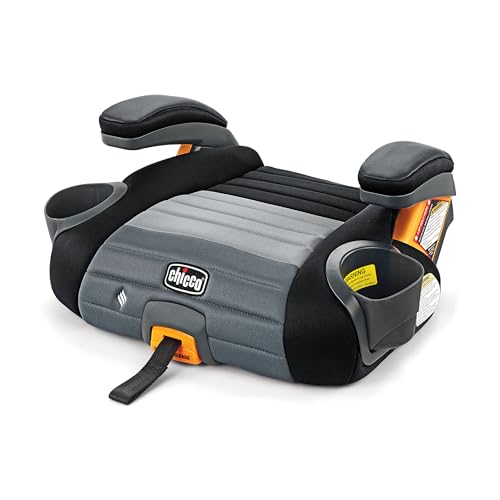
Best for: Families needing a lightweight, portable backless booster with built-in LATCH and quick-release removal for easy travel between vehicles.
Why selected: It’s designed for easy setup and removal, with belt-positioning guidance and ErgoBoost padding for comfort on longer trips.
Limitations: Backless configuration may not provide neck/head support in all seating positions; consider a high-back option if head support is a priority in certain vehicles.
Safety 1st Grow and Go 2-in-1 Booster Car Seat

Best for: Families needing a slim, adaptable booster that can fit three across in the back seat and grow with the child from high-back to backless.
Why selected: The ComfortWings design expands as the headrest rises, offering a comfortable fit for a growing child while keeping a compact seat footprint for vehicle space efficiency.
Limitations: Some parents prefer higher-back support for extra neck protection; this model remains a versatile choice if space is at a premium.
Buying Guide: How to Choose the Right Booster Seat
- Seat height and weight range: Ensure the booster covers your child’s current weight and height and offers a plan for growth (40–100+ pounds, up to 57 inches or more).
- Backless vs. high-back: Backless boosters are lightweight and portable; high-back boosters provide head/neck support in vehicles without built-in headrests.
- Safety features: Look for seats with robust crash tests, side-impact protection, and reliable belt guides to keep the lap and shoulder belts properly positioned.
- Ease of use: Consider models with quick-release LATCH, one-hand height adjustment, and easy cleaning materials for busy families.
- Vehicle fit: Some seats fit three across more easily; if you carpool, prioritize slim designs and compact footprints.
- Portability: For families that move seats between cars or rely on travel, lightweight options with carry handles are advantageous.
- Installation footprint: Check vehicle owner’s manual for correct booster installation guidance and ensure the seat does not impede airbag regions or seat belt routing.
Frequently Asked Questions
- What is the recommended age for booster seats? Most children are ready around 4–6 years old, depending on height and weight, and should use a booster until a vehicle belt fits properly without a booster, typically around 8–12 years old or taller than about 4’9″.
- How do I know if a booster is a good fit for my child? Check that the vehicle’s lap belt sits low on the hips, the shoulder belt crosses the middle of the chest and shoulder, and the child can sit properly without slouching.
- What’s the difference between high-back and backless boosters? High-back boosters provide head and neck support, while backless boosters are lighter and easier to move between cars and are best where headrests support the child’s head.
- Can boosters be used in three-across seating? Some slim designs and 2-in-1 boosters are designed to fit three across in the back seat; verify fit with your vehicle model and seat dimensions.
- How often should booster seats be replaced? Replace boosters after a crash, or if seats show compromised integrity, fading, or torn straps. Always follow the manufacturer’s guidelines for weight limits and lifetime.
- Are boosters with LATCH important? LATCH helps stabilize the seat during transfer and can simplify installation, though many boosters rely on vehicle seat belts for secure fit.