Finding the right cup for a 4-month-old helps with the transition from bottle to cup while keeping mess to a minimum. This guide highlights five baby cups designed for early learners, focusing on spill resistance, grip, and gentle spouts. Ideal buyers include caregivers introducing solids, parents seeking easy-grip designs, and families prioritizing silicone or BPA-free materials. The table below quickly compares who each cup is best for and why it stands out.
| Product | Best For | Why It Stands Out |
|---|---|---|
| MAM Starter Cup (Blue) | Infants beginning on spill-free cups | Extra-soft spill-free spout and non-slip handles |
| Moonkie Training Cup & Sippy Cup Set | Babies progressing from bottle to cup | 2-in-1 set with sippy and open cup for oral development |
| Moonkie Silicone Cup (4 oz) | Three-in-one transition stages | Soft silicone, three-in-one design (spout, straw, open cup) |
| ezpz Tiny Cup (Sage) | Baby-led weaning and precise mouth fit | Non-slip grip, weighted base, designed by a pediatric feeding specialist |
| Tommee Tippee Transition Cup | Mess-averse households | Leak-proof two-piece valve and easy-grip handles |
MAM Starter Cup (Blue)

Best For: Infants beginning the transition to independent drinking. Why selected: It features an extra-soft spill-free spout and non-slip handles, easing grip and reducing mess as babies learn to drink. Limitation: Spout softness may wear with heavy chewing; monitor for wear over time.
Moonkie Training Cup & Sippy Cup Set

Best For: Babies transitioning from bottle to cup with two-in-one versatility. Why selected: The set supports early learning with a sippy cup and open cup to strengthen oral coordination and independence. Caution: Material safety relies on silicone; ensure cleaning between uses to prevent residue buildup.
Moonkie Silicone Baby Sippy Cups (4 oz)
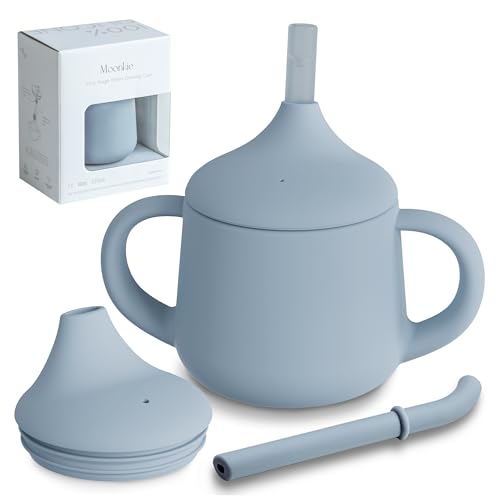
Best For: Families seeking a three-stage cup with long-term use. Why selected: Three-in-one design (spout, straw, open cup) promotes progressive drinking skills and dental-friendly use. Caution: The three modes require correct assembly to avoid leaks during transitions.
ezpz Tiny Cup (Sage)
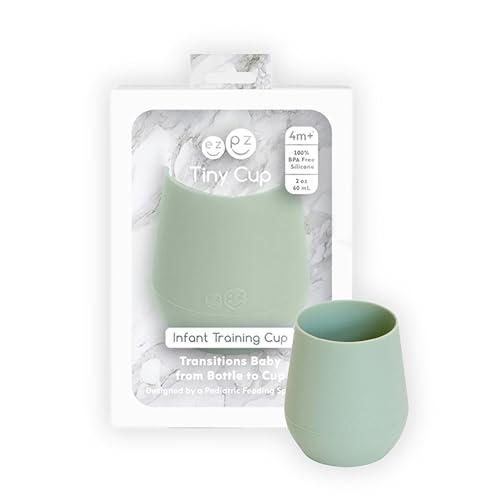
Best For: Parents seeking a compact, specialized cup designed by feeding experts. Why selected: Non-slip grip and a tilted interior for even flow support baby sipping, with a weighted base to resist tipping. Limitation: Made of silicone; while durable, it may retain odors if not cleaned promptly after use.
MAM Starter Cup (Pink)

Best For: Pink-themed option for infants who prefer color variety. Why selected: Similarly features spill-free spout and non-slip handles that support independent drinking. Caution: Similar to blue version, monitor wear on the spout with heavy chewing or biting.
Tommee Tippee Transition Cup

Best For: Households needing leak protection and a simple grip. Why selected: Natural-feel spout and leak-proof two-piece valve minimize spills. Caution: Hinged cap helps keep the spout clean, but may require more careful cleaning around the hinge over time.
Buying Guide
What matters most when choosing a cup for a 4-month-old? Focus on spout softness, grip design, and safety materials. Consider the following questions to compare options.
- Is the cup designed for 4+ months, with a gentle, bite-resistant spout?
- Does it offer non-slip handles or an ergonomic shape for little hands?
- Is the cup made from BPA-free or silicone materials safe for babies?
- Does the design minimize leaks, while still allowing easy cleaning?
- Are there transitional stages (sippy, straw, open cup) to grow with the child?
Material and safety: Silicone and BPA-free plastics are common in this category. Silicone spouts are gentle on gums and teeth but should be cleaned thoroughly after each use. Durability varies by construction; some cups use weighted bases or non-slip grippers to reduce tipping. Cleaning ease is also important for caregivers with busy routines; consider dishwasher-safe parts if applicable.
Transition strategy: Start with a cup that matches your baby’s current biting and chewing stage. A two-in-one set can be helpful for gradual progression, especially when moving from bottle to cup. Gradual introduction of a straw or open cup can support lip closure, speech development, and safe swallowing.
Frequently Asked Questions
- What age is best to start using a sippy cup?
Most babies begin around 4 months or later, depending on developmental readiness and pediatric guidance. - Are silicone cups safer than plastic?
Silicone options are BPA-free and gentle on gums, but must be cleaned properly to avoid residue. - Will a leak-proof cup reduce mess?
Yes, leak-proof valves help minimize spills, though no cup is completely spill-proof in all scenarios. - Should I choose a cup with multiple stages?
Multi-stage cups support progression from sippy to straw to open cup, aligning with developmental milestones. - How do I clean baby cups effectively?
Disassemble parts, wash with warm soapy water, and dry completely; check dishwasher suitability if stated by the manufacturer. - What should I avoid in baby cups?
Avoid cups with small detachable parts that pose choking hazards and those with harsh chemicals in any components.