When safety matters most, a reliable personal alarm can attract attention, deter trouble, and provide immediate reassurance. This guide highlights five top panic button options that are well-suited for kids, families, and everyday safety scenarios. Each product is evaluated for who benefits most, potential limitations, and practical usage tips to help you decide which to choose.
Summary Table: Selected Panic Buttons
| Product | Best For | Key Benefit | Notes |
|---|---|---|---|
| VIGOROAD 3 Pack Loud 130dB Alarm | Kids, Teens, Seniors | Easy pull-pin activation, built-in LED | High visibility; simple to use |
| KOSIN Safe Sound Personal Alarm 3 Pack | Everyone (home, travel) | Long-lasting 140dB alarm, LED light | Durable, battery-powered |
| TECKNET 130dB Rechargeable Alarm | Students, Elderly | Rechargeable, SOS strobe | Low battery indicator |
| PILSAMAS 3 Pack Wireless Caregiver Button | Caregivers, Seniors | Wi‑Fi/app connected alert | Remote monitoring via app |
| Taiker Personal Alarm 10 Pack | Classes, Groups, Families | High-volume 140dB, portable | Great value for multiple users |
VIGOROAD 3 Pack Loud 130dB Alarm
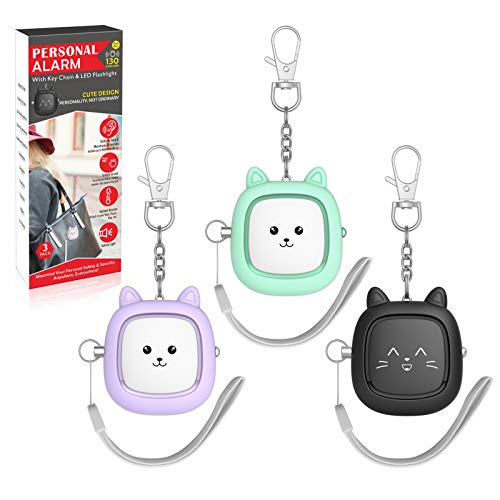
The VIGOROAD alarm set offers a loud 130dB siren with a simple pull-pin activation, designed for quick use in urgent situations. The built-in LED light adds visibility in low-light environments. This kit is best for kids who can operate the pull-pin mechanism independently and for seniors who want a straightforward, no-fruss setup.
Who it’s best for: Younger children learning personal safety routines, teens in unfamiliar environments, and seniors seeking a dependable, easy-to-use alarm.
Why selected: Its combination of a loud alert and LED light provides two layers of deterrence and visibility, with a direct on/off pin that minimizes accidental activations.
Limitations: The device relies on manual activation; it may not be suitable for users who might forget to carry or operate a pin in a panic.
Panic Button

This compact panic button focuses on stress relief rather than safety signaling. It features two calming sequences and lights up for a tactile, sensory experience. It’s best for kids or adults needing a mood-break tool rather than a dedicated safety device.
Who it’s best for: Children needing a simple, non-emergency coping tool, or as a playful, secondary device in a safety kit.
Why selected: Useful as a secondary product in a safety kit where calm-down tools are complementary to alarms.
Limitations: It is not designed for emergency signaling to others during a real threat.
KOSIN Personal Safety Alarm (6 Pack)
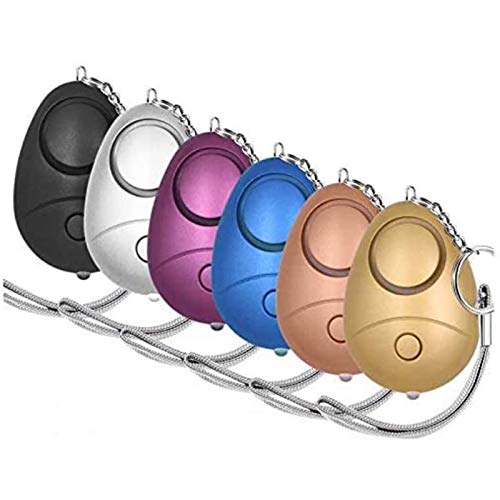
The KOSIN 6-pack Personal Safety Alarm delivers a 140dB alarm with LED lighting. Built to function independently with batteries, it’s designed for a wide age range, including children and seniors, making it a flexible option for family safety kits or classroom use.
Who it’s best for: Families seeking multiple alarms for different locations (home, car, backpack) or groups sharing a single safety system.
Why selected: The higher 140dB output in a multi-pack format supports broad coverage across households or program-wide safety plans.
Limitations: Battery replacement is required; consider keeping spare batteries and a quick replacement plan.
KOSIN Safe Sound Personal Alarm (3 Pack)

This 3-pack variant mirrors the multi-pack concept with 145dB capability and LED lights. The higher decibel level increases attention-getting potential, making it suitable for crowded or outdoor settings where distance might blunt signals.
Who it’s best for: School-aged children, evening commuters, and caregivers who want redundancy in alarms across different locations.
Why selected: The stronger 145dB output can be valuable for larger spaces or when visibility matters in addition to sound.
Limitations: Like other battery-powered alarms, ongoing maintenance (battery checks) is necessary for reliability.
TECKNET Rechargeable Personal Safety Alarm

The TECKNET alarm emphasizes 130dB of sound paired with a rechargeable battery and a SOS strobe. A low-battery indicator helps ensure the device remains ready, making it a practical choice for families who prefer a rechargeable option over frequent battery changes.
Who it’s best for: Students, parents of young children, and seniors who want a long-range, rechargeable alarm with an emergency strobe.
Why selected: The rechargeable design reduces recurring costs and waste, while the strobe light adds an extra layer of deterrence in dark settings.
Limitations: Requires regular charging to stay ready; plan charging intervals into daily routines.
PILSAMAS 3 Pack Wireless Caregiver Button

The PILSAMAS system uses a hub with 433MHz wireless buttons and a Wi-Fi connection for remote alerts. When a panic button is pressed, an alarm sounds and an app notification is sent to caregivers or family members. This approach is best for home safety or assisted-living arrangements.
Who it’s best for: Caregivers and families needing centralized alerts and remote monitoring, especially in households with seniors or mobility challenges.
Why selected: Combines local alarms with smart app notifications, enabling real-time awareness without relying solely on nearby bystanders.
Limitations: Requires Wi-Fi access and app subscriptions for some features; setup may be more involved than standalone alarms.
Buying Guide: How To Choose The Right Panic Button
What features matter most for your situation?
- Alarm volume: Higher dB levels attract more attention but may be louder than needed in quiet areas. For kids in classrooms or playgrounds, 130–140dB is typically sufficient.
- Activation method: Pull-pin designs are quick and intuitive for children; buttons or soft triggers may be more suitable for younger kids or adults with limited dexterity.
- Power source: Battery-powered units are simple to replace but require periodic checks. Rechargeable models reduce waste but need charging routine.
- Visual aids: LED lights and strobe features can help in dark environments and provide assurance when visibility matters.
- Connectivity: Wireless and app-connected systems (like PILSAMAS) expand monitoring but require Wi-Fi and subscriptions for full functionality.
- Range and coverage: Multi-pack options are cost-efficient if multiple family members or locations need protection.
- Durability and portability: Compact, keychain-size devices are ideal for everyday carry; rugged designs suit outdoor use or school activities.
Frequently Asked Questions
- How loud should a panic button be for kids? Answer: A range of 130–140dB is typically effective for drawing attention in most environments without being overwhelming in small spaces.
- Do these alarms require monthly maintenance? Answer: Most battery-powered units require occasional battery checks or replacements; rechargeable models require charging every so often.
- Can alarms be used for caregivers and seniors at home? Answer: Yes, many options offer multi-pack or hub-based systems that notify caregivers via apps or alerts in addition to local sounds.
- Is a Wi-Fi connected alarm necessary? Answer: Not always. Standalone alarms work well for immediate signaling, while Wi-Fi connected systems provide remote monitoring and alerts.
- What if a feature is missing? Answer: Consider combining a standalone alarm with a secondary device (like a wearable beacon or door alarm) to cover different scenarios.
- Which product is best for a classroom setting? Answer: A mix of high-volume standalone alarms and multiple compact units to cover several students’ pockets or backpacks.