The best options for a 6-month-old focus on ergonomic support, adjustable fits, and ease of use for caregivers. This guide highlights carriers suited for babies around 6 months and up, with a mix of 4-in-1 and 6-in-1 designs. Ideal buyers include parents seeking hands-free convenience, travelers, and caregivers who want flexible seating positions for toddler growth. Below is a quick buying table to compare five suitable picks at a glance.
| Product | Best For | Key Benefit |
|---|---|---|
| MOMTORY 6-in-1 Baby Carrier | Active parents; daily errands | Six carrying positions with a detachable hip seat |
| Infantino Flip Luxe 4-in-1 | Growing babies; long wear | Updated lumbar support and four positions |
| Momcozy Ergonomic Carrier | Travelers; hands-free lifestyle | Three size positions; built-in lumbar support |
| HKAI Baby Hip Carrier | On-the-go parents needing storage | Five pockets and ergonomic hip-seat support |
| Infantino Gray 4-in-1 Carrier | Family with multiple caregivers | Classic four-position versatility and ergonomic design |
MOMTORY 6-in-1 Baby Carrier

Best for parents seeking versatility, the MOMTORY carrier transitions from infant to toddler with six carrying positions, including a baby hip seat. It supports 7–50 lbs and features adjustable shoulder straps and waist stools to fit various body types. The fabric is described as skin-friendly for close contact. This carrier is suitable for shopping or travel where different seating styles help keep the child comfortable and the caregiver balanced. A potential limitation is that setup may require practice to switch positions smoothly.
Infantino Flip Luxe 4-in-1 Convertible Carrier
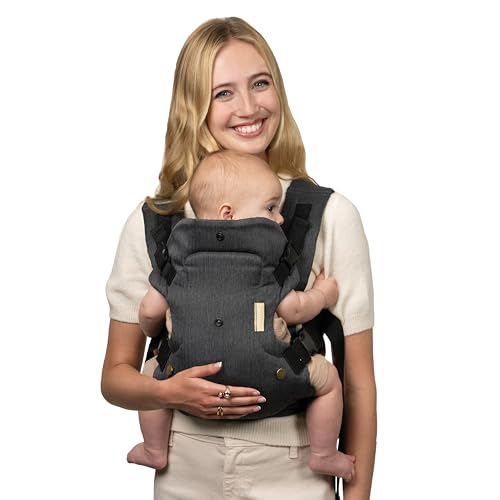
This carrier supports babies from newborn to toddler with four carrying positions and enhanced lumbar support. It is best for families who want a single carrier that grows with their child and provides weight distribution to reduce strain. Choose this if you value ergonomic seating and a secure fit for longer wear. A limitation to note is that it may be bulkier for quick trips and lighter travelers might prefer a more compact option.
Infantino 4-in-1 Convertible Carrier

Best for families needing multiple caregivers, this 4-in-1 carrier offers facing-in, facing-out, and back carry positions for babies from 8–32 lbs. Padded straps and a wide waist belt help distribute weight to reduce back and shoulder strain. It’s a solid choice for daily errands and busy households. If you frequently switch between caregivers, ensure everyone is comfortable adjusting buckles and seat settings.
Momcozy Ergonomic Carrier (Khaki)

The Momcozy carrier emphasizes hands-free usage with three adjustable sizing positions and an ergonomic “M” position for hip and spine support. It includes padded shoulder and waist straps with built-in lumbar support, designed for comfort during extended wear. Best for travelers and daily commuters who want a lightweight, easy-to-adjust option. A potential drawback is that some users may find the three-position setup limiting compared to six-position designs.
HKAI Baby Hip Carrier

Best for parents who value storage alongside a comfortable fit, this hip-seat carrier includes five pockets and a bottle holder. It supports newborns to about 44 lbs and features an ergonomic M-position seat. The hip-seat design can keep baby close for bonding while enabling parents to carry essentials. The trade-off may be the added bulk of pockets and potential weight when fully loaded, so evaluate your everyday carry needs.
Buying Guide
What should you consider when choosing a carrier for a 6-month-old?
- Carrier range and positioning: Look for at least two carrying positions (front-facing in and back carry) and a seat that supports proper hip development for an 6- to 12-month-old.
- Ergonomics and weight distribution: A wide waist belt and padded straps reduce back and shoulder strain during longer wear.
- Adjustability: Ensure straps, buckles, and seats accommodate caregiver height and baby growth.
- Material and comfort: Skin-friendly fabrics and breathable meshes help with hot days and sensitive skin.
- Portability and storage: Carriers with pockets or detachable components can help during travel or errands.
FAQ
- Q: Is a 6-month-old safe in a front-facing carrier? A: Front-facing can be appropriate for babies who can support their head and neck independently; many prefer inward-facing for proper hip alignment at this age.
- Q: How many hours a day is safe to wear a carrier? A: Use as needed and take breaks to prevent discomfort for both parent and baby.
- Q: Do carriers require any special padding? A: Ergonomic designs with padded shoulder straps and a supportive waist belt help distribute weight evenly.
- Q: Can multiple caregivers use the same carrier? A: Yes, choose models with adjustable straps and seat settings that accommodate different body types.
- Q: Are hip-seat carriers better for toddlers? A: Hip-seat carriers can offer close contact while keeping baby accessible for quick transitions and bonding.
- Q: Should I choose a 6-in-1 or 4-in-1 carrier? A: A 6-in-1 provides more carrying positions, which can be beneficial as your child grows and movement needs change.