Answering the question “which floor mats are best for babies?” this guide highlights top picks designed for safety, comfort, and ease of use. These mats suit parents setting up play areas in nurseries, living rooms, or playrooms. The top five selections prioritize non-toxicity, thick cushioning, and slip resistance for crawlers and toddlers. The buyer’s intent is clear: find a durable, baby-safe mat that protects floors and supports active milestones.
Summary of chosen products
| Product | Best For | Material | Key Benefit |
|---|---|---|---|
| Huloo Sleep Ultra Soft Baby Play Mat | Crawling infants; toddlers in playpens | 1.3″ memory foam, non-shedding fabric | Extra thick, noise-reducing, safe for hardwood floors |
| XVISHX Baby Play Mat | Active babies in playpens | XPE foam; double-sided patterns | Soft cushion, anti-slip texture |
| Blissful Diary Baby Play Mats | Babies learning to roll and crawl | Padding foam + polyester fiber | 30% thicker; machine washable option |
| VIVIDVIBEBEARPAS Odorless Premium Foam Play Mat | New walkers; sensory-friendly homes | High-density foam; diamond backing | Non-slip; phthalate-free; anti-toxic |
| ProSource Baby Play Mat – Interlocking Tiles | Customizable play areas | Interlocking EVA panels | Easy assembly; covers large areas |
Huloo Sleep Ultra Soft Baby Play Mat
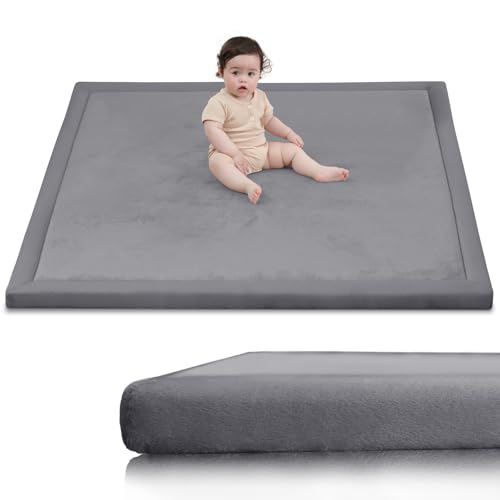
Best for: Parents seeking a thick, cushioned surface for crawlers and tummy time in a playpen or on hardwood floors. The mat’s 1.3-inch slow-rebound memory foam delivers plush support, while the OEKO-TEX certified fabric and CPSIA/ASTM testing enhance safety for infants and toddlers. The non-shedding fabric reduces maintenance needs, and the large 50×50 inch size fits many play areas.
Why selected: It combines substantial thickness with a clean, minimal design that blends into most rooms. The non-toxic materials and quiet surface protect floors and reduce noise during active play.
Caution: Heavier weight may make repositioning slightly cumbersome in smaller spaces. Ensure the mat lies flat to prevent edge lifting.
XVISHX Baby Play Mat

Best for: Families needing a versatile, foldable mat that works with 50×50 inch playpens and travels well. The mat uses high-density XPE foam with a 0.4-inch thickness that cushions falls and supports crawling.
Why selected: The double-sided design adds visual variety to stimulate babies’ curiosity, while the anti-slip texture reduces slipping on smooth floors. It’s lightweight for easy setup in different rooms.
Caution: Limited thickness means less impact protection than thicker mats; pair with careful supervision for vigorous activity.
Blissful Diary Baby Play Mats

Best for: Parents who want extra-thick cushioning and easy cleaning. At 50×50 inches, this mat is designed to fit standard playpens and tents, with a surface that’s comfortable for rolling and crawling.
Why selected: It offers 30% more thickness than many competitors, increasing safety during early milestones. It’s suitable for both indoor and portable use in tents or play areas. The mat is machine washable, though frequent washing may reduce durability.
Caution: Heavier and bulkier than some portable options, which can affect setup in small rooms.
VIVIDVIBEBEARPAS Odorless Premium Foam Play Mat

Best for: Careful buyers prioritizing non-toxicity, slip resistance, and longevity. The mat uses non-toxic materials that pass CPSIA safety standards and features a diamond-textured backing to improve grip on hard floors.
Why selected: Its emphasis on safety—phthalate-free, lead-free, and odor-free—helps create a calm, safe play space. The mat’s durability and reinforced stitching support daily use as babies learn to stand and cruise.
Caution: Some users may prefer a thicker surface for aggressive crawling or high-impact play; consider pairing with protective edge guards if needed.
ProSource Baby Play Mat – Interlocking Tiles
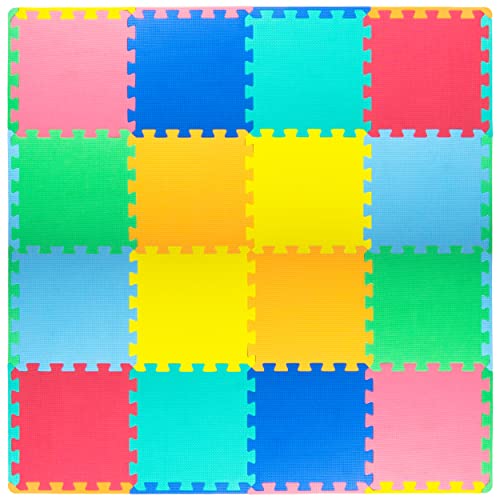
Best for: Families needing a customizable, large play area with easy assembly. The 16 tiles and 24 border pieces allow flexible coverage up to 4×4 feet or larger configurations.
Why selected: Interlocking EVA panels provide quick setup, simple storage, and straightforward cleaning. The modular design lets parents expand the play surface as the child grows.
Caution: EVA foam may not be as soft as premium memory foam mats; ensure consistent edge joining to avoid gaps during crawling.
Buying Guide: Key Considerations For Choosing Baby Floor Mats
- Safety standards: Look for OEKO-TEX, CPSIA, and ASTM compatibility, and non-toxic materials.
- Thickness and cushioning: Choose 0.4–1.3 inches based on infant age and furniture around the area.
- Surface and texture: Non-slip backs and fabric that’s easy to wipe or machine wash help maintain hygiene.
- Size and fit: Ensure the mat fits your playpen or room layout, especially if you plan to cover hardwood floors.
- Maintenance: Consider how easy it is to clean spills, stains, and whether the mat is machine washable or hand-wash preferred.
- Portability and storage: Foldable or interlocking designs aid transport and storage in small spaces.
- Durability: Look for reinforced stitching and long-lasting materials to support daily use as babies grow.
Frequently Asked Questions
- What thickness is best for babies learning to crawl? A thickness around 0.4–1.3 inches provides good cushioning without being overly bulky.
- Are baby floor mats safe for newborns? Yes, if they use non-toxic materials and meet CPSIA/ASTM standards; always supervise newborns during tummy time.
- Should I use a mat on carpet or hardwood floors? Both are suitable; mats with slip-resistant backs are especially important on smooth, hard surfaces.
- Can mats be used outdoors? Some mats are designed for indoor use; check the product’s use guidelines and weather resistance before outdoor use.
- How do I clean a baby play mat? Spot clean for spills; many mats offer machine-washable options; follow care instructions to maintain longevity.
- Is it better to buy a modular interlocking mat or a single large mat? Interlocking mats offer customizable sizes and easier storage, while single large mats minimize seams.