The best open cups for babies are designed to ease the transition from bottle to regular drinking while preventing messy spills. This article compares top open-cup options for babies and toddlers, focusing on grip, size, safety, and ease of cleaning. Ideal buyers include parents seeking durable silicone training cups, caregivers wanting spill resistance without valves, and those prioritizing bite-friendly, teat-friendly designs for teething months.
Summary table of selected products:
| Product | Best For | Key Benefit | Potential Limitation |
|---|---|---|---|
| PandaEar 2 Pack 3.5oz Silicone Cups | Toddlers learning to sip | Non-slip grip bumps; dishwasher safe | Small 3.5oz capacity |
| SAMiGO Silicone Baby Cups | Early open-cup learners | Weighted, less spill likelihood | 2oz size—limited liquid per sip |
| Seposeve Silicone Cups 2-Pack | First open-cup transition | Mouth-like design; capacity markings | 2oz size still small for some feeds |
| ezpz Tiny Cup (Sage) | Precise feeding with guidance | Designed by pediatric feeding specialist; non-slip | Higher price point |
| Reflo Smart Cup (Green 1-Pack) | Slow-flow, training phase | 360° rim for steady flow; BPA-free | Not a true spill-proof cup |
PandaEar 2 Pack 100% Tiny Silicone Drinking Cup

Best for: Parents seeking a soft, bite-friendly cup that fits small hands. The PandaEar cups are 104 ml (3.5 oz) and use 100% premium silicone, offering a safer alternative to hard plastics. The product emphasizes teeth protection and non-slip grip bumps for secure handling during early sipping.
Why selected: The compact size supports precise rehydration and teething comfort. They are top-rack dishwasher safe, stain resistant, and designed to minimize slip and mess during busy mealtimes. The two-pack gives extra value for multiple caregivers or mealtimes away from home.
Limitations: The small capacity may require more frequent refills for older toddlers or extended mealtimes. Some babies may prefer larger sips as they grow, so consider pairing with a larger-capacity option later.
SAMiGO Silicone Baby Cups for 6-12 Months

Best for: Infants beginning open-cup practice with a gentle, child-friendly size. These 2 oz cups are sized for tiny hands and are designed to shorten the learning curve while providing a pleasant texture for contact with the lips and mouth.
Why selected: The cup’s bottom is weighted and textured to reduce tipping, making spills less likely. The soft silicone provides a comfortable experience for new drinkers and supports safer self-feeding development.
Limitations: While spills are reduced, some drips may still occur with vigorous shakes or tilting. The small 2 oz capacity means frequent refills on cups-down days.
Seposeve Silicone Cup Sets for 6-12 Months

Best for: Parents who want a baby-mouth-friendly design with visual capacity markers. The mouth-like arc cup shape aligns with how a baby naturally drinks, aiding in early swallowing and transition from bottle to cup.
Why selected: The two-cup set includes capacity markings (15-30 ml) to help caregivers pace liquid intake. The non-slip texture enhances grip, reducing drop risk during learning. The tapered design and weighted base support stability on flat surfaces.
Limitations: The learning curve may vary; some babies still require practice sessions to gain independent control. Markings help but do not replace caregiver supervision during first uses.
ezpz Tiny Cup (Sage)
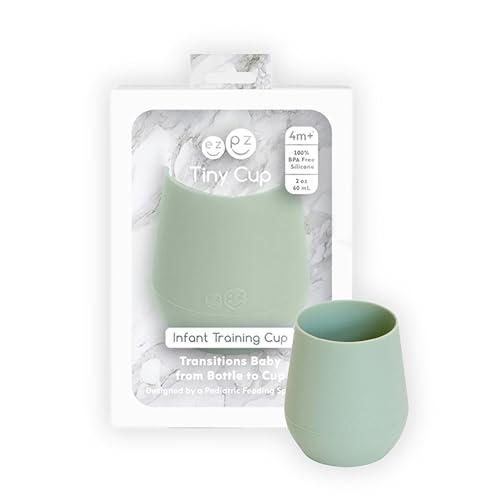
Best for: Families seeking a purpose-built transition cup designed by a pediatric feeding specialist. The Tiny Cup prioritizes safe drinking flow and stable hand positioning for early drinkers.
Why selected: It features a non-slip silicone grip, interior angle for even flow, and a weighted base with tactile bumps to resist tipping. The design supports baby-led weaning and helps babies move away from bottle dependence safely.
Limitations: Higher price relative to basic open cups; some users may prefer a larger capacity once the child progresses beyond 4 months.
ezpz Tiny Cup (Sage/Olive)
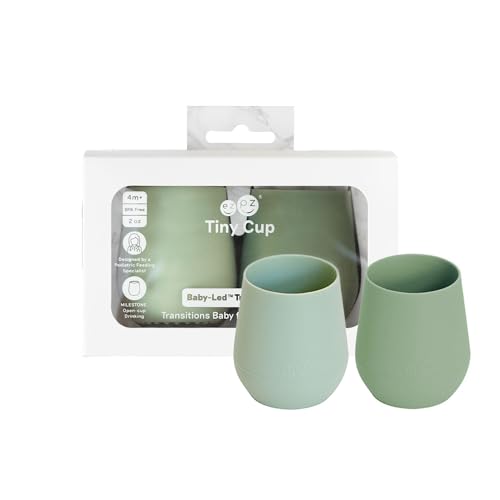
Best for: Parents who want a variant of the classic Tiny Cup for a slightly different color option while keeping essential features. The cup remains designed for tiny mouths and hands with the same expert guidance behind it.
Why selected: The Sage/Olive version maintains non-slip grip, safe flow angle, and beginner-friendly transition guidance. It is a strong option when caregivers value consistency across color variants and identical performance.
Limitations: Similar to the Sage version, it comes with a higher price point than basic open cups, which could influence long-term value considerations with multiple cups in rotation.
Reflo Smart Cup (Green 1-Pack)

Best for: Toddlers in transition from bottles who need controlled, slow-flow training without suction or valves. The 360 rim allows sipping from any side, aiding motor development and oral control.
Why selected: Reflo uses unbreakable Zylar and is free of BPA and phthalates. The slow-flow design is intended to simulate real drinking without overwhelming new drinkers, supporting gradual skill acquisition.
Limitations: It is not strictly spill-proof. Expect light drips if the child tilts aggressively or shakes the cup, though the flow control reduces major messes.
Buying Guide: Practical Tips For Choosing The Right Open Cup
- Child age and development: Choose smaller 2 oz to 3.5 oz cups for babies beginning open-cup practice, then move to larger options as coordination improves.
- Grip and stability: Look for non-slip textures, weighted bases, and ergonomic shapes to minimize tipping and encourage confident handling.
- Flow control vs. spill-proof: Open cups with slow-flow or no-suction designs help teach natural sipping while reducing mess; fully spill-proof options may limit learning to drink from the rim.
- Material safety: Prioritize 100% silicone or food-safe plastics. Ensure the cup is BPA/phthalate-free and easy to clean (dishwasher safe is a plus).
- Ease of cleaning and durability: Dishwasher-safe items save time; soft silicone resists staining and gunk, which matters for frequent use.
- Transition strategy: Use a mix of open cups and supportive training cups to gradually reduce bottle use while preserving healthy oral development.
Frequently Asked Questions
- What age should a baby start using an open cup? – Many babies begin practicing around 6-12 months, depending on development and readiness.
- Are open cups better than sippy cups? – Open cups promote natural swallowing and oral muscle use, which may support better long-term feeding skills.
- What is the best material for baby open cups? – Food-grade silicone or BPA-free plastics are common; silicone offers a softer feel and gentler teething contact.
- Do open cups cause more spills? – They can cause spills during early practice, but features like weighted bases and non-slip grips reduce mess.
- Should I buy multiple cups? – Yes, having a couple of cups allows quick transitions between meals and reduces cleaning bottlenecks.
- When should I progress to larger cup sizes? – Move to larger capacities as your child demonstrates adequate grip, good swallowing, and control over liquids.