Lactose intolerance in infants can cause fussiness, gas, and upset stomachs. This guide highlights five infant formulas designed to be gentler on sensitive tummies while providing essential nutrition. Each product suits different needs—from reduced lactose to hypoallergenic options—so caregivers can choose based on baby’s tolerance, feeding plan, and developmental stage. The focus is on formulas that are suitable for infants from birth to 12 months, with clear notes on who they’re best for and potential limitations.
Product Comparison Summary
| Product | Best For | Why It’s Notable |
|---|---|---|
| Earth’s Best Organic Sensitivity Infant Formula | Babies with fussiness due to upset tummies | Reduced lactose; organic ingredients; supports brain and eye development with DHA/ARA |
| Similac 360 Total Care Sensitive (34.9 oz) | Lactose-sensitive babies needing prebiotics | 5 HMO prebiotics; supports immune and digestive health |
| Similac 360 Total Care Sensitive (20.1 oz) | On-the-go or smaller needs; lactose sensitivity | Same 5 HMO prebiotics; designed for fussiness and gas |
| Similac Sensitive Infant Formula | First-year nutrition with gentle digestion | OptiGRO blend and gentle formula for sensitive tummies |
| Enfamil Nutramigen Hypoallergenic with LGG | Cow’s milk protein allergy symptoms | Amino acid-based, includes LGG probiotic, supports comfort |
Earth’s Best Organic Sensitivity Infant Formula
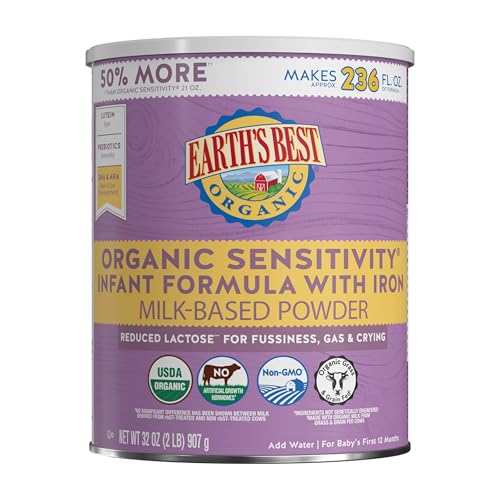
Best for: Parents seeking a reduced-lactose option with organic ingredients. This formula adds lutein, prebiotics, DHA, and ARA to support brain and eye development while easing tummy troubles. It is designed for babies who experience fussiness, gas, or crying due to upset stomachs. It meets FDA requirements for infant nutrition. The formula is ideal for supplementing breastfeeding or serving as a first-year alternative to full-lactose formulas.
Caution: Data notes reduced lactose but not lactose-free. Not suitable for infants with a confirmed cow’s milk protein allergy. Best used under guidance if transitioning from any other formula.
Similac 360 Total Care Sensitive (34.9 oz)

Best for: Babies with fussiness and gas due to lactose sensitivity who benefit from extra prebiotics. This formula includes 5 types of HMOs to support the immune system and digestive development, along with a triple health approach addressing immune, brain, and digestion.
Limitation: For some babies, even reduced lactose formulas may not fully relieve symptoms. Monitor baby’s response when switching from another formula.
Similac 360 Total Care Sensitive (20.1 oz)

Best for: Parents needing a smaller tub while traveling or adjusting feeding routines. It uses the same prebiotic blend as the larger can and targets fussiness and gas related to lactose sensitivity. It is convenient for gradual feeding changes and testing tolerance.
Limitation: Smaller size may require more frequent purchases; ensure consistent feeding plan during transitions.
Similac Sensitive Infant Formula (29.8 oz)

Best for: Infants in their first year who require gentle digestion and complete nutrition while solids are introduced. This stage 2 formula is designed for use from 6 to 12 months and features an OptiGRO blend for brain development and digestion support.
Limitation: Review feeding schedules when moving from stage 1 to stage 2 to avoid feeding disruption. Suitable for common lactose sensitivity, but not a substitute for diagnosed cow milk protein allergy.
Enfamil Nutramigen Hypoallergenic with LGG

Best for: Infants with cow’s milk protein allergy or those who require hypoallergenic formula. It is amino acid-based, designed to ease colic and supports immune health through the LGG probiotic. Suitable from birth and can show quick relief patterns in clinical guidance.
Limitation: Amino acid-based formulas may have different taste profiles; consult a pediatrician if baby shows continued discomfort or allergic reactions.
Buying Guide
What should I look for in a lactose-friendly infant formula?
Key factors include lactose content (reduced vs. lactose-free), digestive tolerance, stage suitability (0-12 months vs later), and presence of prebiotics or probiotics. Consider whether a baby has a diagnosed cow’s milk protein allergy, which would necessitate a hypoallergenic or amino acid-based option.
How to choose based on baby’s age and feeding plan
Newborns may benefit from reduced-lactose or hypoallergenic formulas, while older infants transitioning to solids may rely on stage-appropriate options. If breastfeeding is ongoing, reduced-lactose formulas can complement feeding, whereas full dairy-free formulas suit strictly dairy-free needs.
How to interpret prebiotics and probiotics claims
HMOs mimic breast milk components to support immune and digestive health. Probiotics like LGG may help with gut flora. Evaluate whether these ingredients align with your pediatrician’s recommendations for your baby’s digestion and immune support.
Practical transition tips
- Introduce a new formula slowly over 3-7 days to monitor tolerance.
- Keep a feeding log noting fussiness, gas, stool changes, and sleep patterns.
- Consult a pediatrician if persistent symptoms occur or if there is any suspicion of a cow milk protein allergy.
FAQ
- Q: What’s the difference between reduced-lactose and lactose-free formulas?
A: Reduced-lactose formulas have less lactose than standard formulas but still contain some lactose, while lactose-free formulas do not contain lactose at all and are typically used for diagnosed sensitivities or allergies. - Q: Are prebiotics in infant formula safe?
A: Yes, prebiotics like HMOs are designed to support digestive health and immune development, mirroring components of breast milk. - Q: Can I switch between formulas if my baby tolerates one well?
A: Yes, but do so gradually and monitor for any signs of intolerance or allergy. Consult a pediatrician if unsure. - Q: Which formula is best for cow’s milk protein allergy?
A: Hypoallergenic or amino acid-based formulas (such as Nutramigen) are typically recommended under pediatric guidance. - Q: How long should a baby stay on a reduced-lactose formula?
A: It varies by baby; some transition to standard formula or whole milk alternatives around 12 months, but always follow your pediatrician’s guidance.