Looking for a bed tent that helps reduce sensory distractions and offer a calm, private sleep space for an autistic toddler? This guide highlights five well-suited options that emphasize darkness, easy access, and secure setup. Each choice targets different needs—from light-blocking stability to simple entry and exit. If you want a portable, distraction-free bed tent for bedtime routines, nap time, or quiet time, these selections are designed to support peaceful sleep without complicating your nightly routine. The table below compares the best fits for different situations.
| Product | Best For | Key Benefit | Limitations |
|---|---|---|---|
| BORNA Bed Tent Twin Size | Dark, secure private space | Three doors, durable frame | Mattress not included |
| QPAU Lightweight Blow Up Kids Mattress & Tent | Traveling families | All-in-one tent and mattress | Best for ages 3+ |
| LEEDOR Mosquito Net Bed Tent | Quiet, breathable privacy | Four doors, quick pop-up setup | Mattress not included |
| Sherilyn Twin Size Bed Canopy | Shared bedrooms or bunks | Ventilated with two doors/windows | May require extra space |
| Razee Full Size Bed Canopy | Full bed or bunk setups | Dual doors with blackout design | Full bed width (not for twin) |
BORNA Bed Tent Twin Size With Three Doors
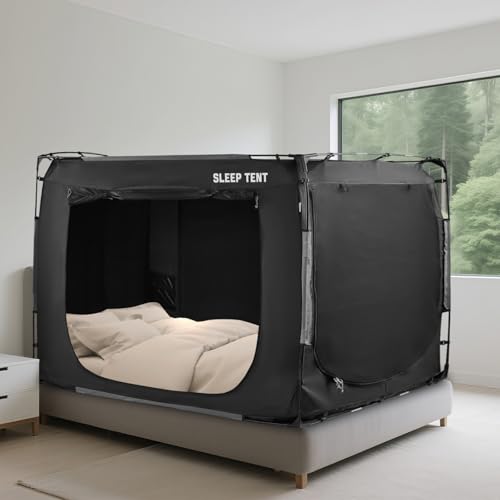
Best for a compact, private sleep nook. The BORNA bed tent uses a rectangular frame with 8mm fiber poles for stability, avoiding collapse. It creates a dark, private space with three doors for easy access. Best suited for toddlers who benefit from darkness to fall asleep and a stable structure to feel secure. The mattress is not included, so pair with a familiar twin mattress. Caution: ensure the room has adequate ventilation to prevent stuffiness; the blackout fabric reduces light by about 70% but still allows airflow through mesh panels.
QPAU Lightweight Blow Up Kids Mattress & Tent

Best for mixed-use travel and home setups. This all-in-one inflatable tent and kid’s mattress provide ventilation with four-sided mesh and dual doors, plus a sunshade for outdoor naps. It’s well-suited for families who travel often and want a familiar sleep surface for children aged 3 and up who can stand on their own. Caution: inflated components require proper air pressure; over-inflating can impact comfort and stability.
LEEDOR Mosquito Net Bed Tent Canopy
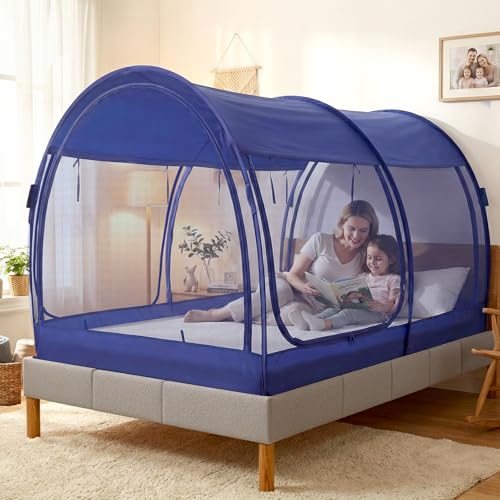
Best for a lightweight, easy-to-assemble privacy tent. LEEDOR’s design features four doors and two windows, with a pop-up frame that makes setup quick and simple. It is a good choice for dorms, small bedrooms, or shared spaces where airflow and privacy matter. It’s light enough to move but strong enough to stay upright with minimal effort. Caution: mattress not included; ensure your bed size matches the tent’s interior dimensions for a snug fit.
Sherilyn Twin Size Bed Canopy

Best for shared bedrooms and bunks where privacy is needed without heavy blackout requirements. Sherilyn uses durable polyester-cotton fabric with reinforced fiberglass poles and features two doors plus two windows for ventilation. It helps create a private, cozy space that can support independent sleep routines. Limitation: larger footprints may reduce space in smaller rooms; verify bed dimensions before purchase.
Razee Full Size Bed Canopy With Pennant Banners

Best for full-size beds or top-bunk setups requiring dual entry. Razee offers a dual-door design with blackout features and included pennant banners for a playful vibe. It fits full beds and provides a sturdy fiberglass frame for long-lasting use. Caution: not ideal for twin beds if space is tight; ensure correct bed size before ordering.
Buying Guide
What to consider when choosing a bed tent for an autistic toddler
Privacy vs. ventilation: A dark, quiet space is beneficial for sleep, but ensure mesh panels or breathable fabrics prevent stuffiness.
Size and fit: Confirm your child’s bed dimensions and the tent interior to avoid a tight fit or wasted space.
Access and mobility: Doors should be easy to operate, with smooth zippers and low-friction access for independent entry and exit.
Stability and setup: Choose tents with sturdy frames and lightweight designs that won’t collapse if the child moves at night.
Mattress considerations: Many tents are mattress-not-included. Plan for a compatible twin or full mattress as needed.
Which tent type matches different routines?
- Darkness-driven sleep: Three-door designs with blackout fabric help minimize light.
- Easy daily setup: Pop-up or quick-assemble frames are ideal for busy evenings.
- Travel and visits: All-in-one inflated mattresses and tents are convenient for hotels or grandparents’ homes.
Durability and cleaning
Look for tents with strong fiberglass poles and fabric that’s washable or easy to clean. Floorless designs simplify sheet changes and cleaning under the tent.
Safety considerations
Ensure the tent stays away from smallParts hazards, uses flame-retardant fabrics, and has safe zippers with secure closures to prevent finger pinching.
FAQ
- Are bed tents safe for autistic toddlers? Yes, when used with appropriate supervision and in spaces that meet safety standards.
- Do these tents require assembly? Some are pop-up or easy-assemble designs; others may need basic setup with poles.
- Will a bed tent affect airflow? Look for models with mesh panels or breathable fabrics to maintain air circulation.
- Can a bed tent fit on a bunk bed? Some designs are compatible with bunk setups; check dimensions and clearance.
- What age range are these suitable for? Most are designed for children from toddlers to early school age, but always verify weight and size limits.
- Do these tents limit safety outlets or alarm devices? Position the tent away from cords, alarms, and outlets to avoid entanglement or tripping hazards.