The best shopping cart walker for a baby blends stability, engaging pretend-play features, and safe, floor-friendly design. This guide highlights five top options that suit different needs—from interactive learning to durable wooden construction. Ideal for parents seeking help with early walking, imaginative play, or multi-function toys, these picks are organized to help you compare at a glance. Below, you’ll find each product’s strengths, who it’s best for, and a quick buying summary table.
| Product | Best For | Main Benefit |
|---|---|---|
| Fisher-Price Snack Cart Walker | Infants transitioning to walking; multilingual households | 4 play modes and 135+ songs with language options |
| Radio Flyer Scan & Sort Shopping Cart | Indoor play spaces; kids who love pretend shopping | Interactive lights, sounds, and shape-sorting play |
| Asweets 2-in-1 Wooden Walker & Cart (Grey) | Wooden toy fans; safe, durable learning cart | 2-in-1 design with safe, smooth-rolling wheels |
| Asweets 2-in-1 Wooden Walker & Cart (Pink) | Wooden toy fans; dolls & pretend shopping | Same 2-in-1 concept with a doll-seat feature |
| VTech Sit-to-Stand Learning Walker | First walkers needing sit-to-stand versatility | Removable tray and early learning activities |
Fisher-Price Snack Cart Walker 4-in-1
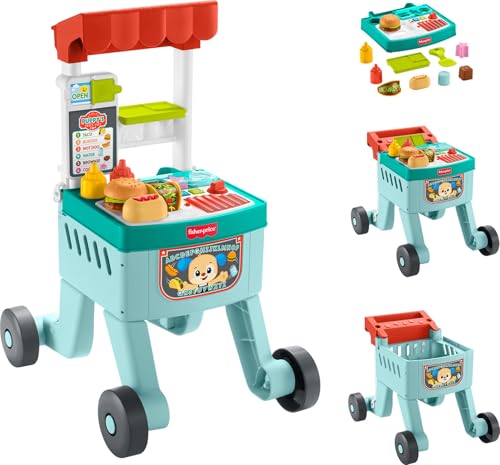
Best for: Babies who enjoy multisensory play and language learning. This push walker evolves from sitting to walking to pretend play, featuring 3 Smart Stages that introduce opposites, numbers, shapes, the alphabet, and more. A globe button selects English, Spanish, French, or Brazilian Portuguese, making it suitable for multilingual households or families teaching more than one language. The unit includes 135+ songs, sounds, and lights, plus interactive elements like a grill dial and a cooler door for engaging exploration. Note a potential limitation: larger playset may take up more floor space.
Radio Flyer Scan & Sort Shopping Cart

Best for: Toddlers who love pretend grocery shopping and early problem-solving. This cart emphasizes interactive play with lights, music, and sound effects as kids scan play foods. The top features shape-sorting cutouts and six included food pieces that double as shapes, supporting early cognitive development. Safety resistance clickers help regulate movement, making it a practical option for indoor use in homes or classrooms. A caveat: the car’s learning features may be most engaging in short play sessions rather than extended sessions.
Asweets 2-in-1 Wooden Walker Grey

Best for: Parents seeking a durable, eco-friendly wooden option. The 2-in-1 design functions as both a walker and a shopping cart, with a large toy box for storage and a doll seat for pretend play. ASTM F963-17 certified and built from high-quality birch plywood, it features non-slip rubber bands for controlled braking and rubber-coated wheels to protect floors. Limitations: assembly is required, and some users might prefer lighter-weight options for very small babies.
Asweets 2-in-1 Wooden Walker Pink
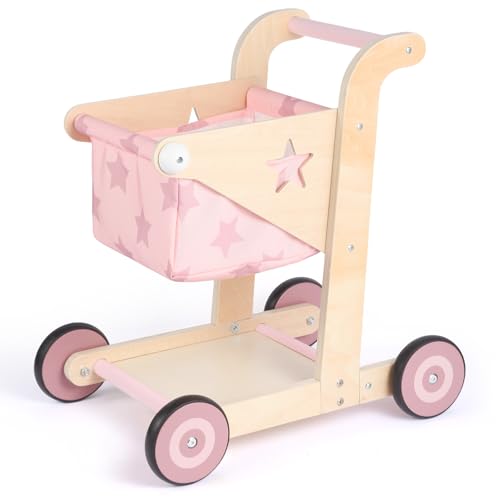
Best for: Families wanting a coordinated pink-themed wooden walker with a doll-seat feature for imaginative play. This model matches the grey version in build quality, safety standards, and 2-in-1 functionality, including a spacious toy box and durable wheels. Choose this if you prefer color variety or want a visually cohesive set with the grey option. It shares the same safety certifications and assembly requirements as its counterpart.
Pithfor Wooden Shopping Cart For Kids

Best for: Parents seeking a 3-in-1 wooden solution that transitions from a baby push walker to a toy shopping cart and a tiny doll stroller. It includes front basket and bottom deck storage, encouraging organized pretend play. The design focuses on stability and gentle pushing, with rounded edges and rubber-covered wheels to protect floors. Limitation: the multi-function design may require more space and a longer setup time compared to single-function walkers.
Buying Guide: Key Considerations For Choosing A Baby Walker Cart
- Materials and safety: Look for sturdy construction, rounded edges, non-slip wheels, and any safety certifications noted in product features. Wooden walkers often emphasize durability, while plastic models emphasize interactive features.
- Walkability vs. play features: Decide whether emphasis should be on early walking support, pretend play, or cognitive activities like shape sorting and language options.
- Adjustability and age range: Some walkers grow with your child, offering sit-to-stand or multiple modes. Check age recommendations and height adjustability if available.
- Space considerations: Multi-function 2-in-1 designs can take more space. Measure your play area to ensure safe maneuvering room.
- Noise and electronics: Toys with songs and lights can be engaging, but consider whether constant noise is a concern in your household or daycare setting.
- Assembly and maintenance: Some wooden models require assembly and occasional upkeep of wheels or moving parts. Ensure you have the necessary tools and time.
Frequently Asked Questions
- What is a shopping cart walker and who should use one?
A shopping cart walker is a push toy that helps babies practice walking while providing storage and pretend-play features. It’s suitable for infants ready to stand with support and for toddlers exploring imaginative play.
- What should I consider when choosing between wooden and plastic walkers?
Wooden walkers tend to be sturdier and longer-lasting, with a classic feel and often fewer electronic features. Plastic walkers usually offer more interactive play, lights, sounds, and easier wipe-down maintenance.
- Are these products safe for 6+ month olds?
All selected items list safety features such as rounded edges and non-slip wheels, and several are ASTM certified. Always supervise infants and check product weight limits and age recommendations provided by the manufacturer.
- Do these walkers help with early walking development?
Yes. Most models provide stability for first steps and incorporate activities that encourage leg movement, balance, and motor skills development while promoting independent play.
- Can these walkers be used in daycare or classrooms?
Yes, many are designed for indoor use with safe materials. However, always follow the facility’s guidelines and ensure adequate space and supervision.
- Which features are most important for a multilingual household?
Language options and diverse learning content, such as 3+ language modes or bilingual prompts, can support early language exposure and consistent practice.