Choosing the right sippy cup can make bottle-to-cup transitions easier for babies and less stressful for caregivers. This guide highlights five reliable options that support a gradual shift, focusing on spill-proof designs, easy-grip handles, and gentle spouts. Best for on-the-go families, parents seeking durable everyday cups, and caregivers prioritizing BPA-free materials, these picks help tailor the transition to your child’s pace.
Below is a quick summary table of the selected products to compare core features at a glance.
| Product | Brand | Key Benefit | Spill-Proof | Age Range |
|---|---|---|---|---|
| NUK First Choice Large Learner Cup 2.0 | NUK | Smooth transition, removable handles | Yes | 6m+ |
| NUK Active Sippy Cup (2 Pack) | NUK | Gum-friendly spout, lightweight | Yes | 12m+ |
| NUK Active Sippy Cup 12+ Months | NUK | Clean spout cover | Yes | 12m+ |
| NUK Learner Cup Pooh Bear | NUK | Easy-grip handles, soft spout | Yes | 6m+ |
| Munchkin Gentle Transition Sippy Cup | Munchkin | Removable handles, durable | Yes | 9m+ |
NUK First Choice Large Learner Cup 2.0 — 10 oz

This 2-pack supports a smooth bottle-to-cup transition. The spill- and leak-proof design helps reduce mess during first drink attempts. The easy-grip anti-slip handles are ideal for early learners and can be removed as your child grows. Best for quick transitions at home or daycare, especially for toddlers who need stable handling.
Best for families wanting a simple, reliable transition cup. Caution: Ensure the spout remains clean to preserve seal integrity and prevent leaks when tossed or dropped.
NUK Active Sippy Cup (2 Pack) — 10 oz

Designed to support a smooth transition from breast or bottle to a cup, this sippy offers a spill-proof spout that’s gentle on gums and an ultra-lightweight build. A carrying clip adds on-the-go practicality, making it a strong choice for families who travel or move between home, car, and caregivers’ homes. Best for mobile toddlers who need a light, easy-to-grip cup.
Consider this if you want travel-friendly features. Limitation: The clip’s durability may vary with repeated drops, so monitor during early use.
NUK Active Sippy Cup 12+ Months — Timeless Collection
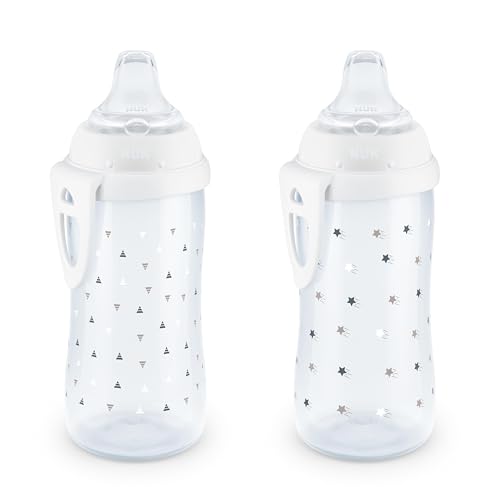
Help babies ease into independent drinking with a spill-proof spout and a clean-spout cover. This version emphasizes easy hygiene and consistent sipping flow, with a design that complements longer-use phases as toddlers grow. Best for households prioritizing a dedicated lip seal and a cover that helps keep the spout clean.
Choose this if you want a cup that stays cleaner between uses. Caution: The cover is an extra part that may require occasional maintenance to prevent mold in small crevices.
NUK Learner Cup Pooh Bear — 10 oz

With a Pooh Bear design, this cup emphasizes a smooth transition from bottle to cup, featuring easy-grip handles that are gentle to small hands. The soft spout is designed to be gentle on gums while teaching baby to drink from a spout, and liquids flow easily when sipped. Best for young fans of familiar characters and early drinkers who need a supportive spout.
Limitation: The bear-themed design is a fashion element; performance remains standard across others in the line.
Munchkin Gentle Transition Sippy Cup — 10 oz

This cup is designed to help babies and toddlers transition from bottle to cup with a leak-proof design and removable anti-slip training handles. The cup uses BPA-free materials and offers durability that withstands drops and throws. Best for households needing a robust transition option that’s easy to clean and maintain.
Caution: Ensure proper assembly to maintain the leak-proof seal, especially after cleaning or reassembly.
Buying Guide: How To Choose The Right Sippy Cup
What matters most for transition success?
Look for spill-proof designs with soft yet durable spouts to protect gums during early drinking. Removable handles help babies practice grip, and anti-slip features reduce drops. BPA-free materials are important for safety, and easy-to-clean parts minimize mold risk and maintenance time.
Spill-proof vs. easy-sip spouts
Spill-proof spouts are ideal for learners prone to squeezing or tilting cups too hard. For older toddlers, a softer sip can be preferable to support controlled drinking without buildup of pressure. Consider cups with a detachable cover to keep the spout clean between uses.
Handle design and cup age range
Easy-grip handles assist hand-eye coordination and independent drinking. Remove handles as your child grows to transition toward regular cups. Check the recommended age range to ensure the cup matches your child’s current abilities.
Durability and portability
For families on the go, light-weight cups with clip or carry features help maintain accessibility. Consider ease of cleaning and the ability to withstand accidental drops, especially for younger toddlers who are developing motor skills.
Hygiene and maintenance considerations
Look for cups with removable spouts and covers to reduce residue buildup. Regular cleaning and inspection of seals help prevent leaks and ensure consistent performance. Some models include protective covers to keep spouts clean when not in use.
Frequently Asked Questions
- When should I start using a sippy cup? Start around 6 months or when your baby shows readiness to practice with a cup, usually after initial bottle feeding is established.
- What features prevent leaks the most? Fully spill-proof spouts, secure seals, and sturdy, removable covers contribute to lower leakage, especially during learning phases.
- Are BPA-free cups safer? Yes. BPA-free materials reduce potential chemical exposure and are widely used in baby cups.
- How many cups should I buy for transitions? Two to four cups can cover various locations (home, daycare, car) and ensure availability while cleaning is ongoing.
- Can these cups be used with other brands? Some cups fit only their own line due to nipple or bottle compatibility; always verify compatibility if you plan to mix components.
- What is the best age for a learn-to-drink cup? Most options list 6 months and up; however, transition pace depends on the child’s development and confidence with self-feeding.