Looking for the healthiest puff snacks for babies and toddlers? This guide highlights five safe, ingredient-forward options suited for early eaters. Each pick targets different needs: organic ingredients, grain-free options, self-feeding support, or easy on-the-go canisters. This overview helps caregivers choose puffs that align with dietary goals and developmental stages. The table below summarizes the featured products to compare at a glance.
| Product | Brand | Best For | Key Benefit |
|---|---|---|---|
| Serenity Kids 6+ Months Baby Puffs | Serenity Kids | 6-12 months | Grain-free with organic veggies and chickpea |
| Little Spoon Kale Apple Meltable Puffs | Little Spoon | Self-feeding basics | No rice, six organic ingredients, melts easily |
| Gerber Baby Snacks Puffs Variety Pack | Gerber | On-the-go variety | Iron & choline, kid-friendly flavors |
| Earth’s Best Peanut Butter Puffs | Earth’s Best | Peanut introduction | Organic, kosher, gluten-free |
| Once Upon a Farm Organic Fruit & Veggie Puffs Mango | Once Upon a Farm | Fruit & veggie variety | No rice, sorghum-based |
Serenity Kids 6+ Months Baby Puffs
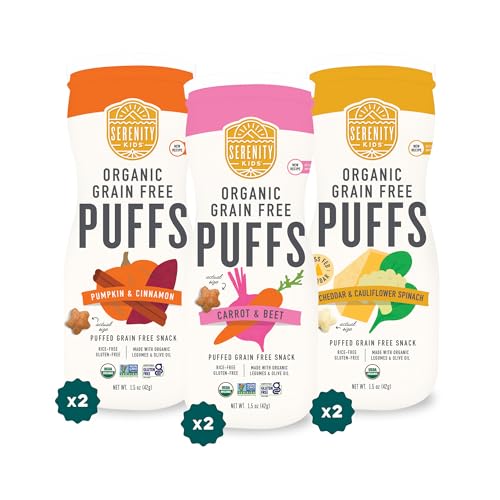
Best for: Parents seeking a grain-free option with organic vegetables. These puffs use chickpea as a base and emphasize vegetables without added sugar, aligning with early taste development and clean-label expectations.
- Key benefit: Organic vegetables and chickpeas provide a nutritious texture and flavor without added sugar.
- Texture: Dissolvable puffs suitable for babies 6 months and up.
- On-the-go: Packaged in a no-mess canister for travel and quick snacks.
Caution: Some babies may need more guidance with finger-food coordination as textures vary; monitor for gagging during the dissolvable stage.
Little Spoon Kale Apple Meltable Puffs

Best for: Parents seeking a melt-in-your-mouth texture with organic ingredients and no rice. Ideal for self-feeding practice and gentle gum development.
- Key benefit: Organic six-ingredient formula with quinoa and sorghum; no added salt, sugar, or rice.
- Texture: Designed to dissolve easily to support early chewing and safe swallowing.
- On-the-go: Comes in a 1 Oz bag, with a four-pack for snacks at home or away.
Caution: No rice means slightly different digestibility for some babies; observe for any digestive sensitivity when introducing new grains.
Gerber Baby Snacks Puffs Variety Pack

Best for: Busy families seeking a dependable, familiar option with multiple flavor choices and iron support. The mix includes banana and strawberry-apple flavors to introduce different fruit profiles.
- Key benefit: Contains six vitamins and minerals, including iron and choline per serving.
- Ideal for: Easy practice with pincer grasp and self-feeding skills.
- Limitation: Flavors may appeal to some more than others; variety helps, but flavor preference varies by child.
Earth’s Best Peanut Butter Puffs

Best for: Parents who want a peanut-based option with organic and gluten-free labeling. Suitable for early peanut introduction where advised by pediatric guidelines.
- Key benefit: Organic, kosher, gluten-free profile supports diverse dietary needs.
- Texture: Puffs provide a gentle dissolve while supporting hand-eye coordination.
- Limitation: Peanuts are a common allergen; introduce with caution and in line with allergy guidance.
Once Upon a Farm Organic Fruit & Veggie Puffs Mango

Best for: Families seeking sorghum-based puffs with fruit-forward flavors. These puffs emphasize simple ingredients and quick-dissolve texture for easy self-feeding.
- Key benefit: Sorghum-based with avocado oil; no rice, corn, or cassava used.
- Texture: Fast-dissolving, easy to pick up, great for on-the-go feeding.
- Limitation: Some flavors may be milder; pairing with a fruit or veggie puree can diversify taste experiences.
Buying Guide
What to look for when choosing baby puffs
- Ingredients: Prioritize organic, simple ingredients with recognizable components. Look for grain bases that align with your child’s dietary needs (grain-free options are available if rice or corn is a concern).
- Texture and age suitability: Choose puffs designed for your child’s chewing and swallowing abilities. Some melts are designed for younger babies, while others support developing pincer grasp.
- Allergen considerations: Be mindful of common allergens (peanuts, tree nuts) and any family allergy history. Start with single-ingredient introductions when advised by a pediatrician.
- Packaging and portability: On-the-go canisters help reduce mess and enable easy snack access during travel or daycare.
- Flavor variety: A mix of flavors can encourage acceptance of new foods, but individual tolerances may vary.
Practical tips for introducing puffs
- Offer puffs in a stable highchair or on a non-slip tray to help with independent feeding.
- Supervise initial introductions to monitor reaction and choking risk, especially with younger babies transitioning to solid foods.
- Pair puffs with complementary fruits or vegetables to broaden flavor exposure.
Allergen and dietary considerations
- If introducing peanuts or peanut butter: consult pediatrician and consider feeding guidelines for early peanut introduction.
- Gluten-free options are available; verify labeling if gluten sensitivity is a concern.
Serving and storage tips
- Store in a cool, dry place; reseal after opening to maintain crispness and prevent moisture exposure.
- Track servings to avoid overexposure to new textures and flavors too quickly.
FAQ
- Are baby puffs safe for 6-month-olds? Yes, many puffs are designed for babies 6 months and up, but always follow your pediatrician’s guidance and watch for choking risk.
- What’s the best grain option for babies? Grain-free varieties or puffs made with quinoa or sorghum are popular choices for families avoiding rice.
- Can puffs help with self-feeding? Yes, many puffs are designed to support grasping and hand-mouth coordination as part of early feeding skills.
- Should I avoid added sugars? Most reputable puffs aim to minimize or omit added sugars; check the ingredient list to be sure.
- How many puffs can a baby eat in a serving? Serving sizes vary by brand; follow package guidelines and adapt to your child’s appetite and tolerance.
- Is peanut butter safe for all babies? Peanut introductions should follow pediatric guidelines and be discussed with a healthcare professional, especially if there is a family history of allergies.