Answering the search for the best play seats for babies, this guide highlights five top, grow-with-me activity centers and seats designed to entertain, support early development, and transition with your child. Each option is suited to different needs—from compact travel-friendly seats to larger activity centers that become a toddler table. The selection favors centers with 360° rotation, multiple stages, and engaging toys to foster motor skills, sensory exploration, and independent play. The buyer will find options ideal for babies starting around 4 months up to toddlers near 3 years old.
Summary at a glance: the following table compares key traits to help you decide quickly.
| Product | |||
|---|---|---|---|
| Skip Hop Silver Lining Cloud Activity Center | Babies who enjoy many activities and a compact footprint | 3 stages | 360° seat rotation, 25+ activities |
| Skip Hop Explore & More | Babies who crave interactive music and discovery | 3 stages | Discovery window, light-up piano |
| Infantino 3-in-1 Discovery Seat | Parents seeking 3-in-1 versatility (play, snack, booster) | 3 stages | 20 songs, snack tray |
| Bright Starts 3-in-1 SuperSeat Paradise | Families wanting a jungle-themed sensory setup | 3 stages | Detachable toys, 360° tray rotation |
| Fisher-Price Sit-Me-Up Floor Seat | Travel-friendly, portable option for quick sits | 2-positions | Compact, machine-washable seat pad |
Skip Hop Silver Lining Cloud Activity Center

The 3-stage Grow-with-Me design supports babies from 4 months up to 25 lbs. The 360° rotating seat enables easy access to all 25+ activities, supporting fine motor development and exploration. The Discovery Window and light-up piano encourage cause-and-effect learning. Best for parents seeking a robust, all-in-one center that remains engaging as their child grows taller and more mobile. Caution: Requires three AAA batteries (not included) for the piano and lights.
Skip Hop Explore & More Activity Center
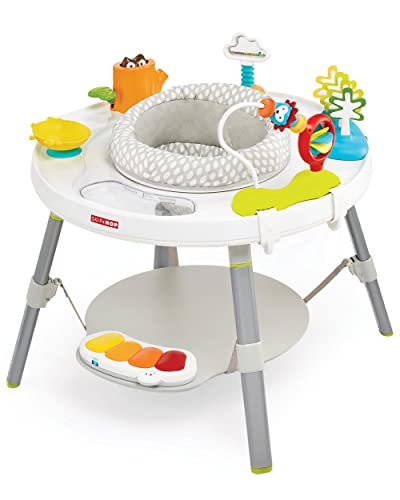
This 3-stage grow-with-me center blends play and learning with a 360° rotating seat and 25+ activities. The Discovery Window shows feet while playing the piano, reinforcing spatial awareness and cause-and-effect. It is best for families who want a highly interactive experience that evolves with their baby’s abilities and enjoys musical components. Limitation: Requires batteries for full piano and motion-sensor modes.
Infantino Music & Lights 3-in-1 Discovery Seat
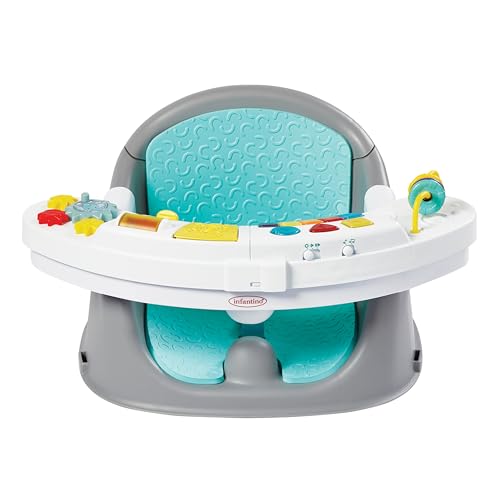
This 3-in-1 seat grows from playtime to meals, converting into a snack seat and toddler booster. It includes a light-up piano with 20 songs, along with toy pods for motor and sensory exploration. Best for households wanting long-term versatility with easy transitions to meals. Caution: Seat height and table clearance should be checked for matchup with your dining setup.
Bright Starts 3-in-1 SuperSeat Paradise

The SuperSeat transforms from an activity seat to a floor seat with snacking tray and then a booster seat for mealtime. It includes six jungle-themed toys and a rotating 360° tray, making it a strong option for babies who will enjoy a themed play space. Best for parents seeking a vibrant, engaging environment and easy tray access. Limitations: Tray rotation and clips should be checked for chair compatibility in small dining spaces.
Fisher-Price Sit-Me-Up Floor Seat

Portable and compact, this seat provides upright support with a wide, sturdy base and cushy padding. It folds for easy travel and storage, making it a practical option for families on the go or small living spaces. Best for quick sits and travel, with a caveat that it offers fewer built-in toys compared to larger activity centers.
Buying Guide
What to consider before buying a baby play seat
- Growth and age range: Choose a seat with multiple stages that align with your child’s development from 4 months through toddler years.
- Space and portability: Consider footprint, foldability, and how easily the seat fits in your living area or during travel.
- Engagement features: Look for 360° rotation, music, lights, clip-on toys, and toy loops that support fine motor and cognitive development.
- Safety and durability: Confirm sturdy bases, weight limits, and easy-to-clean fabrics or surfaces.
- Transition ease: If you want a seat that becomes a booster or snack chair, verify compatibility with your dining setup and tray design.
How to choose between styles
- Best for music lovers: Models with light-up keyboards and multiple sound modes.
- Best for small spaces: Compact, foldable seats with minimal footprint.
- Best for long-term use: 3-in-1 designs that transform into snack or booster seats.
Maintenance and safety tips
- Regularly inspect toy attachments and clips for wear and tear.
- Remove small parts during cleaning to avoid choking hazards for younger babies.
- Wipe down upholstery after spills and machine-wash seat pads when recommended by the manufacturer.
FAQ
- Q: At what age can my baby start using a play seat? A: Many seats are designed for use from around 4 months when babies can hold their head up unassisted, but always follow the manufacturer’s age and weight guidelines.
- Q: Do these seats require batteries? A: Some models include a light-up piano or motion-sensor modes that require batteries; check the product listing for details.
- Q: Can the seat be used for meals? A: Several models convert into snack trays or booster seats for dining, but ensure compatibility with your chair height and table setup.
- Q: How easy are these to clean? A: Look for removable, machine-washable seat pads and wipe-down materials to simplify cleaning.
- Q: Are these seats portable for travel? A: Many options are designed with foldable or compact forms, but verify weight and packed dimensions if you travel frequently.
- Q: Which is best for a toddler? A: Seats that convert to boosters or have taller trays support continued use as your child grows.