These activity cubes provide rich, screen-free play that supports early learning. They’re ideal for parents seeking developmental toys that boost fine motor skills, color and shape recognition, and problem-solving. The top picks below target babies around 12 to 18 months and older toddlers, offering varied activities to keep little hands busy. Each product is described with who it’s best for, why it was chosen, and a practical caveat to consider.
| Product | Best For | Key Highlight |
|---|---|---|
| VTech Busy Learners Activity Cube (Frustration Free Packaging) | Toddlers who need motion-activated sounds and light-up learning | 5 sides of play and 14 interactive features |
| Wooden Activity Cube | Montessori Toys (KMTJT) | Parents seeking a multi-game, wood alternative | 7 games in 1 with natural rubber wood |
| VTech Busy Learners Activity Cube, Purple | Young toddlers new to shapes, colors, and animals | Similar setup with motion-sensor play |
| Wooden Activity Cube for 1 Year Old (TOYVENTIVE) | Gift-ready option with beads, cups, and first words | Space-saving design with removable bead maze |
| Joyreal Wooden 11-in-1 Activity Cube | Broad developmental play for 1–4 year olds | 11 activities across six sides |
VTech Busy Learners Activity Cube (Frustration Free Packaging)
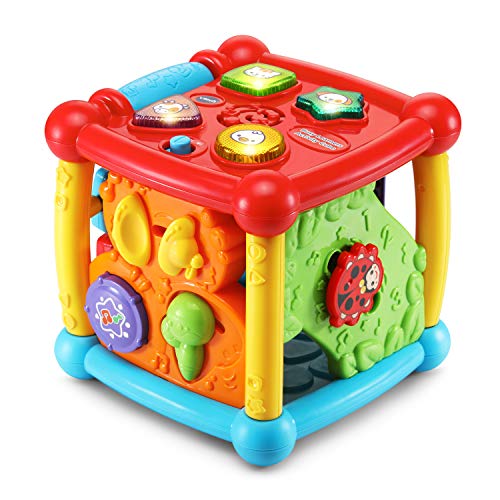
The VTech Busy Learners cube features five play sides and 14 interactive elements designed to teach colors, shapes, animal names, and early literacy concepts. A motion sensor activates sounds when moved, encouraging babies to sit up and engage. Best for parents seeking a compact, sensor-driven toy that rewards active exploration. Limitations include reliance on batteries and potential replacement parts for wear over time.
Wooden Activity Cube | Montessori Toys (KMTJT)

This wooden cube offers seven games in one, including a bead maze, learning clock, shape sorter, and more. Made from natural rubber wood with rounded edges and water-based non-toxic paint, it emphasizes safety and durability. Best for families who prefer a durable, wood-based option that supports counting, color and pattern recognition, and fine motor skills. A potential limitation is its size and setup, which may require more space than smaller plastic cubes.
VTech Busy Learners Activity Cube, Purple
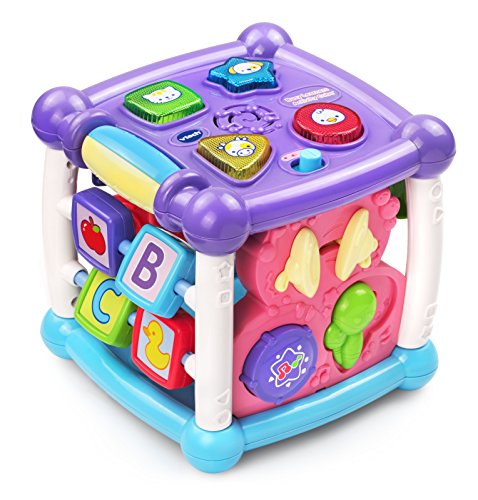
The purple variant mirrors the standard VTech design with a motion-sensor feature and light-up educational buttons. It’s best for toddlers who enjoy responsive play and animal-themed activities. Choose this if you want a visually bright option with similar content to the Frustration Free version; however, battery management is a consideration for continued play time.
Wooden Activity Cube for 1 Year Old (TOYVENTIVE)

Designed as a birthday gift set, this cube includes a bead maze, stacking cups, and a first words board book, offering a multi-piece gift in a single blue box. It’s best for 12-18 month-olds who benefit from sequential learning and physical manipulation. A potential caveat is that some components may be easier for smaller hands, so supervision helps maximize learning during play.
Joyreal Wooden 11-in-1 Activity Cube
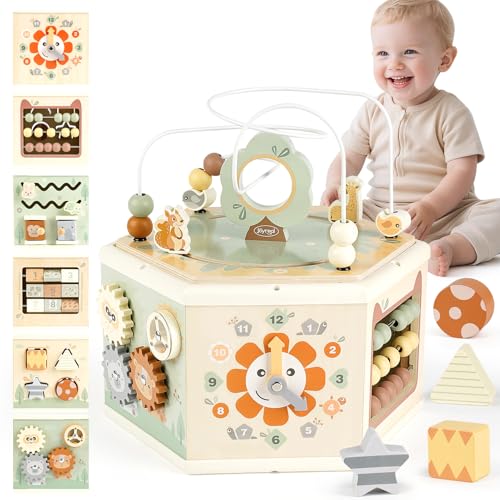
The Joyreal cube offers 11 activities across six sides, including bead maze, gears, a learning clock, sorting blocks, and an abacus. It targets broad cognitive development—color and shape recognition, counting, problem-solving, and hand-eye coordination. Best for parents seeking a feature-rich, all-in-one wooden option. A limitation is the potential weight and setup complexity for very young toddlers; parental assistance may be needed for initial exploration.
WOODMAM Wooden 7-in-1 Activity Cube

The WOODMAM cube combines seven activities within a sturdy wooden frame, featuring chunky blocks and a water-based finish. It’s designed for babies 12-18 months to support number counting, color recognition, shapes, and fine motor development. Best for families prioritizing durability and Montessori-like exploration. A potential caveat is the larger footprint compared to compact cubes, which could impact storage and travel.
Buying Guide: How To Pick The Right Baby Activity Cube
What activities should a cube include?
Look for multiple activities that target different skills: bead mazes for fine motor control, shape and color sorting for cognitive development, clocks for early math concepts, and memory or sequence games for problem-solving. A mix of mechanical, musical, and tactile elements keeps engagement high.
Materials matter: wood vs. plastic
Wooden cubes tend to be sturdier and offer a natural look, with often smoother edges and non-toxic finishes. Plastic cubes can be lighter and feature more dynamic electronics or music. Consider your child’s sensitivity to textures and the durability you need for daily use.
Safety and age appropriateness
Choose models with rounded edges, non-toxic paints, and no small pieces that could detach. The target age range is typically 12 months and up. Always supervise play, especially with components that can be removed or pulled apart.
Portability and storage
Compact cubes fit smaller play spaces and travel well, while larger, multi-feature designs may require more storage. If you plan to move the toy between rooms or take it on trips, consider weight and disassembly options.
Learning vs. entertainment balance
Prefer cubes that offer purposeful learning outcomes (colors, numbers, shapes) alongside exploratory play. Avoid toys with overly repetitive tasks that offer little room for creative problem solving.
Maintenance and care
Wooden cubes with water-based finishes may require occasional wipe-downs and careful handling to preserve paint. Plastic options can be more machine-washable and easier to sanitize, but ensure the electronic components are protected from moisture.
FAQ
- At what age can my child start using an activity cube? Most activity cubes are suitable for children around 12 months and up, with features that grow in complexity as the child develops.
- Are wooden cubes safer than plastic? Wooden cubes often have sturdier construction and natural finishes, while plastic cubes can offer more varied electronics. Check for non-toxic paints and rounded edges in either type.
- Do these cubes require batteries? Many cubes include motion sensors or sound effects that require batteries; check product details for power needs and replacement information.
- Can cubes help with early math skills? Yes. Features like learning clocks, counting beads, sorting blocks, and number-based activities support early math concepts.
- Are these toys easy to clean? Wood models generally need gentle wiping with a damp cloth, while plastic models may be wipe-clean or dishwasher-safe for some components. Always follow manufacturer guidance.
- Which cube is best for a gift? Gift-ready sets that include multiple components (like beads, blocks, and a board book) suit birthdays and milestones, aiding ongoing engagement.