Find the right carrier that supports your growing baby beyond 20 pounds with ergonomic design, adjustable fits, and durable materials. This guide highlights carriers well-suited for toddlers and heavier infants, focusing on comfort for both caregiver and child. The top picks below are ideal for hands-free parenting, daily errands, and extended wear.
| Product | Best For | Max Weight | Why It Stands Out |
|---|---|---|---|
| Infantino Flip Luxe 4-in-1 Convertible Baby Carrier | Parents seeking four positions and lumbar support | 7–35 lbs | Updated lumbar support and weight distribution for comfort during longer wear |
| Infantino Flip 4-in-1 Convertible Baby Carrier | Newborn to toddler, versatile wearers | 8–32 lbs | Multiple carrying positions with ergonomic support |
| MOMTORY 6-in-1 Baby Carrier | Growing babies to toddler with multiple carry options | 7–50 lbs | Six positions including hip seat; skin-friendly fabric |
| Momcozy Baby Carrier (Ergonomic, 7–45 lbs) | Travelers and busy parents seeking lumbar support | 7–45 lbs | Enhanced lumbar support and breathable design |
| Momcozy Air Mesh Baby Carrier (7–45 lbs) | Hot climates or summer outings | 7–45 lbs | Air mesh panel for airflow and cooling |
Infantino Flip Luxe 4-in-1 Convertible Baby Carrier
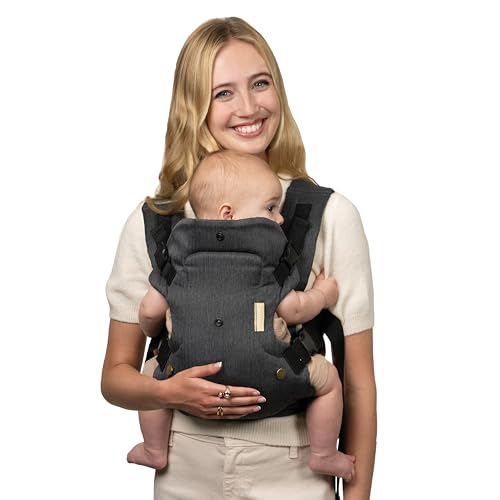
The Infantino Flip Luxe is a 4-in-1 carrier suitable for babies from 7 to 35 pounds. It features an updated lumbar support belt and a wider weight distribution to improve comfort for longer wear. The ergonomic seat and adjustable fit help align baby’s natural position while the shoulder straps and lumbar belt customize the fit for different caregivers.
Best for: Parents who want four carrying positions and enhanced lower-back support in one carrier. Choose this if you expect frequent transitions between facing-in and back carries and value lumbar stability.
Caution: The weight range ends at 35 pounds, which may limit use with larger toddlers.
Infantino Flip 4-in-1 Convertible Baby Carrier

This 4-in-1 carrier offers facing-in (narrow and wide), facing-out, and back carry positions for babies from 8 to 32 pounds. It emphasizes padding on the shoulders and a wide waist belt to distribute weight evenly, reducing back and shoulder strain during errands or longer sessions.
Best for: Caregivers who want flexible positioning across early infancy to toddler stages with an emphasis on comfort for both wearer and baby. Avoid if you need weights over 32 pounds.
MOMTORY 6-in-1 Baby Carrier

MOMTORY’s 6-in-1 carrier grows with your child from infancy to toddlerhood (7–50 pounds). It offers six carrying positions, including a baby hip seat, and has adjustable shoulder straps and waist supports for different body types. The design emphasizes a secure, snug fit with materials described as skin-friendly and comfortable for long wear.
Best for: Families seeking a long-lasting carrier with multiple carry options and a built-in hip seat for added support. Consider limits if you prefer lighter-weight fabrics for warmer days.
Momcozy Baby Carrier (Ergonomic, 7–45 lbs)

This carrier provides a hands-free experience with three adjustable sizing positions, supporting babies from newborn to toddler. It emphasizes ergonomic M-position positioning to support hip and spinal development, padded legs, and built-in lumbar support with adjustable shoulder and waist straps for a personalized fit.
Best for: Parents who want a stable, ergonomic fit across growth stages with strong lumbar support for extended wear. Note that some users may prefer airflow for hot days depending on the fabric.
Momcozy Air Mesh Baby Carrier (7–45 lbs)

This version uses an air mesh panel to improve airflow, making it ideal for warm weather or outdoor activities. It supports babies from 7 to 45 pounds and maintains Momcozy’s ergonomic approach, including a natural M-position and padded accommodations for baby’s legs.
Best for: Heat-prone caregivers and parents who want better ventilation during summer excursions. Caution: mesh fabrics may snag on rough surfaces; inspect for wear over time.
Buying Guide
Key considerations before buying a baby carrier for heavier babies:
- Weight range and growth potential: Look for carriers supporting at least 20 pounds and ideally up to 40–50 pounds.
- Carrier position versatility: Four to six carry options can extend usage across infancy to toddlerhood.
- Ergonomics and support: Prioritize lumbar support, wide waist belts, and properly aligned leg positioning to protect your back and baby’s hips.
- Fabric and breathability: Choose fabrics that balance durability with skin-friendliness; consider mesh panels for hot climates.
- Fit for multiple caregivers: Adjustable straps and belts help accommodate different body types and ensure a secure fit for everyone.
- Care and maintenance: Check for machine-washable fabrics and sturdy construction for repeated use.
FAQ
What’s the best carrier for a toddler who weighs over 25 pounds?
Look for a carrier with a high weight limit (30–50 pounds) and strong lumbar support, such as MOMTORY or Momcozy options listed here.
Are hip seats better for heavy babies?
Hip seats can provide additional support and reduce strain on the caregiver, but ensure hip positioning remains ergonomic for baby’s development.
Is an air mesh carrier better for warm weather?
Yes. Air mesh promotes airflow, keeping both parent and baby cooler in hot conditions.
Can a carrier replace a stroller for longer walks?
Carriers are practical for close-contact tasks and short trips, but for long distances or uneven terrain, a stroller may be preferable.
How do I ensure a proper fit for multiple caregivers?
Choose carriers with adjustable shoulder straps and waist belts; ensure each wearer follows the manufacturer’s fit guidelines.
Do all these carriers support newborns?
Some models start at around 7–8 pounds, which may not suit newborns. If you need newborn capability, pick a model explicitly advertising newborn support or use an insert where provided.