Finding the right formula for lactose sensitivity can ease fussiness, gas, and tummy troubles in infants. This guide highlights five effective options, explaining who each product is best for and why it stands out. Whether you need an ultra-gentle option, a blend with specialized prebiotics, or an organic choice, these picks help support digestion and overall development for babies from birth through the first year.
Product Comparison Snapshot
| Product | Best For | Why It Stands Out |
|---|---|---|
| Similac 360 Total Care Sensitive Infant Formula (34.9 oz, Pack of 3) | Infants with lactose sensitivity needing prebiotics | 5 HMO prebiotics; supports immune, brain, and digestion |
| Similac Sensitive Infant Formula (29.8 oz) | First-year babies with fussiness & gas | OptiGRO blend; complete nutrition with DHA and lutein |
| Mama Bear Sensitivity Premium Infant Formula (33.2 oz) | Budget-conscious families seeking dual HMOs | Dual HMOs (2’-FL and LNnT); supports immune and digestive health |
| Earth’s Best Organic Sensitivity Infant Formula (32 oz) | Organic option with reduced lactose | Organic milk, prebiotics, DHA & ARA; supports defenses and development |
| Similac Alimentum with 2’-FL HMO (19.8 oz) | Hypoallergenic need for protein sensitivity | Hydrolyzed protein; includes 2’-FL HMO for immune support |
Similac 360 Total Care Sensitive Infant Formula for Fussiness & Gas Due to Lactose Sensitivity (34.9-oz 3-Pack)

Best for parents seeking a ready-to-use, lactose-tolerant formula with multiple prebiotics. This version emphasizes gentle nutrition for delicate digestive systems and adds 5 HMO prebiotics to support immune function and digestion. It aims to address fussiness and gas commonly linked to lactose sensitivity, while providing a triple-health approach for immune, brain, and digestive development. Choose this if you want a convenient 3-pack that targets tummy troubles with a strong prebiotic blend.
Who it’s best for: Babies with lactose sensitivity who need a gentle, all-in-one formula and caregivers wanting a value-pack option. Limitation: May not be widely available in single-can formats, requiring bulk purchase.
Similac Sensitive Infant Formula (29.8 oz)

The best pick for babies in their first year who experience fussiness and gas due to lactose sensitivity. It features a comprehensive nutrition profile for ages 6-12 months (Stage 2) and includes OptiGRO, a blend designed to mimic beneficial components of breast milk. This formula supports brain and eye development with DHA and lutein. Choose this if you want a well-rounded option that aligns with early solids feeding and ongoing growth.
Best for: Babies in the 6-12 month range needing a mature formula with enhanced prebiotic and brain-support ingredients. Limitation: Not specifically marketed as a hypoallergenic option; consider if your infant shows signs of protein intolerance.
Mama Bear Sensitivity Premium Infant Formula (33.2 oz)

Best for families seeking a budget-friendly formula with enhanced HMOs. This product provides two HMOs (dual prebiotics) to support immune and digestive health and offers reduced lactose content to ease sensitivity-linked tummy troubles. It’s a solid alternative for caregivers who want a retrofitted formula with immune-supporting prebiotics at a lower cost per ounce. Choose this if you prioritize value without sacrificing gut health support.
Best for: Budget-conscious households needing dual prebiotics for lactose sensitivity. Limitation: Availability and brand familiarity may vary by retailer; verify ingredient lists if you need full HMO alignment with breast milk.
Earth’s Best Organic Sensitivity Infant Formula (32 oz)
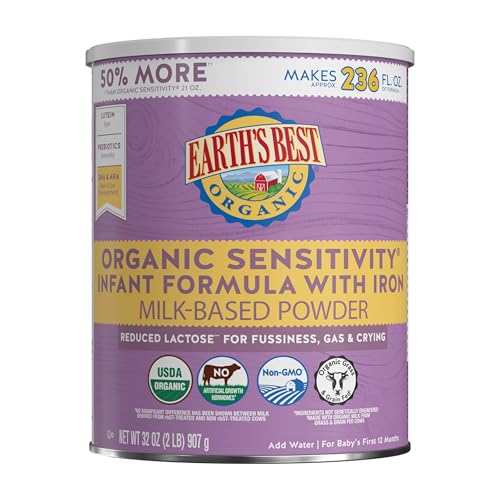
This organic option is designed for babies who experience fussiness and gas due to upset tummies and reduced lactose. It combines organic milk with prebiotics and essential fatty acids (DHA and ARA) to support defenses, brain, and eye development. It’s ideal for families prioritizing organic sourcing, non-GMO practices, and a formula that aligns with dietary preferences for organic nutrition. Choose this if you prefer an organic label and reduced lactose without compromising essential nutrients.
Best for: Parents seeking an organic, reduced-lactose option with broad nutritional support. Limitation: Organic formulations can be more expensive and may have limited availability in some markets.
Similac 360 Total Care Sensitive (Ready to Feed, 2-oz Bottle, Pack of 12)

This ready-to-feed option is convenient for travel or feeding on the go. It emphasizes a sensitive formulation designed to ease fussiness and gas from lactose sensitivity, while being kosher, halal, and gluten-free. It suits families needing quick packaging and a consistent nutrition profile without preparing powder. Choose this if you want the least preparation and a portable option for occasional use.
Best for: On-the-go feeding where preparation time is limited. Limitation: Ready-to-feed bottles add cost per feeding compared with powder forms.
Similac Sensitive Infant Formula (29.8 oz)

This version emphasizes brain and eye development with DHA and lutein while targeting fussiness and gas related to lactose sensitivity. It’s a strong option for babies who need stable nutrition across the first year, with added rewards points via MySimilac to support ongoing purchases. Choose this if you want a well-established formula with robust brain- and eye-support nutrients and a rewards program.
Best for: Babies needing targeted fussiness/gas relief with brain and eye support. Caution: Rewards program is optional and varies by product availability.
Similac Alimentum with 2’-FL HMO Hypoallergenic Infant Formula (19.8 oz)

Best for babies with cow’s milk protein allergy or strong protein sensitivity. Alimentum uses a hydrolyzed protein base and includes 2’-FL HMO for immune help. This option aims to reduce colic symptoms linked to protein sensitivity in many infants. Choose this if hypoallergenic formula is necessary and you want an HMO-included option for immune development.
Best for: Infants with cow’s milk protein allergy or significant protein sensitivity. Limitation: Hypoallergenic formulas can have distinct taste and may require physician guidance for long-term use.
Buying Guide: Key Considerations for Lactose-Sensitive Formulas
- Age and stage: Some formulas are designed for newborns, while others target 6-12 months or beyond. Align with your infant’s age and feeding stage.
- Lactose sensitivity vs. protein allergy: If lactose is not the sole issue, consider formulas like Alimentum for protein sensitivity or hypoallergenic needs.
- Prebiotics and HMOs: Look for 5-HMO blends or dual HMOs to support digestion and immune health.
- Organic options: If you prefer organic sourcing, Earth’s Best Organic Sensitivity is a solid pick with DHA/ARA and prebiotics.
- On-the-go needs: Ready-to-feed options save time but can cost more per feeding; powder formulas offer cost savings and flexibility.
- Flavor and tolerance: Some babies show preferences or tolerance variations; monitor fussiness, gas, stool changes, and overall mood after switching formulas.
- Budget and availability: Multi-pack formats can offer per-ounce savings but require storage planning and longer lead times.
Frequently Asked Questions
- What is lactose sensitivity in babies, and how does it differ from a milk protein allergy?
– Lactose sensitivity relates to difficulty digesting lactose, a milk sugar, often causing fussiness and gas. A milk protein allergy involves an immune response to the protein in milk and can require hypoallergenic formulas like Alimentum. - Are HMOs in formula similar to breast milk?
– HMOs (prebiotics) are designed to support beneficial gut bacteria and immune development, mirroring some components of breast milk, though not identical. - Can I switch formulas if my baby has digestive discomfort?
– Yes, but make changes gradually over 1–2 weeks and monitor for improvements. Consult a pediatrician if discomfort persists or worsens. - Is organic formula better for lactose sensitivity?
– Organic status does not guarantee reduced lactose; it emphasizes organic farming and ingredient sourcing. It can be combined with reduced lactose options if needed. - Do ready-to-feed formulas provide the same nutrients as powder formulas?
– Ready-to-feed formulas are formulated to match standard nutrition profiles but may differ in cost and packaging. Both types can meet daily nutrient needs if used as directed.