Answering the search for reliable baby door handle locks, this guide highlights five practical options designed to keep toddlers from opening interior doors. These locks are best for parents seeking quick, tool-free installations, strong adhesion, and high child-resistance. They suit households with toddlers who are curious about doors and pets who might explore levers. Below is a quick summary table of the selected products to help you compare at a glance.
| Product | Best For | Why It Stands Out |
|---|---|---|
| Door Lever Lock (2 Pack) – Wappa Baby | Flat-panel doors with available space | Two-pack option, adhesive-only install, simple one-hand avoidance on parents’ side |
| Door Lever Locks (4 Pack) – Wappa Baby | Space-conscious households needing multiple locks | 4-pack for broader coverage, dual-side button requirement increases tamper-resistance |
| Huglock by SnapPower | High-traffic interior doors | No tools or adhesives, adjustable height, works with knobs or levers |
| Door Lever Lock Child Proof Dogs & Handles – Tuut (2 Pack) | Standard lever doors | Patented button mechanism, unobtrusive design |
| Inaya Child Proof Door Lever Lock (2 Pack) | Flexible universal fit | Minimalist design, 24-hour adhesive bonding note, universal lever compatibility |
Door Lever Lock (2 Pack) – Best for quick, adhesive installs

Wappa Baby’s Door Lever Lock is a simple, adhesive-only solution designed for flat-panel doors with adequate space beside the lever. The product measures 3.25″ L x 1.5″ W x 4.5″ H, and installation requires a flat surface next to the lever. Best for parents who want an unobtrusive lock with easy one-handed operation for adults, this option prioritizes straightforward application over drilling or tools. A caveat is ensuring your door surface is compatible with the adhesive backing to maintain long-term adhesion.
Door Lever Locks (4 Pack) – Stronger multi-pack option
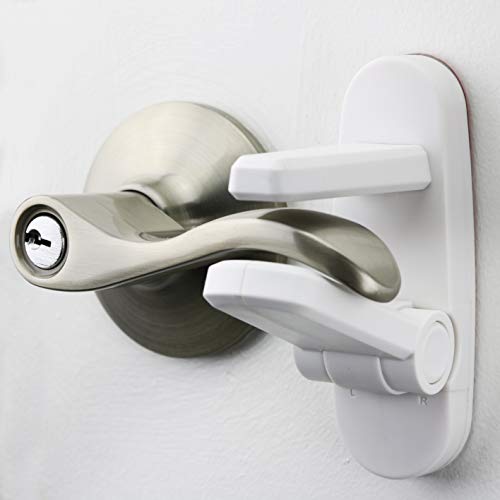
This four-pack from Wappa Baby is ideal for homes with multiple interior doors. Like the two-pack, these locks use an adhesive method and require a flat surface next to each lever. The design emphasizes a high level of tamper resistance by requiring adults to press buttons on both sides to operate. Choose this if you need coverage across several rooms or doors. A potential limitation is the need for consistent, smooth surface prep for best adhesion over time.
Huglock – No-Tool, No-Adhesive Solution

Huglock by SnapPower offers tool-free, adhesive-free installation. It slides over interior doors to secure knobs or levers and stays out of reach for children. This option is best for households wanting a high-visibility, non-permanent solution that can be moved between doors and heights. It suits bedrooms, bathrooms, offices, and closets. A limitation is that it’s designed for interior doors with a compatible jamb width, and very thick or uneven surfaces may affect fit.
Tuut Door Lever Lock (2 Pack) – Patented Safety Mechanism
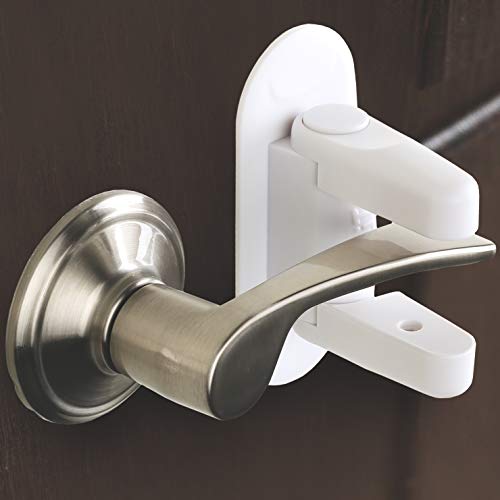
Tuut’s 2-pack lever lock uses a patented mechanism that requires pressing buttons to lock and unlock, delivering a simple yet effective defense against curious children. The design is meant to blend with most interiors and avoid a bulky appearance. This option is best for doors where you want clear, unobtrusive hardware. A potential limitation is that, like many adhesive models, proper surface prep is essential for durability over time.
Inaya Child Proof Door Lever Lock – Minimalist, 2 Pack
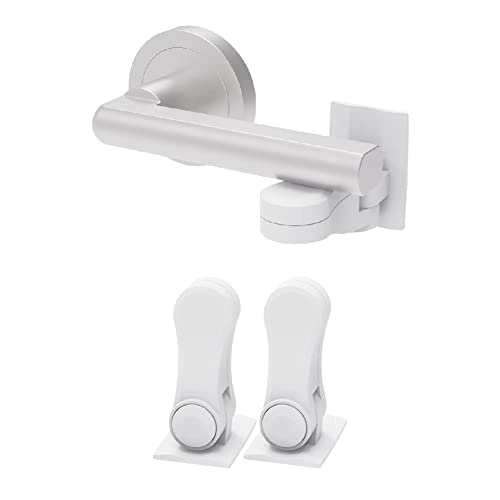
Inaya presents a minimalist two-pack designed to blend with interiors while securing door levers. It notes a 24-hour adhesive bonding period to ensure the strongest possible hold after installation and claims universal fit across lever types. Choose this if you value a low-profile look and a universal approach to door handles. A caution is to plan the bonding time to achieve maximum effectiveness.
Buying Guide: Key Factors To Compare
- Installation method: Adhesive-only models are fastest and simplest but may require surface prep for durability; tool-free options provide flexibility but may be less strong over time on textured surfaces.
- Door compatibility: Check lever type (round, oval, modern) and ensure a flat surface next to the lever for mounting. Interior doors with standard jambs are typically compatible.
- Tamper resistance: Locks that require action on both sides or multi-step button presses reduce attempts by little hands but may be less convenient for adults with limited dexterity.
- Surface integrity: Consider how the adhesive or mechanism could affect paint and finish. Some products offer easy removal with minimal surface damage.
- Coverage: For larger homes or multi-room layouts, a multi-pack option can save time and expense while ensuring consistent protection across doors.
Frequently Asked Questions
- What type of door handles do these locks work on?
Most products are designed for interior lever handles and knobs with standard dimensions. Always verify the product’s compatible door thickness and lever style before purchase.
- Are tool-free installs as durable as drilled installations?
Tool-free options rely on adhesives or simple slides. They can be durable for months to years if surfaces are clean and dry, but may require reapplication on textured or non-smooth doors.
- Can these locks be used on doors that are painted or finished?
Yes, but check the packaging for surface compatibility and consider heat-activated release methods if you plan to reposition them later.
- Do these locks affect door usability for adults with accessibility needs?
Some models require simultaneous button presses or leverage on both sides. If accessibility is a concern, choose models emphasizing easy adult operation and consider higher placement of the lock.
- Is there a difference between a two-pack and a four-pack for home safety?
Four-packs are helpful for multi-door homes or two-story layouts, while two-packs are cost-effective for fewer doors. Select based on the number of interior doors you need to secure.
- How soon after installation should I test adhesion?
Adhesive-backed locks typically require a curing period; some products specify up to 24 hours before full use to ensure maximum bond.