Answering the needs of families monitoring two kids, these no‑WiFi, 2‑camera systems provide private, long‑range viewing without exposing video to the internet. They’re best for parents who want simple setups, durable battery life, and clear two‑camera coverage in multiple rooms. The top picks below are selected for ease of use, strong connection, and practical features like split or dual views, night vision, and temperature sensing. The following table highlights the chosen products for quick comparison.
| Product | Brand | Key Benefit | Best For |
|---|---|---|---|
| HelloBaby Upgrade 5” | HelloBaby | Long battery life, two cameras, 1000 ft range | |
| Blemil 6″ Upgrade | Blemil | Large 6″ IPS display, remote PTZ | Two-room viewing with flexible camera angles |
| HelloBaby 6″ IPS Split Screen | HelloBaby | Split-screen two-camera view, long range | Two-kid setup with side-by-side viewing |
| iFamily Split Screen | iFamily | 4.3″ split screen, 1000 ft range | Compact, budget-friendly dual view |
| GoodBaby 5″ Split Screen | GoodBaby | 5″ display, expandable to 4 cameras | Growing families needing extra cameras |
HelloBaby Upgrade 5” Baby Monitor With 2 Cameras
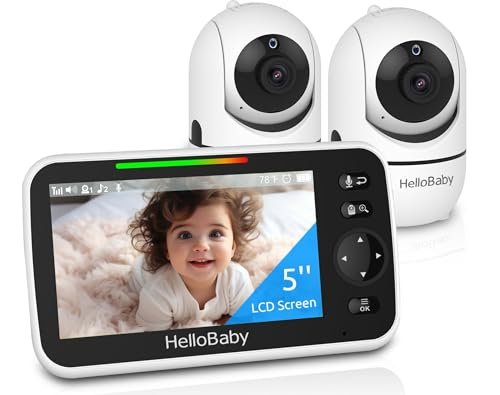
Best for parents seeking a private, camera‑two setup with a compact handheld screen. This 5″ monitor operates on a 2.4GHz FHSS link, avoiding WiFi and keeping data off the internet. The dual cameras offer pan/tilt/zoom controls and auto switching, delivering reliable two‑room coverage for two kids. A long battery life supports overnight monitoring on ECO mode, making it suitable for sleepovers or shared rooms. Caution: the outdoor range claim may vary indoors due to interference and building materials.
Blemil 6″ Baby Monitor With 2 Cameras

Best for families wanting a larger screen and flexible camera orientation. The 6″ IPS display provides clear viewing, with remote camera rotation up to 310° horizontally and 120° vertically. No Wi‑Fi keeps the feed private, and a long outdoor range up to 1000 ft enhances two‑room monitoring. A noted limitation is potential interference from nearby wireless devices; keep the device away from metal objects for best performance.
HelloBaby 6″ IPS Split Screen Monitor

Best for households needing true side‑by‑side two‑camera viewing on a single 6″ display. The split screen lets you monitor two feeds concurrently, with up to 30 hours of battery life when the screen is off or in VOX mode. It uses a secure 2.4GHz FHSS link, reducing hacking risk compared to cloud‑connected models. Choose this if you want a robust two‑room setup without WiFi, but be aware the product notes indicate single‑camera viewing at times when actively recording audio.
iFamily Split Screen Baby Monitor
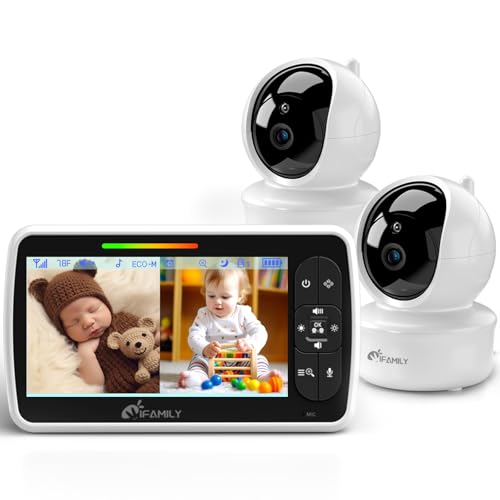
Best for shoppers needing a compact twin‑view option with a 4.3″ screen. The two cameras provide a 355° pan and 120° tilt, with a 1000 ft outdoor range and 150 ft indoor range. It uses 2.4GHz FHSS for privacy. This model is notably suitable for two kids in adjacent rooms but may feel small for users who prefer larger displays or more screen real estate during night monitoring.
GoodBaby 5″ Split Screen Monitor
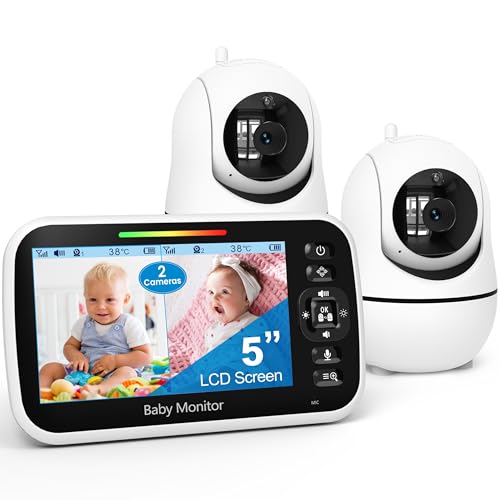
Best for growing families who want to expand beyond two cameras. The 5″ display supports a split view of two feeds and can expand up to four cameras. It features a long 30‑hour battery in VOX mode and a stable FHSS connection with no WiFi. A limitation to note is that when multiple cameras are used, audio focus may alternate between feeds, which can affect real‑time listening in busy nurseries.
Buying Guide
What to look for when choosing a two‑kid baby monitor
- Connection type: No‑WiFi FHSS vs. WiFi models. No‑WiFi options offer privacy and resilience to outages.
- Display size and layout: Split‑screen vs. single‑screen views. Larger screens help with quick glances across rooms.
- Camera count and expandability: Two included cameras with the option to add more for growing families.
- Battery life: Longer ECO or VOX modes extend use between charges, especially overnight.
- Range: Outdoor range matters for larger homes; indoor range can vary with walls and interference.
- Night vision and temperature monitoring: Important for sleep safety and room conditions.
- Privacy and security: 2.4GHz FHSS provides a private link; avoid open WiFi cloud connections for sensitive use cases.
How to decide between split-screen and dual-camera setups
Split-screen monitors show both feeds at once, which is convenient for simultaneous observation but can reduce video size per feed. Dual‑camera setups with a single screen avoid clutter if you primarily need to monitor one room at a time. Consider your home layout, sleep patterns, and whether you want to expand beyond two cameras in the future.
What can limit performance
- Interference from other wireless devices or metal structures can reduce range and signal stability.
- Outdoor range is often greater than indoor range due to walls and furniture.
- Some models prioritize audio over video when battery saver modes engage, affecting immediacy of alerts.
FAQ
- Do these monitors work without WiFi? Yes. Most listed models use a private 2.4GHz FHSS link without requiring WiFi.
- Can I expand to more than two cameras? Several models support up to four cameras, useful for growing families.
- Is split-screen necessary for two kids? Not strictly; it depends on whether you need simultaneous viewing in real time.
- What is the typical range I should expect? Outdoor ranges commonly reach up to 1000 ft; indoor ranges vary by construction.
- How important is battery life? Critical for overnight monitoring and when parents want to check on both rooms without frequent recharging.
- Are there privacy concerns with non‑WiFi monitors? These designs reduce exposure to internet threats since video stays on a closed system.