When caring for a loved one with dementia, a dependable monitor that combines two-way talk, alerts, and simple controls is essential. The top picks below are designed for non-WiFi setups or privacy-focused environments, with features like one-touch SOS, medication reminders, and night vision. Best for caregivers who need reliable in-home monitoring without internet dependence, or those seeking straightforward room-to-room communication.
Summary table of chosen products:
- Product: JEMXITG Elderly Monitor with Camera and Audio — Best for privacy-conscious users; no WiFi required; long battery life.
- Product: CallToU 2-Way Talk Baby Monitors for Elderly — Best for secure 2.4GHz FHSS connection; private room monitoring; easy SOS buttons.
- Product: Elderly Monitor with Camera and Audio & Call Button by Zaguoroo — Best for all-day reminders and VOX power-saving.
- Product: CallToU Elderly Monitor with Camera and Audio — Best for dual-camera setups in caregiving settings.
- Product: Deerift Elderly Monitor with Camera and Audio — Best for built-in white noise and memory support features.
JEMXITG Elderly Monitor With Camera And Audio
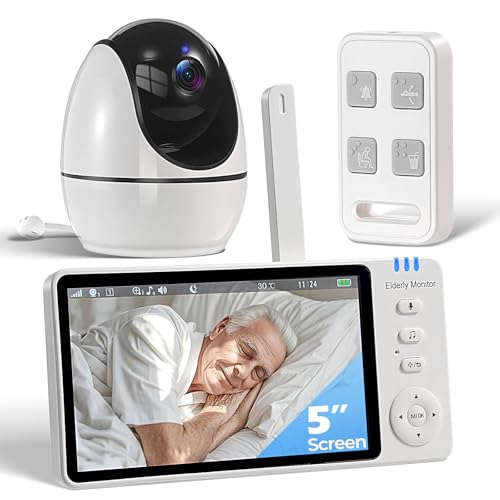
Best for privacy-focused scenarios. This all-in-one senior care monitor offers 2-way audio, an SOS emergency button, medication alerts, and temperature monitoring. It features infrared night vision and VOX voice activation, with no Wi-Fi required for privacy protection. A 3500mAh battery reduces daily charging. The dedicated tactile SOS, Help, Toilet, Fall, and Water buttons support quick caregiver alerts. The ergonomic remote has raised markers for visually impaired users.
CallToU 2-Way Talk Monitor With Call Button
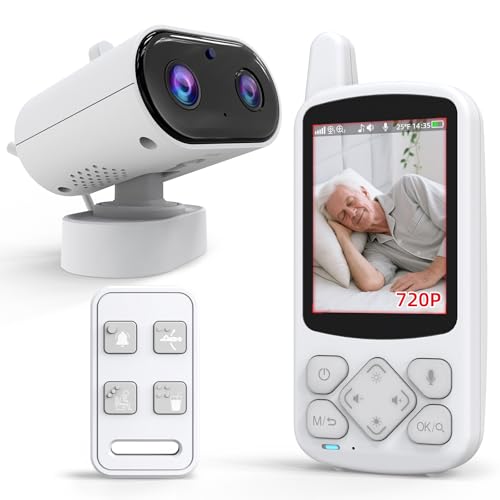
Better for families prioritizing privacy and straightforward setup. It operates on a secure 2.4GHz FHSS signal, removing Wi-Fi requirements while delivering real-time two-way audio and video. Infrared night vision helps in low light, and the one-press SOS button plus daily alerts (drink water, move, toilet, help) support routine care. This makes it a practical, private room monitor for seniors and dementia patients who need quick response capabilities.
Elderly Monitor With Camera And Audio & Call Button — Zaguoroo

Best for caregivers who need 24/7 vigilance without constant screen duty. Features include a one-touch call button, medication reminders, infrared night vision, and temperature monitoring. The VOX smart mode conserves power by dimming the screen during quiet moments and waking it when noise exceeds a threshold. This makes it suitable for dementia care where caregivers want a balance of monitoring and freedom for the patient.
CallToU Elderly Monitor With Camera And Audio (Two Cameras)

Best for multi-room monitoring. This No-Wi-Fi 2.4GHz FHSS setup supports two cameras, enabling caregivers to check two rooms without moving the unit. The system emphasizes privacy with a secure data path and provides an immediate SOS button plus daily alerts. It’s a practical option for homes where a second camera improves oversight for dementia patients.
Deerift Elderly Monitor With Camera And Audio

Best for dementia care with memory-support features. Deerift includes high-sensitivity video and audio, infrared night vision, and a one-touch SOS. A unique addition is built-in white noise to assist caregivers and potentially aid sleep for dementia patients. Medication reminders help address forgetfulness, and the device supports calm communication that reduces distress.
Buying Guide: Key Considerations For Choosing A Dementia-Support Monitor
- Privacy vs. Convenience: Do you prefer no Wi-Fi (for privacy) or does app-based access (for remote checking) matter?
- Alert System: Which alerts are essential (SOS, reminders, drink water, fall detection) and how customizable should they be?
- Two-Way Communication: Is immediate in-room talk important, or is a VOX-enabled display sufficient for your routine?
- Night Vision and Light Conditions: Do you need infrared night vision for dark rooms or low-light environments?
- Power And Battery: Is a long-life battery preferable to reduce charging interruptions?
- Single vs Multi-Camera Setups: Will you monitor more than one room, and is a second camera necessary?
- Ease Of Use: Are tactile buttons and large remotes important for caregivers with limited mobility or vision?
- Security Standards: If using wireless, does the device use a secure, private connection to minimize risk?
Practical Comparison At A Glance
- No Wi-Fi models: JEMXITG, CallToU (two-camera option) and Deerift offer private monitoring paths with separate radio signals.
- With reminders: JEMXITG and Deerift emphasize medication reminders and memory aids suited for dementia care.
- Multi-camera flexibility: The two-camera CallToU option serves larger spaces or nursing setups.
- Voice features: VOX and two-way talk help maintain communication with minimal power use.
FAQ
- What is the main advantage of a no-WiFi monitor for dementia care?
It provides private monitoring without internet exposure, reducing potential privacy concerns and network interference. - Are two-way audio monitors better for dementia patients?
Yes, two-way audio supports real-time reassurance and quick assistance without moving the patient. - Can these monitors help with medication reminders?
Several models include reminder features to help caregivers manage daily schedules and meds. - Is night vision important for dementia monitoring?
Infrared night vision helps caregivers check on patients safely in dark rooms. - Do all these monitors require a smartphone app?
Some do for remote viewing, while others operate independently with a dedicated handheld unit. - What should I consider when choosing between one or two cameras?
A second camera is beneficial for monitoring multiple rooms or angles in a larger home or care facility.