Answering parents’ search for engaging, development-promoting toys for 12- to 24-month-olds, this guide highlights five well-rounded options. These picks support fine motor skills, language, problem-solving, and early math through hands-on play. Each product is suitable for travel, indoor use, or classroom-style learning. The buyer’s notes indicate who each toy is best for and why it was selected.
Summary table of selected products:
| Product | Best For | Key Benefit |
|---|---|---|
| SOCBTNSO Busy Cube Toy | Toddlers learning through six activities | Montessori-inspired sensory play in a compact cube |
| iPlay, iLearn Press to Go Car | Babies who enjoy pull-and-go motion | Battery-free, simple push-and-go action |
| hahaland 10 in 1 Cloth Fishing Game | Color and number sorting fans | Touch-and-Velcro fishing with stacking cups |
| Airbition Talking Flash Cards | Early language learners | 224 visuals with American-accent narration |
| Joyreal Wooden Montessori Toys | Multifunction and creative play | Pounding, xylophone, fishing game, and gears |
SOCBTNSO Busy Cube Toy for 1 Year Olds

The 6-in-1 cognitive cube offers six learning activities designed for 1-year-olds and older. It supports hand-eye coordination, problem-solving, and concentration with Montessori-inspired sensory elements. Its compact size makes it travel-friendly, ideal for road trips or airplane rides where space is limited. This toy is best for toddlers who benefit from diverse activities in a single, portable unit. A potential limitation is its small parts sensitivity for very young infants; use under supervision.
iPlay, iLearn Press to Go Car Toys

This press-to-go car toy is designed with safety in mind, featuring rounded edges and smooth surfaces. No batteries are required; simply press the car’s head to make it move. Bright colors and cartoon characters stimulate curiosity and support early cognitive and sensory development. Best for hands-on, battery-free play; avoid for babies who may chew on plastic parts without supervision.
hahaland Montessori 10 in 1 Cloth Fishing Game

This 22-piece set combines fishing, stacking cups, and an ocean mat with Velcro-based fishing for safe play. It promotes color and number recognition, sorting, and early math concepts. It’s ideal for toddlers who enjoy tactile, hands-on activities and imaginative play. A limitation is that Velcro fishing requires direct interaction to sustain interest over time.
Airbition Talking Flash Cards for Toddlers

This Montessori-style flash card set includes 224 visuals across animals, vehicles, foods, and more, paired with sounds to reinforce learning. The reader uses a standard American accent and has a repeat option, with volume control for comfort. Best for language development and memory association; consider using in short, daily sessions to avoid overstimulation.
SEREED Baby Balance Bike for 1-2 Year Olds
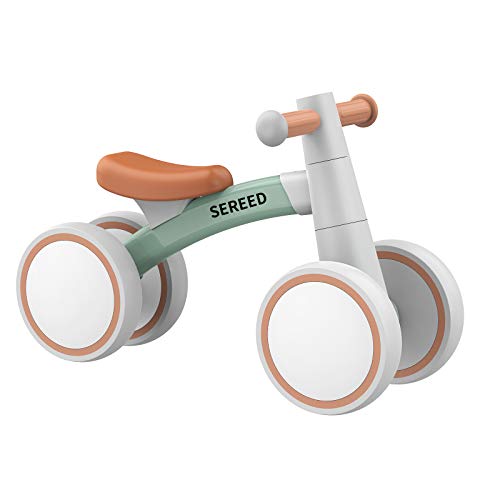
Designed to help balance, steering, and coordination, this 4-wheel balance bike is suitable for 12- to 24-month-olds. It features a sturdy aluminum frame, non-slip handlebars, and a padded seat for comfort. It’s best for early walkers transitioning to pedaled bikes; avoid indoors on delicate floors if space is tight.
Fisher-Price Corn Popper Push-Along
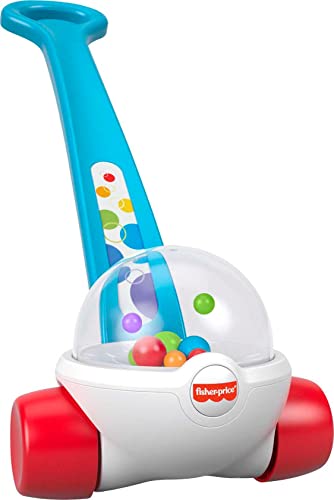
This classic push toy encourages walking with engaging ball-popping sounds and action. It’s a sturdy option for early walkers who respond to auditory feedback. Good for encouraging steady steps; best used on flat surfaces and under supervision to avoid tipping on uneven floors.
Joyreal Wooden Montessori Set

This wooden set combines a pounding bench, a xylophone, a magnetic fishing game, and gears to stimulate motor skills, rhythm, and problem-solving. The natural wood with non-toxic paint offers a calming aesthetic for focused play. Best for hands-on, multi-activity exploration; avoid if space is very limited.
Buying Guide
What to consider when choosing toys for 1-year-olds:
- Developmental stage: Look for toys that encourage motor skills, language, and problem-solving at this age.
- Safety: Choose toys with rounded edges, non-toxic finishes, and minimal small parts for supervised use.
- Portability: For travel, prioritize compact, durable items that resist breakage and are easy to store.
- Ease of use: Simple mechanisms (press-to-go, Velcro, big buttons) suit toddlers’ emerging dexterity.
- Durability: Wood and solid plastics typically endure rough handling better than flimsy toys.
How to Use These Toys Effectively
- Rotate between toys to maintain interest and build a broader range of skills.
- Play alongside your child to model behaviors and extend learning with questions.
- Set short play sessions (5–15 minutes) and gradually increase as attention grows.
FAQ
- Q: At what age can my child start using these toys? A: All listed toys are suited for children around 12 months and up, depending on the child’s development and supervision.
- Q: Are these toys safe for toddlers who mouth objects? A: Most items include non-toxic materials and smooth finishes; supervise to prevent choking hazards on smaller parts.
- Q: Which toy supports language development the most? A: Airbition Talking Flash Cards provide speech and vocabulary exposure through sounds and images.
- Q: Which toys help with balance and walking? A: The SEREED balance bike and Fisher-Price Corn Popper promote walking and gross-m motor engagement.
- Q: Are wooden toys better than plastic for this age? A: Wooden toys are often more durable and can offer a calmer, sensory-friendly play experience, though both materials have value for varied play.