If you’re seeking reliable bed monitors for an elderly loved one, this guide flags options that clearly alert caregivers when a person tries to get out of bed. These systems are best for caregivers who want early warnings, dignity-preserving approaches, and wireless setups without constant in-room alarms. The top picks prioritize discreet pads, dependable wireless alerts, and scalable monitoring for multiple locations. Below, each product section explains who it’s best for, why it was selected, and practical limitations to consider. A compact buying guide and FAQ follow to help finalize your choice.
| Product | Best For | Key Benefit |
|---|---|---|
| Smart Caregiver Bed Alarm (Pad + Monitor) | Direct caregiver alerts in real time | Under-sheet pad with optional wireless alerts |
| Smart Caregiver Bed Exit Alarm (Wireless Pager) | Active, night-time monitoring | Pager alerts; supports multiple sensors |
| Lunderg Wireless Early Alert Bed Alarm | Gentle, dignity-focused monitoring | Hip-level pad for early detection |
| Lunderg Bed & Chair Alarm Set | Comprehensive coverage | Bed + chair sensor with single pager |
| Nesthao Upgraded Bed Sensor Alarm | Floor-mount detection flexibility | Motion-based, floor-mounted sensing |
Smart Caregiver Bed Alarm With Weight-Sensing Pad

Best for immediate, local alerts when your loved one leaves the bed. This system uses a 10″ x 30″ weight-sensing bed pad that triggers a bed alarm as soon as pressure is released. It’s suitable for caregivers wanting a straightforward setup and a clear audible alert in the room. The in-room alarm can remind the person to stay seated until help arrives, with an optional wireless add-on to send alerts directly to the caregiver without startling the patient. Setup is simple, with the pad fitting discreetly under the lower fitted sheet and a cord linking to the monitor.
Who it’s for: solo or family caregivers who prefer a compact, cost-efficient setup and in-room alerts. Why chosen: strong, immediate bed-out alerts and flexible alert options. Caution: the standard in-room alarm may be louder than some environments; if you need silent alerts, consider the wireless add-on kit (sold separately).
Smart Caregiver Bed Exit Alarm With Wireless Pager

Best for ongoing caregiver oversight with mobile notifications. This system uses a full-coverage 10″ x 30″ bed pad that wireless alerts caregivers when pressure is removed, complemented by a caregiver pager with vibrate and sound options to match your routine. It supports an expandable network, allowing up to six sensors for broader coverage across beds, chairs, or doorways. The wireless setup helps maintain dignity while enabling timely responses.
Who it’s for: families or facilities needing scalable monitoring with flexible notification modes. Why chosen: strong emphasis on caregiver convenience and multi-sensor expansion. Caution: wireless pager reliability can depend on environment; ensure range fits your space.
Lunderg Wireless Early Alert Bed Alarm System

Best for dignity-first monitoring with early alerts. This system positions a patented PreRise Early-Alert Bed Pad at hip level to detect getting-up attempts before the full rise, reducing false alarms tied to shoulder-level placement. It uses a wireless handheld monitor to relay alerts, avoiding in-room sounds that may frighten the senior. The soft, removable pad is designed for easy cleaning and incontinence resistance.
Who it’s for: caregivers who want proactive alerts with a non-intrusive pad placement. Why chosen: proven approach to minimize false alarms and minimize distress. Caution: ensure correct hip-level pad placement for effective alerts.
Lunderg Wireless Early Alert Bed & Chair Alarm Set

Best for total room monitoring with bed and chair coverage. This Lunderg set pairs a 10×33-inch bed sensor pad with a chair sensor pad, both wirelessly connected to the same handheld pager. It provides comprehensive alert coverage so caregivers are notified whether the person sits, stands, or shifts, reducing the risk of undetected transitions. No Wi-Fi or apps are required, and the longer pad size helps reduce false alarms.
Who it’s for: households needing synchronized alerts for bed and seating areas. Why chosen: full coverage reduces blind spots in senior safety. Caution: ensure the chair sensor positioning aligns with common seating behavior to avoid missed alerts.
Nesthao Upgraded Bed Sensor Alarm
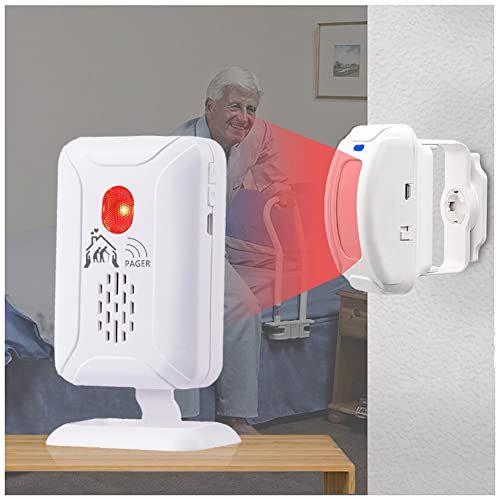
Best for flexible sensing and floor-placement versatility. The Nesthao system uses a motion sensor that can sit under the bed or on the floor to detect when a patient’s foot touches the ground. It transmits within a long-range open-area, and unlike traditional bed pads, it avoids alarming during normal bed repositioning. It’s designed to minimize patient disturbance while providing reliable alerts to caregivers who travel within the home or facility.
Who it’s for: caregivers seeking option to place sensors on the floor or near the bed for fewer false alarms. Why chosen: flexible placement reduces disruptions and suits varied room layouts. Caution: test sensing range and direction before final placement to ensure accurate detection.
Buying Guide
What type of alert do you prefer?
Choose between in-room alarms, wireless pagers, or a combination. In-room alerts are immediate but can startle some seniors. Wireless pagers offer discreet notifications and mobility for caregivers, but verify range in your home or facility.
How important is dignity and false-alarm reduction?
Pad placement at hip level or floor-based sensors can reduce false alarms compared with head or shoulder placements. Consider systems that emphasize early alerts and high placement accuracy to protect dignity.
Do you need multi-sensor coverage?
For rooms with multiple access points, consider a setup that supports additional bed pads, chair pads, or door sensors. A scalable network helps monitor several transitions without gaps in coverage.
Is ease of setup a priority?
Systems that do not require Wi-Fi or apps can be easier for non-technical caregivers. Look for handheld pagers or simple mounting options that do not rely on a smartphone.
What is your space and range?
Check the wireless range to ensure alerts reach you where you live, work, or move around the house. A longer range improves reliability for multi-story homes or apartments.
FAQ
- What is a bed alarm? A device that detects when a person leaves or tries to get out of bed and alerts a caregiver or monitoring device.
- Are these systems safe for dementia patients? Most are designed to be non-intrusive and reduce distress, but placement and alert settings should be chosen to minimize fear or agitation.
- Can alerts reach a caregiver away from home? Some systems support wireless pagers or long-range transmissions, enabling alerts beyond the immediate room.
- Do I need Wi-Fi? Many models do not require Wi-Fi; they use standalone hubs or handheld pagers for alerts.
- How do I prevent false alarms? Proper pad placement and sensor calibration are essential; consider hip-level pads or floor-mounted sensors to account for different movement patterns.
- What should I consider when choosing? Focus on alert type, dignity, range, scalability, and ease of setup to match your living space and caregiver routine.