Looking for a reliable behavior chart for toddlers? This guide highlights five highly actionable options ideal for establishing routines, encouraging responsibility, and reinforcing positive actions. Each chart uses visual rewards, magnets, or stickers to help toddlers understand expectations. Best for parents seeking tangible, kid-friendly motivation and quick, visual progress tracking.
The top picks below cover a range of formats—from magnetic boards to sticker pads—so you can match your child’s attention span, your home space, and whether you’re guiding daily routines, potty training, or classroom-like behavior at home.
| Product | Best For | Key Benefit |
|---|---|---|
| Behavior Reward Chart System – Pad with 26 Chore Charts | Multi-child homes; sticker enthusiasts | Large sticker supply with perforated pages for flexible use |
| Kenson Kids “I Can Do It!” Token Board | Focused task goals; positive reinforcement | Customizable goal box and dry-erase compatibility |
| Reward Chart for Kids, Dinosaur Magnetic Chart | Quick setup; fridge-based reminders | Complete magnetic system with many stickers |
| Large Magnetic Reward Chart for Kids | One-child focus; fridge mounting | Pre-written and customizable tasks on a large surface |
| Melissa & Doug Magnetic Responsibility Chart | Preschool to early elementary | Wooden, durable, with magnets for long-term use |
Behavior Reward Chart System – Pad

This 26-charts pad includes 2,800 stickers and 35 motivational stickers. It’s well-suited for households with multiple children or for parents who want a large sticker library to animate behavior goals. Best for parents who prefer a tactile sticker system and frequent progress markers. A potential limitation is the sheer volume of stickers, which may be excessive for very simple routines.
Kenson Kids “I Can Do It!” Token Board
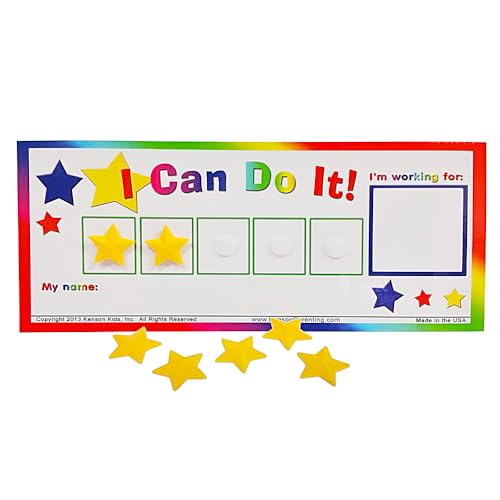
Best for focusing on specific tasks or behaviors with a clear goal box and five star-reward slots. The board supports dry-erase compatibility and can accommodate diverse routines, including sitting at meals, homework, or medication routines. Choose this if you want a flexible, task-specific system. It’s less ideal for younger toddlers who may require simpler visuals or fewer components.
Reward Chart for Kids, Dinosaur Magnetic Chart
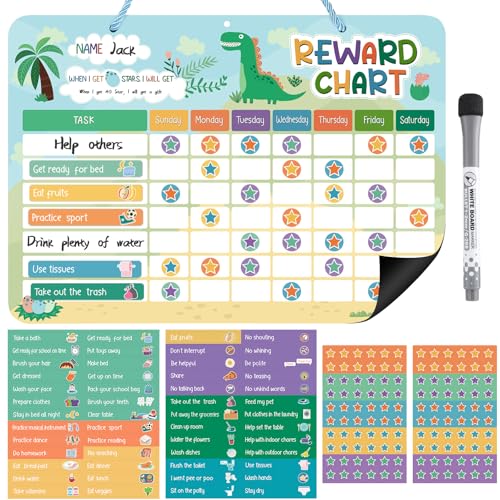
This magnetic set comes with 52 behavior charts and 120 star stickers. The magnetic surface makes it easy to reposition tasks, and the dinosaur theme appeals to many toddlers. Best for households wanting quick attachment to any metal surface. A limitation is that it relies on magnetic compatibility with your mounting surface.
Large Magnetic Reward Chart for Kids

Designed for one child, this board measures 13.5″ x 16″ and supports seven weekly chores or 21 daily achievements. It includes 127 pre-printed stickers plus 30 customizable tags. Best for families needing a large, durable, all-in-one chart. Avoid if you need multi-child support on a single board; it’s optimized for a single user.
Melissa & Doug Magnetic Responsibility Chart

This wooden chart includes 89 magnets and two hinged dry-erase boards for versatile goal tracking. Best for parents wanting a sturdy, long-lasting option that blends into a child’s room decor. The wooden design may be heavier and bulkier than magnetic boards, which could be a consideration for smaller spaces.
Buying Guide
What format best fits your child’s needs? Magnetic charts work well for quick, visible routines on the fridge or a metal board, while sticker pads and token boards suit children who respond to tangible rewards. Consider space: large boards demand more wall or fridge room, and portability matters if you want to move the chart between rooms or use it in a classroom setting.
How much structure is ideal? For older toddlers learning self-management, a customizable task system (like the token board or dry-erase formats) helps build independence. For younger children, simpler visuals and fewer steps reduce cognitive load. If you’re managing multiple kids, look for charts with separable sections or multiple charts per child.
What about durability and cleaning? Wooden or thick magnetic boards tend to last longer, while sticker-based systems may need replacement if stickers lose adhesive or a board gets damaged. Dry-erase compatibility is a plus for long-term use and easy updates.
What should you avoid? Charts that are overly complex or carry too many components may overwhelm toddlers. Also, verify surface compatibility—magnetic charts require a magnet-friendly surface to function as intended.
FAQ
- What is a behavior chart for toddlers best used for? It’s designed to reinforce routines, track progress, and motivate positive actions through visible rewards.
- Should I choose a magnetic chart or a sticker-based chart? Magnetic charts are great for fridge mounting and quick visibility; sticker-based systems are often more tactile and engaging for some children.
- Can these charts work for potty training? Yes, several options include potty-related tasks or easily adaptable rewards to support potty training goals.
- How many goals should I track at once? Start with 3–5 clear goals to avoid overwhelming the child, then add more as they build consistency.
- Are these charts suitable for classrooms or homes? They’re suitable for both, depending on the space and how you plan to manage multiple children or students.
- Do I need to buy all accessories at once? Many charts include basic components; you can progressively add stickers or magnets as needed to fit your child’s progress.