If you’re shopping for a booster seat for a child around 35 pounds, you’re looking for a seat that safely boosts your kid to a proper belt position, adapts as they grow, and offers ease of use for daily rides. Below are five well-rounded booster seats that fit big-kid needs, with clear guidance on who each is best for. The summary table highlights key suitability to help you compare quickly.
| Product | Best For | Weight Range | Key Benefit |
|---|---|---|---|
| Graco TurboBooster 2.0 Backless Denton | Active kids who don’t need a high back | 40-100 lb | Lightweight and simple, trusted safety features |
| Graco TurboBooster 2.0 Highback Declan | Kids needing extra head/neck support | 30-100 lb | 2-in-1 versatility with highback then backless |
| Chicco GoFit ClearTex Plus | Parents seeking LATCH stability and portability | 40-110 lb | Easy install with quick-release carry handle |
| Britax Skyline 2-Stage | Growing kids who ride long-term | 40-120 lb | 2-stage converts between highback and backless |
| Chicco KidFit ClearTex Plus | Kids needing head-and-torso protection | 40-100 lb | DuoGuard protection with simple LATCH |
Graco TurboBooster 2.0 Backless Denton

This backless booster is designed for big kids from about ages 4 to 10, supporting 40 to 100 pounds and up to 57 inches tall. It emphasizes ease of use and portability, making it a good pick for frequent travelers or vehicles with limited back seat space. Best for children who no longer need a highback for neck protection but still require a proper belt fit. A potential limitation is the absence of head support in vehicles with low seat backs.
Graco TurboBooster 2.0 Highback Declan

This model offers a 2-in-1 setup: switch from highback to backless as your child grows, accommodating a weight range from 30 to 100 pounds. It includes Graco ProtectPlus Engineered safety testing and height-adjustable armrests/head support for enhanced comfort. Choose this if you want long-term usability and additional side-impact protection when the highback is installed. A caveat is that the highback requires a taller vehicle seat for best head support in some configurations.
Graco Tranzitions 3-in-1 Harness Booster (Cinder)

This 3-in-1 harness booster grows with your child, moving from forward-facing harness to highback booster to backless booster as weight and height increase. It covers 26.5 to 65 pounds in harness mode, then 40 to 100 pounds for booster configurations. The No-Rethread Simply Safe Adjust Harness System lets you adjust the harness and headrest together in one motion. Best for families wanting a single seat that lasts through multiple stages; best for children who need continued belt positioning guidance as they grow. Note the weight minimum increase to 40 pounds for some configurations in line with industry standards.
Chicco GoFit ClearTex Plus Backless
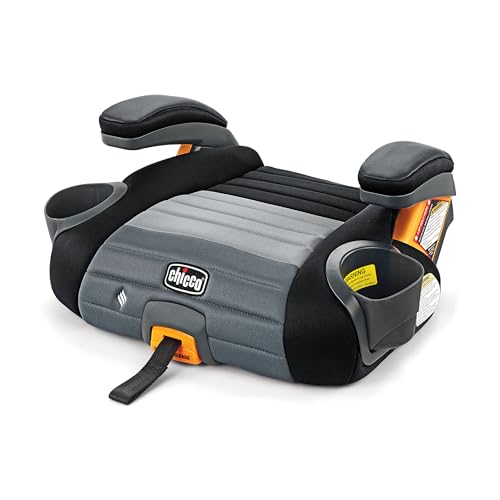
This backless booster is optimized for children who are at least 4 years old and weigh between 40 and 110 pounds. It features LATCH to stabilize the seat during entry and removal, and a quick-release design for one-hand handling. The ErgoBoost contoured seat enhances comfort for longer rides. Best for parents who value portability and quick transitions between cars. A limitation is that it relies on LATCH compatibility and may not suit all vehicle seat designs.
Britax Skyline 2-Stage Belt-Positioning Booster

The Skyline 2-Stage booster easily converts from highback to backless to extend its use as your child grows, supporting 40 to 120 pounds and up to 63 inches tall. Plush foam and built-in armrests improve comfort on longer trips. Best for families seeking a durable, long-lasting booster that adapts to growth. A potential consideration is that the two-stage design may be bulkier in smaller cars, affecting fit in tight back seats.
Buying Guide
What to consider when choosing a booster seat for 35 pounds and up:
- Weight and height range: Ensure the seat accommodates your child’s current weight and height and accommodates continued use as they grow.
- Back vs. backless preference: Highback models offer head/neck support, while backless are lighter and easier to transport.
- Installation method: Look for LATCH compatibility, or belt-positioning features, and how easily the seat installs for daily use.
- Safety features: Graco ProtectPlus, DuoGuard, or equivalent multi-crash testing can indicate enhanced protection across common crash scenarios.
- Comfort and adjustability: Armrests, headrests, and height adjustments improve long-ride comfort for kids.
- Portability: If you travel or ride in multiple cars, consider a model that’s easy to move and store.
- Maintenance: Removable, machine-washable fabrics simplify cleaning and upkeep, especially for active children.
FAQ
- What is the typical weight range for booster seats?
booster seats commonly support children from around 40 pounds up to 100 pounds, with some models extending to 120 pounds for extended use.
- Do I need a highback booster for a child over 40 pounds?
Not always. A highback booster offers head and neck support, which is beneficial if the vehicle seat back is low or if you want extra guidance for a younger rider. Backless boosters are suitable when the vehicle seat and child meet belt-positioning needs.
- How do I know if a booster is properly installed?
Ensure the seat belt lies flat and properly across the child’s shoulder and hips, the latch or belt path is secure, and there is no excessive movement of the booster itself when installed.
- What makes a booster seat “2-in-1” or “3-in-1”?
2-in-1 or 3-in-1 boosters can transform between configurations (highback, backless, and sometimes a forward-facing harness stage) to grow with a child’s needs and weight limits.
- Are flame-retardant-free materials important?
Some parents prefer fabrics without added flame retardants; many modern boosters use fabrics that meet federal flammability standards without extra chemicals. Check product specifics for each model.
- Should I prefer LATCH or seat belt installation?
LATCH can simplify secure installation in many vehicles, but you should follow the booster’s guidelines and your car’s seat belt paths for the safest fit.