Answering the common question “which bottle is best for a newborn?” this guide highlights five top newborn bottles designed to reduce gas, colic, and feeding issues, while supporting natural feeding rhythms. The picks focus on anti-colic features, easy transition between bottle and breast, and durable materials. Each product is suited for different families: some prioritize anti-colic venting, others emphasize natural latch feel or glass durability. Use the summary table to compare core benefits at a glance.
| Product | Best For | |
|---|---|---|
| Philips Avent Anti-Colic AirFree (4oz, 4 Pack) | Newborns with gas or reflux | AirFree vent helps keep nipple full of milk |
| Dr. Brown’s Natural Flow Anti-Colic Options+ (2 oz, 4 Pack) | Premature or feeding-difficulty babies | Very slow Preemie Flow nipple, anti-colic internal vent |
| Philips Avent Natural Glass (4oz, 4-Pack) | Breast-to-bottle transitions, glass lovers | Natural Response nipple, borosilicate glass |
| Tommee Tippee Natural Start (12 Piece Set) | Complete starter for transition and travel | Anti-colic venting, variety of sizes and nipples |
| Philips Avent Natural (2oz, 2 Pack) | Gentle drinkers and early breastfeeding support | Ultra-soft nipple, wide breast-shaped design |
Philips Avent Anti-Colic AirFree 4oz Bottle

Best for babies with gas and reflux. This bottle uses an AirFree vent to keep the nipple full of milk, reducing the amount of air swallowed during feeds. The vent can be used with or without the AirFree system. Best for parents seeking a straightforward, pump-friendly anti-colic option that can help upright feeding positions.
: Parents dealing with colic symptoms or spit-up, especially if you want a simple, proven venting approach without multiple components. Limitations: Some users may prefer bottles with fewer parts for cleaning.
Dr. Brown’s Natural Flow Anti-Colic Options+ Narrow Bottle
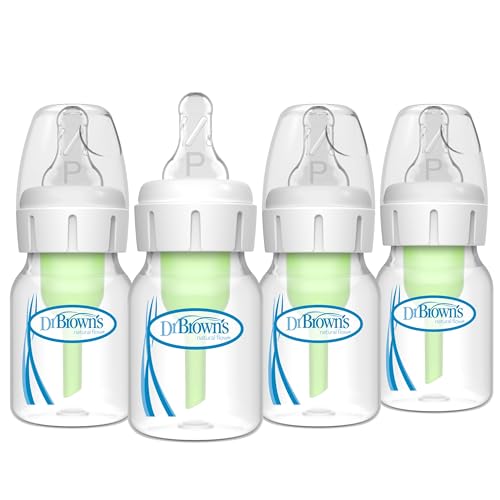
Best for preemie or feeding-difficulty babies. This set includes the Preemie Flow nipple with a very slow flow to support small stomachs and slower feeding. Its anti-colic internal vent system is clinically presented to reduce spit-up, burping, and gas, with a vacuum-free feeding design that mimics breastfeeding pace.
: Babies needing very slow flows or medical-like feeding support. Caution: More parts mean more cleaning time and assembly steps.
Philips Avent Natural Glass Bottle (4oz)

Best for parents who want a glass option with a natural-feel nipple. The borosilicate glass is heat and thermal shock resistant, and the Natural Response nipple lets babies control the pace of milk flow. This bottle is ideal for easy sterilization and long-term durability.
: Families prioritizing a glass bottle with a breast-like nipple for natural latch and easy cleaning. Caution: Glass bottles are heavier and can shatter if dropped.
Tommee Tippee Natural Start 12-Piece Set

Best for seamless breast-to-bottle transitions in a comprehensive starter kit. The Natural Start bottles feature silicone nipples designed for an anti-colic valve and a feeding feel similar to breastfeeding. The set includes different sizes, travel lids, handles, and cleaning tools for new parents.
: Families seeking a complete, travel-friendly kit for ongoing bottle feeding. Limitation: More components may require more storage space.
Philips Avent Natural Glass Bottle (2oz)

Best for tiny feeds and early breastfeeding support. This 2-ounce glass bottle uses a Natural Response nipple to mimic the breastfeeding pace and requires careful handling due to glass. It’s a compact option that pairs well with slower flow rates for delicate feeders.
: Newborns needing small-volume feeds and parents who prefer glass durability. Caution: Small capacity means more frequent refills.
Buying Guide
What to consider when choosing newborn bottles:
- Feeding goals: Anti-colic vents, slow-flow nipples, and natural latch design address different reflux and gas concerns. Choose based on your baby’s feeding pattern.
- Material preferences: Glass offers durability and easy cleaning; BPA-free plastics are lighter and more shatter-resistant. Consider your household handling needs.
- Flow rate options: Start with slower flows for newborns and adjust as baby grows. A kit with multiple nipple sizes can reduce buying multiple sets.
- Cleaning and assembly: Valve systems add cleaning steps. If you want simple cleaning, prefer fewer components with proven anti-colic features.
- Breastfeeding compatibility: Look for wide, breast-shaped nipples and natural latch designs to ease the transition between breast and bottle.
- Durability and heat tolerance: Glass bottles tolerate microwaving and sterilization well, but require careful handling; some plastics are lighter for travel but may stain over time.
Frequently Asked Questions
- What is the main difference between anti-colic and natural-flow bottles?
– Anti-colic bottles use vents or special wands to reduce air intake and gas. Natural-flow bottles aim to mimic breastfeeding pace, allowing the baby to control flow more easily. - Are glass bottles better than plastic for newborns?
– Glass is durable and easy to clean, and it doesn’t retain odors. It is heavier and can break. Plastic bottles are lighter and more travel-friendly but may require more frequent replacement if scratched or stained. - When should I switch nipple flow rates?
– Start with slow or preemie flows for newborns, then progress to medium flows as feeding becomes easier and the baby grows, following feeding cues. - Can I mix different brands within a feeding routine?
– Yes, but ensure nipples and bottle tops are compatible by size and threading. Mixing can be convenient for caregivers with multiple bottle types.