Answer: For a 7-month-old, choose bottles that support a baby-led drinking pace, reduce gas, and ease transitions to sippy cups. The top picks below are best for babies who still bottle-feed, prefer comfortable handling, and may start moving toward cups or spouts. This guide highlights five options with clear use cases: everyday feeding, anti-colic benefits, and gradual transitions to cups.
| Product | Best For | Why It Stands Out |
|---|---|---|
| Philips Avent Natural Baby Bottles (Medium Flow) 9 oz (4-Pack) | Breastfed or mixed feeding babies | Wide, breast-shaped nipple encourages natural latch and a controlled flow. |
| Philips Avent Natural Baby Bottles (Fast Flow) 11 oz (4-Pack) | Babies needing faster flow or larger feeds | Same natural rhythm with faster flow for bigger appetites. |
| Dr. Brown’s Milestones Wide-Neck Sippy Spout Bottle 9 oz (2-Pack) | Transition from bottle to sippy cup | Includes a soft silicone sippy spout and easy-grip handles for older babies. |
| NU K Learner Cup 5 oz (Pack of 2) | Beginner cup transition for 7+ months | Spill-proof with easy-grip handles; gentle on gums. |
| Lansinoh Anti-Colic Baby Bottles 8 oz (3 Count) | Reducing gas and fussiness during feeds | Air-vent technology supports comfortable feeding at a baby’s own pace. |
Philips Avent Natural Baby Bottles with Natural Response Nipples (Medium Flow, 9oz)

Brand: Philips Avent. Features: The Natural bottle supports a baby’s natural drinking rhythm, allowing milk flow when the baby actively drinks. It uses a soft, wide, breast-shaped nipple to mimic breastfeeding and ease breast-to-bottle transitions. Best for: babies who breastfeed or are being introduced to bottle feeding. Caution: The medium flow may be slower for some infants with bigger appetites, potentially requiring a faster option.
Philips Avent Natural Baby Bottles with Natural Response Nipples (Fast Flow, 11oz)
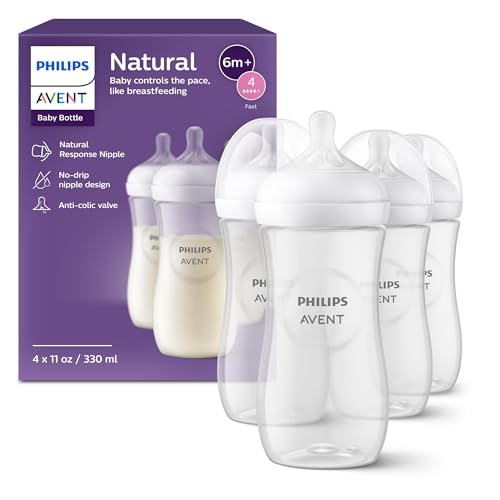
Brand: Philips Avent. Features: Supports a baby’s natural drinking rhythm with a flow that responds during active feeding. The bottle’s design reduces milk flow during pauses, aiding coordination of swallow and breath. Best for: babies who need a quicker flow as they grow. Caution: Fast flow is not ideal for very young or slow feeders without monitoring for signs of swallowing difficulty.
Dr. Brown’s Milestones Narrow Sippy Bottle (2 Pack)

Brand: Dr. Brown’s. Features: Transition from bottle nipple to a soft silicone sippy spout to teach new drinking skills. Sippy handles are easy to grip and removable to fit other bottles. Best for: babies progressing toward a sippy cup while retaining familiar bottle features. Caution: Spout compatibility depends on vent system removal for some configurations.
NUK Learner Cup (5 oz, Pack of 2)

Brand: NUK. Features: Helps transition from bottle to cup with easy-grip, anti-slip handles. Spill-proof with a soft spout for gentle gum contact. Best for: babies learning to drink from a spout without leaks. Caution: Small 5 oz capacity may require more frequent refills for longer feeding sessions.
Lansinoh Anti-Colic Bottles (8 oz, 3 Count)

Brand: Lansinoh. Features: BPA-free plastic with a clinically-proven anti-colic system. Nipple design supports a secure latch and controlled milk flow to reduce gas. Best for: babies prone to gas or fussiness during feeds. Caution: Some families may prefer glass or silicone options for temperature sensitivity or cleaning preferences.
Buying Guide: Key Considerations for 7 Month Olds
- Feeding pace and flow control: Look for nipples labeled as slow, medium, or fast flow to match the baby’s appetite and feeding rhythm.
- Transition readiness: If your child is starting to show interest in cups, consider bottles with easy grips or built-in handles to practice self-feeding.
- Anti-colic features: Bottles with venting or air-control systems can help minimize swallowed air and gas, especially during longer feeds.
- Materials and cleaning: BPA-free plastics are common; consider ease of cleaning and dishwasher compatibility. Wide-neck designs can simplify cleaning and filling.
- Grip and handling: For growing babies, wider and textured surfaces improve grip for self-feeding attempts.
- Compatibility: If using a mix of bottles, verify whether nipples and spouts are interchangeable with other brands you already own.
Frequently Asked Questions
- What flow should a 7-month-old bottle nipple have?
Answer: Many 7-month-olds use medium to fast flow depending on appetite and how well they’re coordinating sucking, swallowing, and breathing. - When should I transition from a bottle to a sippy cup?
Answer: Look for signs like interest in holding a cup, jaw strengthening, and willingness to drink from a spout. Begin with short practice sessions. - Are anti-colic bottles worth it?
Answer: Anti-colic bottles can help reduce swallowed air during feeds, which may decrease gas and fussiness in sensitive babies. - Can I mix bottle brands with sippy cups?
Answer: Yes, but check nipple compatibility and vent systems to ensure smooth transitioning without leaks or inconsistent flow. - What materials are safest for infant bottles?
Answer: BPA-free plastics are common; glass and silicone options are also available, depending on cleaning ease and temperature tolerance. - How often should I replace nipples?
Answer: Nipples should be inspected for wear, cracks, or thinning and replaced if necessary to maintain reliable flow and hygiene.