If your baby experiences gas or discomfort during feeds, choose bottles designed to minimize air and support comfortable feeding. The top picks below are best for parents seeking anti-colic features, easier venting, and a milk flow that mimics breastfeeding. These options suit new parents, caregivers juggling multiple feeds, and families seeking reliable, gas-reducing bottles for day and night use. The summary table highlights key attributes to compare quickly.
| Product | Brand | Best For | Key Benefit |
|---|---|---|---|
| Philips Avent Anti-Colic AirFree Vent (Medium Flow) | Philips Avent | Newborns and up, frequent feeders | AirFree vent keeps nipple full of milk, reducing air ingestion |
| Dr. Brown’s Natural Flow Anti-Colic Options+ Narrow (8 oz) | Dr. Brown’s | Gas-prone babies needing consistent flow | Vacuum-free feeding with internal vent preserves nutrients |
| Philips Avent Anti-Colic Slow Flow (4 oz) | Philips Avent | Breastfed babies or combo feeders | Vent helps keep nipple full of milk for upright feeding |
| Dr. Brown’s Anti-Colic Wide-Neck (5 oz) | Dr. Brown’s | Small to medium feeds, babies needing steady flow | Internal vent system reduces colic and gas |
| Philips Avent Natural Glass Bottle (4 oz) | Philips Avent | Caregivers preferring glass and easy breast-to-bottle switch | Mimics natural breast feeding with wide, breast-shaped nipple |
Note: The table is for quick comparison. Each product links to the official listing for full details.
Philips Avent Anti-Colic AirFree Vent, Medium Flow

Designed to reduce feeding issues such as gas and reflux, this bottle features the AirFree vent that keeps the nipple full of milk rather than air. Best for babies who gulp too much air during feeds or parents who want a simple, effective venting solution. Best for new or returning-to-work parents who need reliable, easy feeding. Caution: Some users may prefer a different flow for very fast feeders; ensure the flow matches your baby’s pace.
Dr. Brown’s Natural Flow Anti-Colic Options+ Narrow (8 oz)

Anti-colic bottle that reduces spit-up, burping, and gas. Vacuum-free feeding is closest to breastfeeding, with a consistent flow that adapts to your baby’s pace. The vent system helps preserve milk nutrients. Best for babies who experience gas from flow issues or vent air. Limitation: Cleaning all vent components can require more effort than simpler designs.
Philips Avent Anti-Colic Slow Flow (4 oz)

Designed to reduce colic and gas, the AirFree vent helps keep the nipple full of milk. Suited for upright feeding and babies who benefit from slow flow to mimic breastfeeding. Best for newborns or early-month feeding transitions. Caution: Some babies may require a slightly faster flow as they grow; monitor pace and adjust as needed.
Dr. Brown’s Anti-Colic Wide-Neck (5 oz)
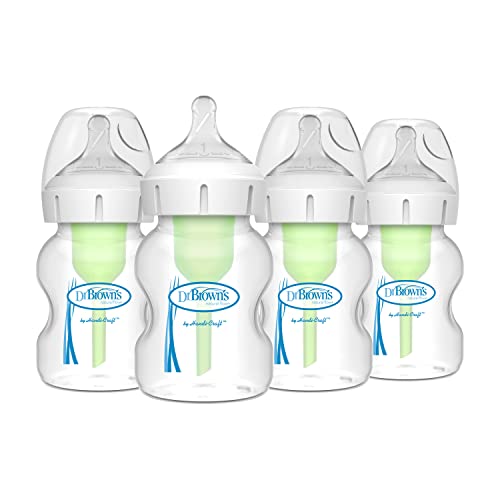
Anti-colic internal vent system reduces gas and spit-up. The wide neck aids cleaning and allows a comfortable grip for caregivers. Best for babies who benefit from a steady, predictable flow. Limitation: The internal vent requires regular cleaning to maintain performance. Choose this if you want a robust venting solution with a wide mouth.
Dr. Brown’s Anti-Colic Wide-Neck Dino Decos (9 oz)

Anti-colic bottle with a Dino Decos design for visual appeal and a Level 1 slow flow nipple. Best for toddlers transitioning from formula or breast milk to a bottle while minimizing gas. Choose this if you want a fun design with the same venting and flow benefits. Limitation: Theme design may appeal more to some babies than others.
Philips Avent Natural Glass (4 oz)

Glass bottle with a natural response nipple that allows the baby to control the pace of milk flow. Premium borosilicate glass is BPA-free and resistant to heat and thermal shock. Best for caregivers who prefer glass and intend to mix feeding methods. Caution: Glass bottles require careful handling to avoid breakage.
Philips Avent Natural Baby Bottles (4 oz)

Natural bottle designed to support a baby’s natural drinking rhythm. The nipple opens when baby drinks and pauses when they swallow, helping to coordinate feeding with breathing. Best for parents seeking a breast-like feeding experience to ease bottle transitions. Limitation: Some babies may prefer softer or firmer nipples; consider flow compatibility.
Buying Guide
What features matter most for gassy babies?
- Vent design: Internal vents or air-free systems reduce air intake and gas buildup.
- Flow rate: Slow to medium flow nipples help babies feed at a comfortable pace and emulate breastfeeding.
- Material: Glass bottles won’t retain odors and are easy to clean, though they require careful handling; plastic options are lighter and less prone to breakage.
- Maintenance: Bottles with extra vent components require thorough cleaning to maintain performance.
- Compatibility: Consider whether you want to mix breast milk and formula and how the nipple shape matches your baby’s latch.
How to choose among these bottles?
- Best for minimizing gas overall: bottles with proven anti-colic vents (e.g., AirFree or internal vent systems).
- Best for glass lovers: Philips Avent Natural Glass offers durability without sacrificing a breast-like feeding feel.
- Best for easy cleaning: Wide-neck designs and fewer pieces reduce cleaning time, though some models include internal vents that need attention.
- Best for transitioning between breast and bottle: Natural or breast-shaped nipples better mimic breastfeeding and ease switching.
Frequently Asked Questions
- What bottle helps reduce gas in babies?
– Bottles with internal anti-colic vents or AirFree technology are commonly recommended to reduce air intake and gas buildup. - Is glass better than plastic for gassy babies?
– Glass is easier to clean and does not retain odors, but it is heavier and more fragile; plastic is lighter but may retain odors over time. - Do slow-flow nipples help with colic?
– A slower flow can prevent swallowing too much air and help a baby feed at a comfortable pace, potentially reducing gas. - Can I mix bottle brands for one baby?
– Yes, but ensure compatible nipple shapes and flow rates to maintain a consistent feeding rhythm for your baby. - What maintenance do anti-colic bottles require?
– Regular cleaning of valves or vents is essential to prevent milk residue buildup that could affect performance. - Are these bottles BPA-free?
– Most choices listed are BPA-free; verify the specific model’s material safety in the product details.