Choosing a car seat that pivots can make buckling and unbuckling easier for parents and caregivers, especially in tight back seats. This guide highlights pivot-friendly and rotating car seats that fit a modern American family’s needs, focusing on safety, adaptability, and ease of use. Below you’ll find five top options with rotating or modular designs, followed by a practical buying guide to help you compare features like installation, weight limits, and compatibility with strollers.
| Product | Brand | Rotation/Pivot Feature | Key Benefit |
|---|---|---|---|
| Graco EasyTurn 360 | Graco | 360° rotation with one hand | Eases getting baby in and out |
| Evenflo REO by Revolve360 | Evenflo | 360° rotation for infant to toddler | One-handed transitions, space-saving |
| Graco Extend2Fit Convertible | Graco | Not pivoting; extended legroom panel | Long rear-facing use for safety |
| Graco Slimfit 3-in-1 Convertible | Graco | Non-rotating; compact design | Slim profile saves back-seat space |
| Evenflo Pivot Modular Travel System with LiteMax | Evenflo | Modular frame; stroller and seat integration | Versatile for growing families |
The following product sections provide more detail on each option, including how a pivoting or modular system can help daily use, installation considerations, and what to expect in real-world scenarios.
Graco Slimfit 3-in-1 Convertible Car Seat

Graco Slimfit 3-in-1 is designed to grow with a child from rear-facing through forward-facing to a highback booster, with a slim profile that helps when the back seat is crowded. While it does not offer a rotating base, its compact footprint is especially helpful in SUVs and compact cars where space is a premium. The seat supports rear-facing from 5 to 40 lb and forward-facing from 26.5 to 65 lb, and includes a 10-position headrest to accommodate growing kids. The dual integrated cup holders rotate away when not needed, maximizing back-seat space without compromising safety.
Graco Extend2Fit Convertible Car Seat

Graco Extend2Fit offers a 4-position adjustable extension panel that provides up to 5 inches of extra legroom, allowing a child to ride rear-facing longer for enhanced safety. This model transitions from rear-facing harness (4–50 lb) to forward-facing harness (26.5–65 lb), with an emphasis on extending rear-facing time. It does not rotate, but the extension panel is a practical feature for families prioritizing legroom and comfort on longer trips, especially for infants who start with smaller distances between the car seat and the vehicle’s seatback.
Graco EasyTurn 360 2-in-1 Convertible Car Seat
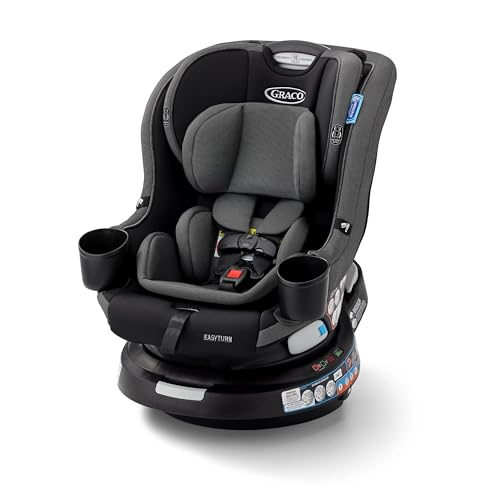
Graco EasyTurn 360 is a rotating car seat designed to switch between rear-facing and forward-facing with a simple, one-handed turn. It features two modes of use: rear-facing from 4–40 lb and forward-facing from 26.5–65 lb. The 360° rotation reduces reaching and bending, making the installation and daily use more convenient for caregivers. Its slim design also helps maximize back-seat space for additional passengers or cargo while keeping a secure, traditional harness system in place.
Evenflo Pivot Modular Travel System with LiteMax Infant Car Seat
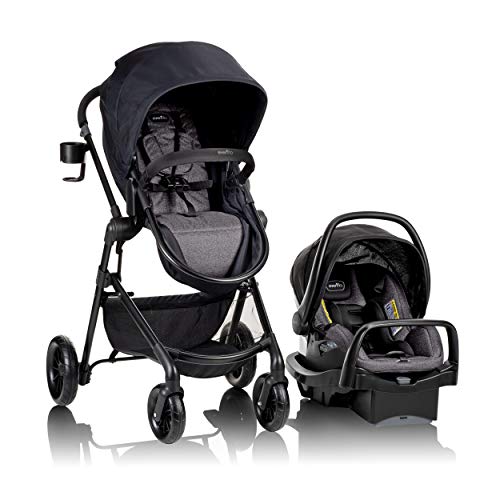
Evenflo Pivot Modular Travel System combines a modular frame with six modes, allowing you to configure for infant car seat use or convert to a toddler seat and stroller arrangement. While its rotating functionality is primarily in the stroller-to-seat transitions and modular setup rather than a fully rotating car seat, the system is designed for flexible swiveling between modes, providing ease of access and adaptability for growing families. The LiteMax infant seat supports babies from 3 to 30 lb and 15.7 to 32 inches, with a compact footprint to help maximize rear-seat space.
Evenflo REO by Revolve360 Rotating 2-in-1 Car Seat

Evenflo REO by Revolve360 is a rotating 2-in-1 convertible car seat designed to rotate a full 360 degrees for easy in-and-out access. It supports both infant and toddler configurations, transitioning from rear-facing to forward-facing as the child grows. A compact 17-inch wide footprint helps preserve back-seat space, and the one-time LATCH installation with secure hooks aims to simplify setup. This option emphasizes ease of movement, particularly in vehicles where space is tight or frequent seat adjustments are needed.
Buying Guide: Pivoting Car Seats And Rotating Systems
- Rotation vs. modular design: Understand whether you need a seat that truly rotates (360 degrees) or a modular travel system that provides flexible configurations with a separate stroller or seat base. Rotation can simplify entry and exit, while modular systems offer adaptability across stages of growth.
- Weight and height limits: Check rear-facing and forward-facing weight ranges. Many seats extend their use by allowing longer rear-facing use, which is a critical safety factor in early years.
- Installation method: Some seats use LATCH, others rely on seat belts. Rotating seats may require careful alignment to ensure the rotation mechanism remains secure and for the base to be properly anchored.
- Space considerations: A rotating seat can save space by making it easier to access the child from the curb side; however, ensure the vehicle’s back seat width accommodates the seat’s footprint especially when paired with a second seat or booster.
- Ease of use: Features like one-handed rotation, intuitive “click” confirmations, and easy-to-clean fabric can influence day-to-day usability for busy families.
- SAFETY standards: Look for seats engineered to meet or exceed current safety standards and include features like side-impact protection and robust crash testing as part of the overall design.
- Compatibility with strollers: If you’re shopping a travel system, verify compatibility between the car seat and stroller, including transition ease and harness compatibility.
- Maintenance: Removable covers and easy-to-clean fabrics are practical for messier journeys; verify washing instructions and warranty terms.
When evaluating pivoting options, balance the convenience of rotation with the seat’s safety features, installation requirements, and vehicle fit. Real-world use often hinges on how easily a caregiver can load or unload a child in regular daily routines, from school drops to road trips.