Door bouncers for babies provide a compact, doorway-based activity that helps develop leg strength, balance, and motor coordination. This guide highlights five secure, easy-to-use options ideal for parents seeking simple, tool-free installation and age-appropriate use. Best for busy households, travel-ready setups, and indoor play sessions. Each product section explains who it’s best for, why it was selected, and a practical caution to consider before purchase.
Below is a quick buying snapshot to compare top picks at a glance:
| Product | Best For | Key Benefit | Limitations |
|---|---|---|---|
| Bright Starts Playful Parade Door Jumper | First-time jumpers, 6 months+ | Compact, tool-free clamp-and-go setup | Door frame must meet thickness specs |
| Bright Starts Bounce ‘n Spring Deluxe | Little ones who can sit up, 6 months+ | Easy storage and quick setup | Similar frame thickness requirements |
| Bright Starts Purple Paradise Door Jumper | Travel-friendly, growing infants | Height-adjustable, sturdy construction | Door frame compatibility still matters |
| Slevoo Baby Jumper | Older infants near walking age | Wide height range, adjustable strap | Follow frame measurements precisely |
| Jolly Jumper Iconic | Longevity with growing babies | Adjustable height for continued use | Doorway must support weight and size |
Bright Starts Playful Parade Door Jumper
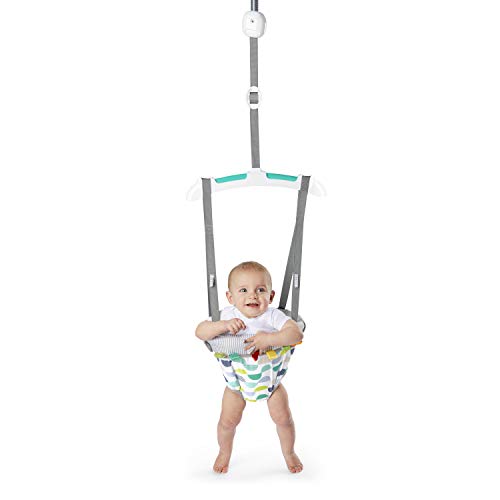
This jumpers’ compact design and tool-free clamp make setup quick for interior door frames. It’s best for babies who can sit up independently around 6 months and weigh under 26 pounds. The model emphasizes a secure center-door placement to maximize safety during bouncing.
Best for: Families needing a straightforward, space-saving option for first-time users. Why selected: it combines simple installation with predictable use in typical door frames. Caution: ensure proper centering in a compatible doorway to prevent slips.
Bright Starts Bounce ‘n Spring Deluxe Door Jumper

Similar to other Bright Starts models, this door jumper focuses on easy, clamp-and-go setup suitable for interior doors. It’s ideal for babies who can sit upright by six months and stay under 26 pounds. The adaptable design supports quick transitions for multiple rooms.
Best for: Parents who value compact storage and minimal assembly. Why selected: consistent performance with quick removal when not in use. Caution: verify door frame thickness and center alignment prior to use.
Bright Starts Purple Paradise Door Jumper

This model emphasizes an adjustable height design and a compact doorway setup. It’s best for babies who can sit up around six months and weigh under 26 pounds. A travel-friendly configuration makes it suitable for families on the go, with a focus on safe, center-door mounting.
Best for: Travel-ready households needing a height-flexible option. Why selected: helps support core development through adjustable positioning. Caution: ensure the doorway is securely centered and within the recommended thickness range.
Infant Master Baby Doorway Jumper

Designed for stability with a sturdy doorframe clamp, this jumper offers a durable seat bag that supports upright posture as babies develop. It accommodates babies under 24 months or up to 35 pounds, with an adjustable strap and a breathable seat bag for comfort.
Best for: Parents seeking a robust, long-term option as babies approach walking age. Why selected: strong construction and adaptable height provide ongoing use. Caution: follow weight and age guidance to prevent overstretching or strain.
Slevoo Baby Jumper
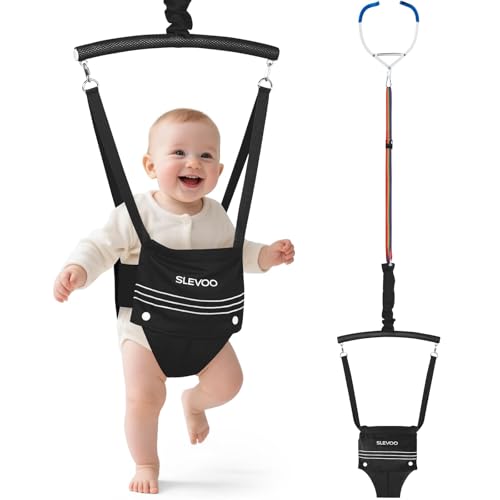
Designed for doorframes within specific height and thickness ranges, this jumper strengthens legs and coordination. It targets babies around 6 months up to approximately 16 kg (35.2 lb) with a 15-20 minute recommended play window under supervision.
Best for: Families with taller ceiling or frame considerations requiring height-specific setups. Why selected: clear guidance on fit and safe usage. Caution: measure your doorway accurately to avoid slippage or improper fit.
Jolly Jumper Iconic

This classic doorway jumper offers long-standing popularity with a saddle seat and adjustable height to accommodate babies from about three months to walking age, up to 28 pounds. It provides spring-loaded movement that keeps babies engaged indoors.
Best for: Parents seeking a time-tested option with durable design. Why selected: enduring use and adjustable height help babies progress. Caution: ensure the doorway supports weight limits and that the setup is centered for safety.
Buying Guide
What to look for when choosing a door jumper
- Age and weight range: Check that the jumper supports your child’s current weight and age, and that they can sit up unaided if required by the model.
- Door frame compatibility: Measure wall thickness and trim margins to confirm a proper fit in interior doorways. Most jumpers are designed for standard frames; mismatches can cause instability.
- Safety features: Look for secure clamps, adjustable straps, breathable seat materials, and sturdy springs. Ensure there is no pinching risk and that the product centers in the door.
- Adjustability and growth: Height-adjustable designs help accommodate growth and different ceiling heights, enabling longer use as babies get taller.
- Portability and storage: If space is a concern, choose a compact model that folds or stores easily between uses.
Usage guidelines and safety notes
- Always supervise babies during use and limit play time per the manufacturer’s guidance. Avoid continuous use that could lead to fatigue or overstimulation.
- Use only on interior door frames that meet the specified dimensions and are free of damage or loose trim.
- Position the jumper in the center of the door to maintain stability and prevent tipping or detachment.
- Regularly inspect straps, fasteners, and springs for wear and replace if any signs of damage appear.
What makes a door jumper a good buy?
- Reliable construction and secure mounting to reduce safety concerns during active play.
- Clear instructions and compatible frame requirements to avoid installation issues.
- Balanced price-to-feature ratio, with models offering growth features and compact design for small spaces.
Common questions
- Are door jumpers safe for all door types? They work best on interior frames that meet the manufacturer’s specifications and are free from damage.
- Can a door jumper replace floor play? No, it complements floor play by providing isolated, supervised bouncing as part of a broader activity routine.
- What age should I stop using a door jumper? Use is typically limited to babies who can sit up on their own and within the product’s stated weight limit, often up to around 26-35 pounds depending on model.
- Do all door jumpers require tools? Many models advertise tool-free installation, but always verify the setup steps in the manual.
Choosing the right door jumper involves matching the baby’s size and developmental stage with a frame-compatible, safely constructed product. The five options highlighted here combine core features like adjustable height, quick setup, and secure centering to support early movement and play while staying within practical household constraints.