Looking for a fabric softener that’s gentle enough for baby clothing and safe for sensitive skin? This guide highlights five baby-friendly fabric softeners with hypoallergenic or naturally derived formulas. The selections are ideal for parents seeking mild, fragrance-light options or plant-based ingredients. Best for newborns, toddlers with sensitive skin, and families prioritizing gentle, dermatologist-tested formulas.
| Product | Brand | Load Size | Key Benefit |
|---|---|---|---|
| Downy Free & Gentle Liquid Fabric Softener | Downy | 150–190 loads | Hypoallergenic, dye- and perfume-free |
| Downy Free & Gentle Liquid Fabric Softener | Downy | 111 loads | Hypoallergenic, dye- and perfume-free |
| ATTITUDE Baby Fabric Softener (Unscented) | ATTITUDE | 40 loads | 98% natural-origin ingredients, unscented |
| ATTITUDE Baby Fabric Softener (Sweet Lullaby) | ATTITUDE | 40 loads | Plant- and mineral-based, dermatologist tested |
| Noodle & Boo Baby Fabric Softener | Noodle & Boo | — | Hypoallergenic, pediatrician-tested |
Downy Free & Gentle Liquid Fabric Softener (140 fl oz)
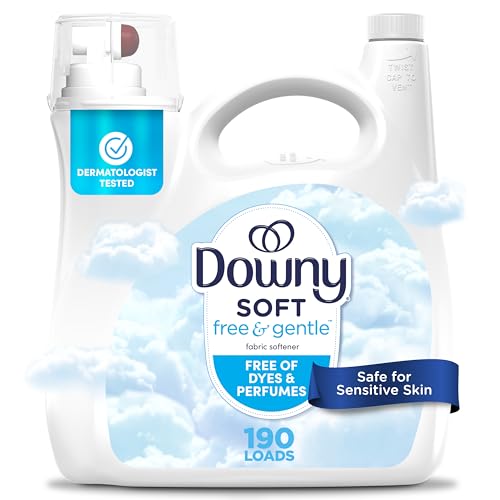
Best for: Families seeking a large, dye- and perfume-free option. This hypoallergenic formula is dermatology-tested and gentle on sensitive skin. Use in the fabric softener dispenser or directly into the washer’s drum as directed.
Why chosen: It offers a generous 140 fluid ounces and a no-dye, no-perfume formula, reducing the risk of irritation on baby skin while keeping fabrics soft. Caution: While fragrance-free, always test on a small fabric patch if you have a known sensitivity.
Downy Free & Gentle Liquid Fabric Softener (111 fl oz)
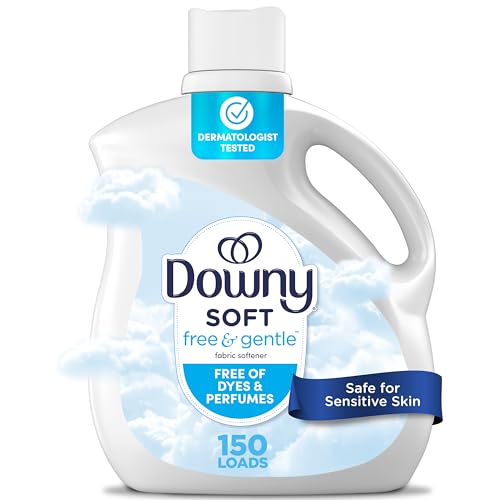
Best for: Parents needing a reliable, hypoallergenic softener in a mid-size bottle. Dermatologist-tested and free of dyes and perfumes.
Why chosen: This option emphasizes skin-friendly care with a clear focus on sensitive noses. Better for smaller households or while traveling with baby clothes. Caution: Check washer compatibility when dosing in smaller machines to avoid over-dosing.
ATTITUDE Baby Fabric Softener (Unscented)

Best for: Parents seeking a naturally derived, unscented option with plant- and mineral-origin ingredients. Suitable for babies with sensitive noses or daily use.
Why chosen: Made with ≥ 98% naturally sourced ingredients and designed to be gentle and fragrance-free, reducing irritants on delicate fabrics. Caution: Unscented formulas may be preferred, but some households may still miss a light fragrance after wash.
ATTITUDE Baby Fabric Softener (Sweet Lullaby)

Best for: Families wanting a plant- and mineral-based softener with a family-friendly scent option. Great for daily baby laundry with a gentle aroma.
Why chosen: The Sweet Lullaby variant provides a gentle scent while maintaining plant-based ingredients and dermatologist testing. Caution: If your baby or household is fragrance-sensitive, consider unscented options first.
Noodle & Boo Baby Laundry Essentials Ultra-Soft Fabric Conditioner

Best for: Parents seeking pediatrician-tested, hypoallergenic care with a mild fragrance. Aimed at preserving baby garment softness and reducing static.
Why chosen: Specifically marketed for babies, it uses naturally derived softening oils and a gentle scent, designed to minimize drying time and wrinkles. Caution: Availability may vary; verify compatible dosing for your washer.
Buying Guide
What to look for in a baby fabric softener
- Hypoallergenic and dermatologist-tested formulas reduce potential irritation on sensitive skin.
- Unscented or lightly scented options help parents choose based on baby noses and sensitivities.
- Plant- or mineral-based ingredients can be gentler on fabrics and the environment.
- Compatibility with your washing machine and dosing instructions ensure safe use and optimal softness.
Choosing by baby needs
- Newborns and toddlers with eczema or sensitive skin: prioritize unscented, dye-free formulas such as ATTITUDE Unscented or Downy Free & Gentle in fragrance-free variants.
- Households seeking natural options: consider ATTITUDE Sweet Lullaby or Noodle & Boo with pediatrician-aligned formulas.
- Large households or frequent loads: a high-capacity option like Downy 140 oz offers long-term convenience without sacrificing gentleness.
How to use baby fabric softeners safely
- Follow manufacturer dosing, dispensing into the washer drawer or directly into the agitator as instructed by your machine.
- Do a patch test on a small fabric area if you’re introducing a new product to your baby’s clothes.
- Avoid over-applying to prevent residue on fabrics that touch baby skin.
Frequently Asked Questions
- Can baby fabric softeners be used on all fabrics?
– Most are safe for cotton and blends; check fabric care labels and test on a small patch if unsure. - Are unscented options better for babies?
– Yes, unscented or fragrance-free formulas minimize potential irritation and nasal irritation for sensitive babies. - Do plant-based fabric softeners work as well as traditional ones?
– They typically soften and reduce static effectively while using natural-origin ingredients. - Is it necessary to avoid fabric softeners altogether for newborns?
– Not necessarily; choose hypoallergenic and fragrance-free formulas and monitor baby skin for any reaction. - Should I use a fabric softener with Dreft detergent?
– Pairing appropriate hypoallergenic softeners with baby detergents can improve softness; avoid excessive fragrances if sensitive.