Ask for the best tools to teach lactation techniques, hand expression, and breast massage? This guide highlights five realistic breast models and forms suitable for educators, clinicians, and individuals preparing for breastfeeding or caregiving. Each selection is evaluated for suitability, realism, and practical use in teaching sessions, clinics, and home practice. Whether you’re an IBCLC, midwife, nursing student, or someone practicing breast massage techniques, these options offer clear advantages and practical limits to consider as you choose.
Overview of top picks:
| Product | Best For | Why It Stands Out |
|---|---|---|
| KAROLSIMOS Lactation Model | Educational settings, clinical demonstrations | Realistic milk expression, soft silicone skin |
| SimCoach Lactation Model | Hands-on lactation teaching | High-simulated texture for practical skills |
| MedEduQuest Lactation Model (Left) | Massage techniques and secrete-feedback practice | Syringe-connected feedback for authentic feeling |
| Crochet Breasts | Classroom teaching and skill-building | Lightweight, easy to grip, tactile practice |
| BELAPEACH Strap On Forms | Prosthesis and cosplay/light daily wear | Ultra-realistic with discreet integration |
KAROLSIMOS Lactation Model With Realistic Milk Expression

This lactation model includes a built-in liquid reservoir to simulate milk flow. It is designed for teaching hand expression, the C-hold, and the let-down reflex. Best for lactation consultants, midwives, and nurses who need a reliable demonstration tool in clinics or prenatal classes. The model uses premium soft silicone skin to mimic real tissue texture, aiding practice of deep latching and proper flange positioning. A potential limitation is that the realism depends on trained demonstrations for maximum accuracy.
Who it’s best for: IBCLCs, hospital lactation teams, and nursing educators who want a lifelike demonstration of milk expression and relief techniques. Why chosen: its integrated milk-flow feature and silicone feel closely resemble real breasts, improving transfer of skills from model to patient care.
Caution: Handle with care to avoid tearing the silicone and ensure the reservoir is kept clean between sessions.
SimCoach Lactation Breast Model

This model emphasizes a highly simulated texture close to real breast tissue, supporting hands-on lactation education and practical teaching scenarios. It is ideal for class demonstrations and practicing lactation techniques in a controlled setting. The silicone-based material provides tactile feedback that can help students learn massage, massage sequencing, and positioning for latch-related exercises.
Who it’s best for: nursing students, lactation interns, and educators needing a tactile, realistic breast model for demonstrations. Why chosen: its emphasis on hands-on learning helps learners gain confidence in real-world breast care and massage techniques.
Caution: The texture realism means it may require careful upkeep to maintain its look and feel with frequent handling.
MedEduQuest Lactation Model (Left)

This model is designed to simulate breastfeeding massage techniques with an attached syringe-like mechanism to mimic milk secretion. It provides immediate feedback on massage technique and can be used for prenatal classes and clinical instruction. Made with silicone to resemble real tissue and latex-free materials to reduce allergy concerns. It’s best for users focusing on massage sequences and how proper technique affects secretion.
Who it’s best for: educators teaching massage-based breastfeeding techniques, lactation consultants, and prenatal instructors. Why chosen: the built-in feedback mechanism adds realism to massage practice and technique refinement.
Caution: The syringe connection should be checked to ensure it functions properly and does not leak during demonstrations.
Crochet Breasts – Crochet Lactation Model
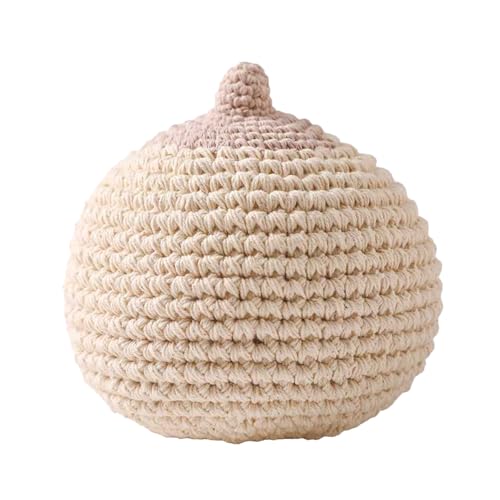
These crochet breasts provide a realistic shape and tactile feel through hand-woven design. They are lightweight and easy to grasp, making them a practical option for beginner learners and classroom exercises that focus on hand coordination and breast positioning. While less medical-grade than silicone models, they offer a creative, low-cost way to practice positioning and comfort cues during breastfeeding education.
Who it’s best for: educators teaching basic breastfeeding positions, nursing students, and classrooms that value durable, low-cost teaching aids. Why chosen: the simple, tactile design supports early skill development in a non-intimidating format.
Caution: May not accurately reflect silicone-like texture or precise anatomy; use as a supplementary teaching tool rather than the sole model for clinical techniques.
BELAPEACH Strap On Silicone Breast Forms

These strap-on silicone breast forms are designed as prosthetic forms for crossdresser, transgender cosplay, or post-mastectomy use. They mimic natural shape with a soft touch and thin edges to blend with the skin. They can be used for demonstrations of form-fitting techniques, prosthetic care, and non-medical education about breast appearance and fit. Best for: situations requiring realistic appearance and movement in non-clinical settings. Limitation: not intended as a medical training aid for lactation or milk expression; use accordingly.
Who it’s best for: individuals exploring cosmetic or prosthetic breast options, educators introducing the concept of prosthetics in broader anatomy education. Why chosen: offers an ultra-realistic external look and feel for visual demonstrations and cosplay contexts.
Caution: Ensure proper sizing and comfort, as fit may vary by user and garment compatibility.
Buying Guide: Key Considerations For Selecting a Feeding Education Model
- Realism vs. purpose: Choose silicone-based models for realism in massage and latch demonstration; crochet or non-silicone options work well for introductory practice and classroom activities.
- Medical use vs. cosplay or education: Separate prosthetic forms from lactation training tools to avoid confusion; use each for its intended context.
- Maintenance: Consider cleaning requirements, reservoir cleaning, and repair needs. Silicone models typically resist repeated cleaning well, while crochet models may require gentle handling.
- Audience and setting: For clinical classrooms or hospital rounds, prioritize models with accurate anatomy and feedback features. For beginner workshops, simpler designs reduce intimidation.
- Allergy considerations: Look for latex-free options to reduce allergy risk; most silicone models are latex-free, but always verify materials.
- Portability and storage: Lightweight models with compact footprints are easier to transport between classrooms and clinics.
FAQ
- What is the main difference between silicone and crochet breast models?
Silicone models offer higher realism in texture and range of motion, while crochet models are lighter, more affordable, and easier to grasp for beginners. - Which model is best for teaching milk expression?
The KAROLSIMOS Lactation Model features a built-in reservoir to simulate milk flow, making it a strong choice for expression demonstrations. - Are these models safe for repeated use in clinical settings?
Most models use medical-grade silicone and latex-free materials designed for repeated training sessions when properly maintained. - Can these aids be used for non-clinical education and cosplay?
Yes, several options like the BELAPEACH forms offer realistic appearance for visual demonstrations and cosplay contexts but are not intended for lactation training. - How should I clean and store silicone lactation models?
Follow manufacturer guidance; generally, clean with mild soap and warm water, dry completely, and store away from direct sunlight to preserve silicone integrity. - What should I consider when choosing among these products?
Assess realism, intended use (clinical demonstration vs. classroom teaching), maintenance, and material safety to match your training goals.