Finding the right feeding cup for a newborn can be challenging. This guide highlights five dependable options that suit different feeding needs, from milk collection to transitional cups for open drinking. Whether you’re seeking silicone safety, measurement marks, or spill-proof design, these picks help caregivers choose the best fit for newborns and growing babies. The buyers below are best for parents seeking safe materials, leak resistance, and easy cleaning. Tables summarize each product’s key details for quick comparison.
| Product | Best For | Notes |
|---|---|---|
| Maymom Baby Feeding Cup, 1 oz, 4 Count | Milk collection and small-dose feeding | Smallest increments, BPA/DEHP free |
| Maymom Baby Feeding Cup, 1 oz, 6 Count | Multiple cups for ongoing feeds | Re-usable after proper washing; clear increments |
| ezpz Tiny Cup (Sage) – 4 months+ | Beginner open-cup drinking | Silicone, designed by a pediatric feeding specialist |
| Olababy First Cup | 2 oz Silicone | Clear view for monitoring intake | Non-slip, 100% silicone, measuring aid |
| haakaa Silicone Measuring & Feeding Lidded Cup | Colostrum collection and storage | Pre-sterilized, 25 ml capacity |
Maymom Baby Feeding Cup, 1 oz, 4 Count

Clear, small-volume feeding cups designed for first milk collection. Made from food-contact grade PP, BPA and DEHP free, and suitable for boiling water cleaning. The round bottom helps measure tiny volumes down to 1 mL, while a special spout minimizes dripping. Best for caregivers who need precise small-dose collection or early milk transfer. Limitation: larger pours require multiple cups to collect more milk in one session.
Maymom Baby Feeding Cup, 1 oz, 6 Count

Six identical cups provide a handy supply for milk collection or dosing. Features include a 1 oz measurement, BPA and DEHP free materials, and reusability after proper washing. The built-in increments help caregivers track baby intake across feeds. Best for families who prefer multiple cups on hand or longer pumping sessions. Caution: avoid prolonged boiling if cup material is not explicitly rated for repeated high-heat exposure.
Maymom Drinking & Infant Feeding Cup Set
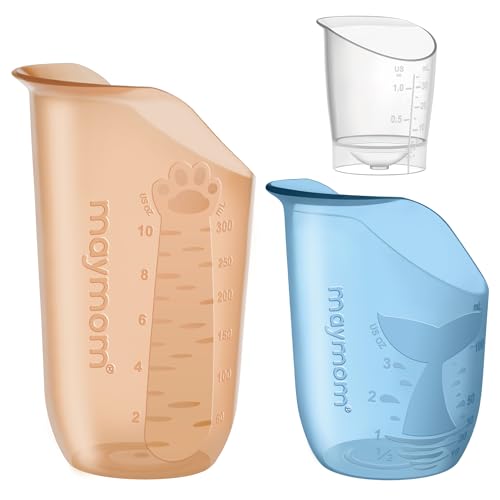
All-in-one 3-piece set includes a 1 oz cup, a 3 oz nosey cup, and a 10 oz nosey cup. It covers needs from newborn feeding to older infants and even dysphagia rehabilitation. Best for households seeking versatility in one product line. Limitation: the nosey cups require careful handling to avoid spills during transitions and storage.
Olababy First Cup | 2 oz Silicone

2 oz clear silicone cup with a sloped design for better visibility of liquid and easy handling by little hands. Made from high-purity silicone, BPA, PVC, lead, and phthalate free. Best for parents wanting a see-through cup that supports monitoring intake and reduces overfeeding. Caution: some users may prefer a more rigid cup for ultra-young infants who require highly controlled feeding.
haakaa Silicone Measuring & Feeding Lidded Cup

Pre-sterilized, 25 ml capacity cup designed for colostrum collection, storage, and direct feeding. The tilted base helps gather every drop, allowing precise measurement and reduced waste. Best for early postnatal feeding and storage. Limitation: its primary use is collection and storage; frequent direct feeding with this cup may require additional cups or adapters for larger feeds.
ezpz Tiny Cup (Sage) – 4 months+
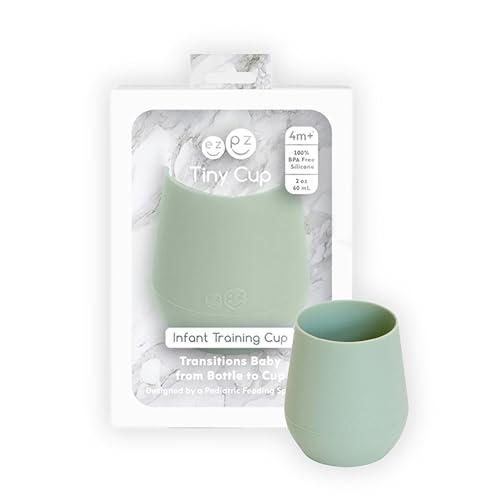
Open-cup silicone training cup designed by a pediatric feeding specialist. Its interior angle promotes a smooth, even flow and a non-slip grip helps babies bring liquid to the mouth. Best for transitioning from bottle to cup and supporting early speech and oral development. Caution: open-cup design requires supervision to prevent spills and choking risks in very young infants.
ezpz Tiny Cup (Sage/Olive) – 4 months+
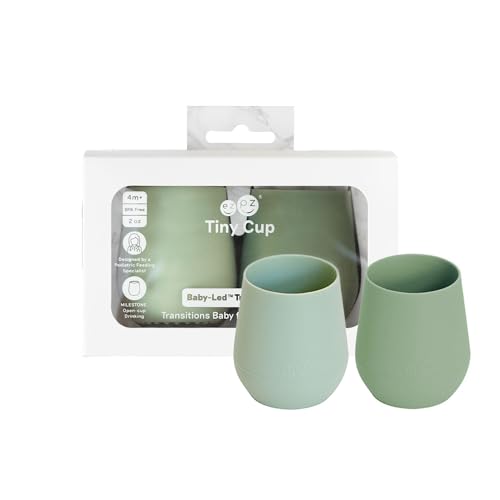
Stylish, silicone Tiny Cup variant designed for tiny mouths and hands with a non-slip grip. The angled interior supports a steady flow and reduces tipping. Best for families pursuing baby-led weaning and open-cup drinking. Limitation: the open design may require more careful cleaning and supervision during early use.
Buying Guide: What To Consider When Choosing a Newborn Feeding Cup
Open vs. closed design: Open cups promote oral development but require supervision and stability features. Closed cups with measurement marks help track intake but may restrict sipping as babies grow.
Material safety: Look for BPA and DEHP-free materials. Silicone offers flexibility and grip; polypropylene cups are lightweight and easy to clean.
Capacity and increments: Small-volume cups (about 1 oz or 30 mL) are ideal for milk collection and precise dosing. Larger cups allow more milk or liquid to be held before feeding.
Cleanability: Cups that withstand boiling or high-temperature cleaning reduce contamination risk. Check for dishwasher safety and lid seals where applicable.
Versatility: Some sets cover newborns through older infants or adult hydration, which can simplify purchasing decisions over time.
Frequently Asked Questions
- What is the best cup for collecting colostrum? haakaa silicone cups are designed for colostrum collection, storage, and feeding, with a see-through design to monitor yield.
- Are silicone cups safer than plastic for newborn feeding? Silicone is generally durable, has fewer leach concerns, and is easy to clean, but ensure it is food-grade and BPA-free.
- Should I choose an open-cup or a sealed cup for a newborn? Open cups support development and transition but require supervision; sealed or spouted cups reduce spills and help when precise dosing is needed.
- Can I use these cups for older babies? Yes, many of these cups are suitable for transitioning to toddler stages, but always observe age-appropriate use and supervision.
- Is a multi-pack better than buying single cups? Multi-packs reduce replacement frequency and offer backups for busy feeds, but choose based on your cleaning routine and storage space.
- What should I consider regarding cleaning and sterilization? Choose cups rated for boiling water or dishwasher use, and follow manufacturer guidance for sterilization to maintain hygiene.