Answering the search for convenient, flushable liner options for cloth diapers, this guide highlights five top products. These liners are designed to stay dry next to baby’s skin, trap solids, and allow moisture to pass through for easier laundering. Best for busy caregivers, eco-conscious families, and parents seeking quick cleanups without constant rinsing. The table below compares key points to help you decide at a glance.
| Product | Best For | Notes |
|---|---|---|
| ALVABABY Diaper Liners (1 Roll, 400 Sheets) | Budget-conscious households needing bulk sheets | 100% bamboo rayon; tearable; cut for smaller babies |
| OsoCozy Flushable Diaper Liners | Simple disposal, quick changes | Stay-dry, flushable; best for older plumbing with caution |
| BlueSnail Rayon Unscented Liners (4PK, 400 Count) | Low-fragrance option with high quantity | 12″ x 7.5″ size; fragrance-free; extends diaper life |
| Naturally Nature Disposable Liners (600 Count) | Eco-conscious, compostable option | Unscented; newborn to size 2; easy cleanup |
| ALVABABY Diaper Liners (400 Sheets) | Medium-load use with portable sheets | 80% rayon bamboo, 20% polyester; cut and tearable |
ALVABABY Diaper Liners for Baby Cloth Diaper

Best for budget-minded families needing bulk liner sheets. These liners are designed to sit inside the diaper, next to the baby’s skin, catching solids while moisture is absorbed by the diaper. The 11.8 x 7.1 inch size fits most cloth diapers, and sheets can be torn open one by one. A caution: avoid folding layers or using multiple sheets, as that can slow absorption. Materials are 100% viscose from bamboo, phthalate-free, BPA-free, and lead-free.
OsoCozy Flushable Diaper Liners

Best for quick disposal and minimal mess, these liners are soft, stay-dry, and easy to flip into the toilet. They allow moisture to pass while retaining solids for simpler laundering. A potential limitation: septic systems or older plumbing may require soaking before flushing to minimize clogs. They’re a practical choice for parents who want a straightforward flush-and-go option while keeping the diaper area comfortable for the baby.
BlueSnail Rayon Unscented Diaper Liners

Best for fragrance-sensitive households needing a high-volume option, these unscented liners measure 12″ x 7.5″ and come in a 400-count package with multiple rolls. They are chlorine-free and fragrance-free to minimize irritation. The 100-count-per-roll format makes them easy to stock. A limitation: while they are designed to be flushable, always confirm local guidelines and sewer compatibility before flushing to avoid clogs.
Naturally Nature Disposable Cloth Diaper Liners
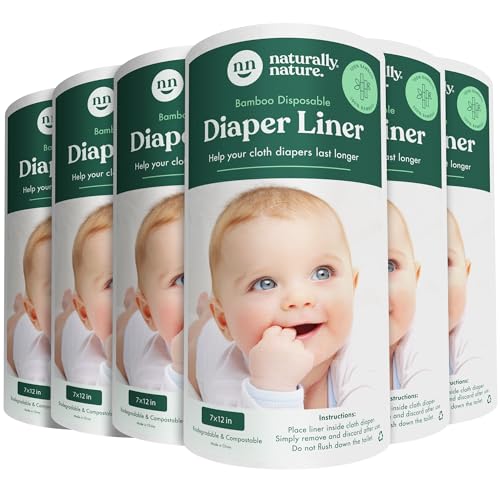
Best for eco-minded families seeking compostable liners, these unscented liners are made to be gentle on sensitive skin and suitable from newborn to diaper size 2. They are designed to simplify diaper changes by catching solids and allowing easy disposal. A caution: naturally, not all facilities compost liners; check local composting capabilities and disposal rules in your area.
ALVABABY Diaper Liners for Baby Cloth Diapers (400 Sheets)

Best for moderate use with portable liner sheets, this product features 80% rayon bamboo and 20% polyester. It’s fragrance-free and chlorine-free, with a size that fits most diapers. Liners are tearable and can be cut in half for smaller babies. A potential limitation is that folding or stacking multiple sheets can hinder quick absorption, so use as directed for best performance.
Buying Guide
What to consider when choosing flushable liners for cloth diapers:
- Material and skin-friendliness: Look for bamboo rayon or soft blends that minimize irritation and are fragrance-free if your baby has sensitive skin.
- Size and fit: Most liners are 11.8 x 7.1 inches or around 12 x 7.5 inches; ensure compatibility with your diaper brand and size range (Newborn to larger sizes).
- Disposal method: Decide if you prefer flushable options or simple disposal into a diaper pail. Check local plumbing guidelines and septic system compatibility.
- Bulk vs. single rolls: Consider how often you change liners and your budget. Higher-count packages reduce replacement frequency but require storage space.
- Ease of use: Tearable sheets and the ability to cut sheets to fit smaller babies can improve usability and absorption efficiency.
- Environmental impact: Fragrance-free and chlorine-free liners generally offer a lower chemical burden; compostable options may appeal to eco-conscious buyers.
FAQ
- Q: Are flushable liners safe for all plumbing systems?
A: Many liners are designed to be flushable, but septic systems and older plumbing can vary. Always check local guidance and consider soaking solids if in doubt. - Q: Can I cut liners to fit smaller babies?
A: Yes. Many liners are tearable and can be cut or torn to fit; avoid folding multiple sheets for quicker absorption. - Q: Should I avoid scented liners for sensitive skin?
A: If your baby has sensitive skin, choose fragrance-free and dye-free options to minimize irritation. - Q: Do liners extend diaper life?
A: Liners catch solids and help keep inserts cleaner, which can simplify laundering and potentially extend diaper lifespan with proper care. - Q: How many liners should I start with?
A: Start with a mid-range pack (e.g., 400–600 sheets or 4–6 rolls) to gauge fit, comfort, and disposal ease for your routine. - Q: Can I flush every size of liner?
A: Most liners are designed to be flushable, but always follow product directions and local wastewater guidelines to prevent clogs.