Answer: The top foam mats for babies provide a safe, cushioned area for crawling, tummy time, and play, while being easy to clean and store. This guide highlights five strong options, detailing who they’re best for and why they were chosen. The mats vary in thickness, size, and materials, so consider space, portability, and learning stages when choosing. The listed products are suitable for infants, toddlers, and active little ones, with features like non-slip backing, foldable designs, and water-resistant surfaces to support daily development.
Buyer’s quick reference table
| Product | Brand | Size | Best For |
|---|---|---|---|
| Huloo Sleep Ultra Soft Play Mat | Huloo Sleep | 50″ x 50″ x 1.3″ | Large play area, safe for crawling on hardwood floors |
| XVISHX Baby Play Mat | XVISHX | 50″ x 50″ | High-contrast patterns and double-sided design for engagement |
| Infantino Foldable Soft Foam Play Mat | Infantino | 57″ x 57″ | Versatile, portable play space with soft walls |
| ProSource Baby Play Mat | ProSource | 4 x 4 ft area with 16 tiles | Interlocking tiles for customizable coverage |
| MioTetto Baby Play Mat | MioTetto | Multiple tile sets; customizable | Non-toxic, anti-slip surface for crawling and learning |
Huloo Sleep Ultra Soft Play Mat
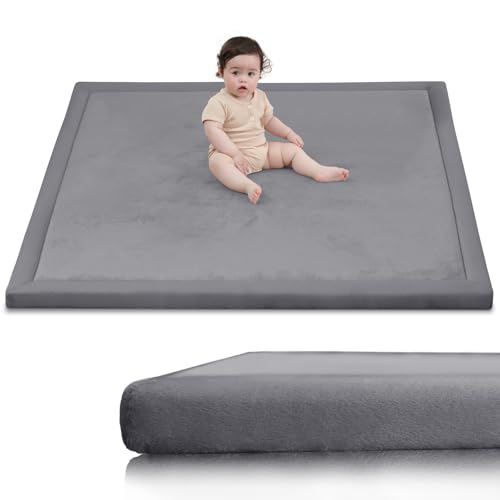
Size and padding: 50×50 inches with a 1.3-inch thick cushion. The mat uses slow-rebound memory foam and a non-shedding fabric surface. Best for homes with limited space or larger play areas, and for babies who are crawling or learning tummy time on hard floors.
Safety and materials: OEKO-TEX certified fabric and CPSIA/ASTM compliant. Non-toxic and designed to minimize noise on hardwood floors, reducing impact during active play.
Best for: Parents seeking a thick, soft surface that covers a large area and reduces impact on floors. Particularly suitable for infants and toddlers who spend extended time on the floor.
Caution: Heavier mats can be bulkier to move and store; ensure storage space is sufficient when not in use.
XVISHX Baby Play Mat

Size and construction: 50×50 inches with 0.4-inch thick high-density XPE foam. Offers lightweight portability and a double-sided pattern with animal designs to stimulate exploration.
Safety and materials: Non-toxic, odorless, BPA-free material with anti-skid texture to aid stability during standing and cruising.
Best for: Families who want a balanced mat that’s easy to clean and store, with engaging two-sided designs for varied play scenarios.
Caution: The 0.4-inch thickness is thinner than some premium mats; may offer less cushion for very active toddlers on hard floors.
Infantino Foldable Soft Foam Play Mat

Size and versatility: 57×57 inches when opened; includes foldable soft walls to create a contained play area. Quick, tool-free setup with fold-and-buckle mechanism for easy storage.
Safety and materials: Cushioned foam supports rolling, sitting, and ball play with a neat reversible design for different looks.
Best for: Families needing a flexible space that doubles as a soft play arena and a portable setup for travel or visits.
Caution: Folding and unfolding may require attention to ensure corners fit neatly; avoid overpacking when storing.
ProSource Baby Play Mat
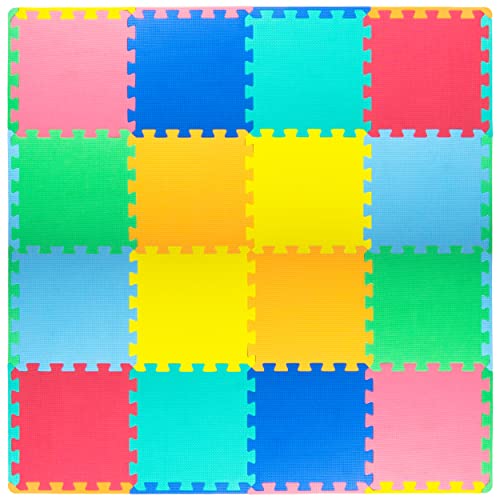
Size and coverage: Interlocking EVA tiles forming a 4 x 4-foot area with 16 tiles and 24 border pieces. Provides scalable coverage for different rooms.
Safety and materials: High-density foam surface offers a protective layer on hard floors. Interlocking design makes cleaning and storage straightforward.
Best for: Those who want a modular system that can be expanded or reduced to fit available space or playpen dimensions.
Caution: Plastic interlocking tiles can separate if pulled or stepped on with heavy force; ensure proper assembly for stability.
MioTetto Baby Play Mat
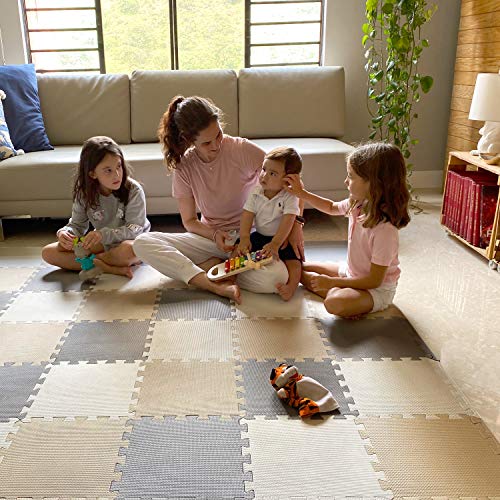
Design and options: Interlocking foam tiles, adjustable sets to fit 50×50 playpens, with anti-slip surfaces for crawling and tummy time. Provides customization with multiple tile sets and matching borders.
Safety and materials: Non-toxic, water-resistant EVA foam that’s easy to wipe clean and maintain a hygienic play area.
Best for: Parents seeking a customizable play space that can be scaled to fit a specific room or playpen size.
Caution: Some sets may be heavier as you add more tiles; account for storage and handling when assembling larger configurations.
Buying Guide: Key Considerations For Choosing A Baby Foam Mat
What thickness best suits your space and baby stage?
Thicker mats provide more cushioning for early crawlers and tumbles, especially on hard floors. Thicker options (around 1 inch or more) are better for infants who are learning to roll and crawl, while thinner mats may suffice for older toddlers on carpet or cushioned floors.
How important is surface material and safety?
Look for non-toxic, CPSIA-compliant materials and fabrics. OEKO-TEX certification and BPA-free plastics offer additional confidence. A non-slip backing helps prevent slips on slick surfaces.
Is portability or modular design a priority?
Foldable mats or interlocking tiles are easier to store and travel with. Consider whether you need a single large surface or a configurable layout to fit various rooms or playpens.
How much space do you have?
Measure your play area and compare with mat dimensions. Large 50×50-inch mats work well in roomy playrooms, while modular sets suit smaller spaces or apartments.
Cleaning and maintenance considerations
Waterproof or wipeable surfaces simplify daily cleaning. Machine-washable covers add convenience, but may reduce durability with frequent cycles. Spot cleaning is a practical compromise for longer life.
Durability and expected lifespan
Foam density and stitch quality influence longevity. Mats with reinforced edges or double-sided fabrics tend to endure more hours of active play and repeated setup.
FAQ
- Are foam baby mats safe for tummy time? Yes. Reputable mats use non-toxic materials and provide cushioning to protect against hard floors during tummy time.
- Do these mats require special care? Most mats wipe clean easily; some offer machine-washable covers. Spot cleaning is often recommended to extend lifespan.
- Is a larger mat better for play? Larger mats offer more space for crawling and rolling, especially in open play areas or busy households with multiple activities.
- What is the advantage of interlocking tiles? Interlocking tiles let you customize coverage and make storage easier, adapting to different rooms or playpens.
- Should I choose a double-sided mat? Double-sided mats provide variety in patterns and can help maintain a stimulating environment without purchasing multiple mats.
- Can these mats be used outdoors? Some mats are water-resistant and easy to clean, but many are designed for indoor use and may not withstand prolonged sun exposure.