Looking for a foam mat that cushions a baby’s tumbles while staying safe and easy to clean? This guide highlights five top foam baby play mats designed for floors, playpens, and tummy time. Each option is chosen for safety, thickness, and practical use in US homes. Ideal buyers include new parents seeking non-toxic surfaces, caregivers with hard floors, and families needing portable or foldable mats for travel or storage.
| Product | Size | Material | Best For | Why It Stands Out |
|---|---|---|---|---|
| Huloo Sleep Ultra Soft Baby Play Mat | 50 x 50 in | Elasti-Foam, non-shedding fabric | Toddlers, infants on hard floors | 1.3″ thick, cushioned, non-slip backing; meets OEKO-TEX, CPSIA, ASTM |
| XVISHX Baby Play Mat | 50 x 50 in | XPE foam | Playpen use, crawling infants | Double-sided patterns; anti-skid texture; 0.4″ thick |
| ProSource Baby Play Mat | 4 x 4 ft area (16 tiles) | Interlocking EVA foam | Larger play areas, easy cleanup | Interlocking tiles with border pieces; easy storage |
| MioTetto Baby Play Mat | Varies by set (12.4″ tiles, options) | Interlocking EVA foam | Customizable play area | Waterproof surface, non-toxic; multiple size sets |
| AEOCOO 50×50 Playpen Mat | 50 x 50 in | 1.3″ thick velvet foam | Soft, cushioned tummy time | Anti-slip bottom, hypoallergenic velvet fabric |
Huloo Sleep Ultra Soft Baby Play Mat
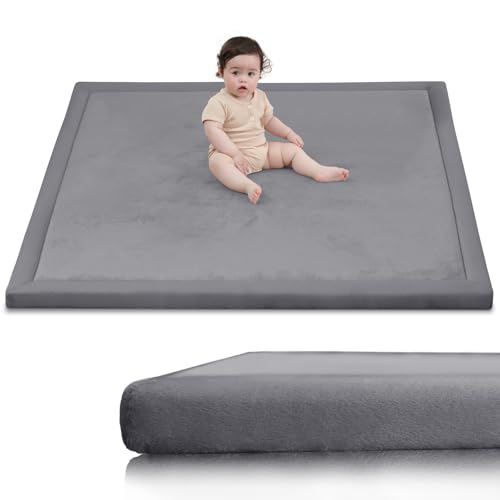
The Huloo Sleep Ultra Soft mat uses 1.3-inch Elasti-Foam for extra cushioning, making it well suited for tummy time, crawling, and floor play. The mat measures 50 x 50 inches, providing a large, soft surface that fits well in playpens and on hardwood floors. It is certified safe by OEKO-TEX and tested to CPSIA and ASTM standards, appealing to parents who prioritize non-toxic materials. The mat’s back contains a non-slip backing to reduce shifting on smooth floors, which helps keep little ones stable during movement.
Best for: families needing a thick, non-toxic surface that can cover a substantial play area on hard floors. It’s particularly suitable for babies who flop or roll during tummy time and for toddlers learning to crawl.
Limitations: Some users may prefer a thinner mat for tight play spaces, and heavier mats can be bulkier to transport. Cleaning requires quick wipe-downs to maintain its stain-resistant surface.
XVISHX Baby Play Mat

XVISHX offers a 50 x 50 inch playmat with 0.4-inch thickness, crafted from high-density XPE foam. It is non-toxic, odorless, and BPA-free, designed to cushion babies as they crawl, roll, or sit. The mat features an anti-skid texture to reduce slipping, helping infants gain confidence while learning to walk. It’s a solid choice for homes with hard floors where a lighter, more portable option is desirable.
Best for: families seeking a safe, double-sided mat with appealing patterns to stimulate curiosity. The light thickness makes it easy to store and transport for travel or visits.
Limitations: The thinner profile compared to 1.3″ mats means slightly less cushioning for very active crawlers on very hard surfaces.
ProSource Baby Play Mat
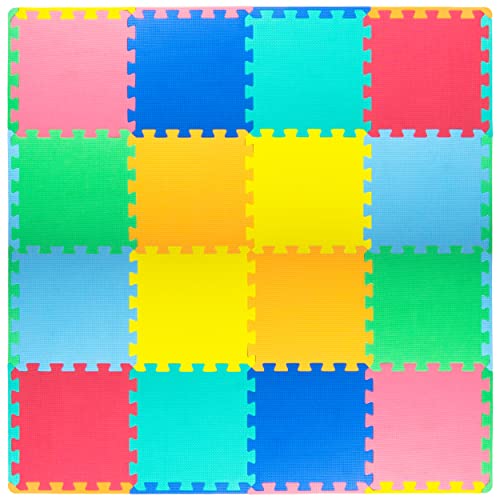
ProSource provides interlocking EVA foam tiles that create a 16-square-foot play area with a 4 x 4-foot footprint when assembled. The tiles are designed for quick assembly and easy disassembly, making cleanup straightforward. The set includes border pieces to finish the edges and protect floors, making it a practical choice for larger play zones in living rooms or nurseries.
Best for: parents building a dedicated play zone with simple, modular setup and easy storage. Suitable for toddlers who require a larger surface for crawling exercises and ball play.
Limitations: Interlocking mats may require occasional re-alignment after heavy use or movement of furniture; ensure borders are securely in place to prevent gaps.
MioTetto Baby Play Mat
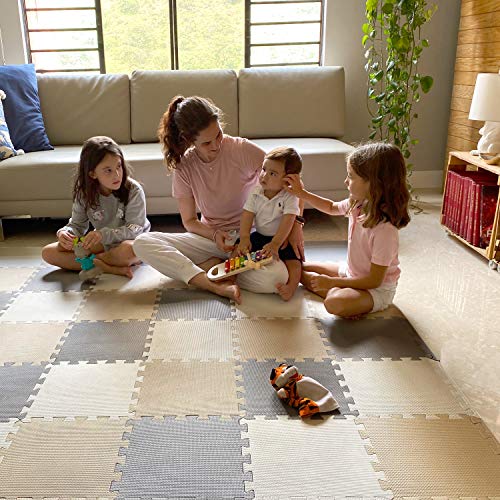
MioTetto offers interlocking foam tiles in various configurations, with a 0.4-inch thickness and easy-to-clean waterproof surfaces. The non-toxic EVA foam provides a soft playing surface while protecting against impacts on hard floors. The mat set can be expanded or reduced, allowing tailored coverage for different rooms and play areas. Sets include borders to give a finished look and safe edges for little hands and knees.
Best for: households wanting a customizable area that can grow with their child and fit multiple rooms. The waterproof surface supports easy cleanup after spills or accidents.
Limitations: Some users may prefer thicker mats for added cushioning during more rambunctious play sessions.
AEOCOO 50×50 Playpen Mat

The AEOCOO mat uses 1.3-inch thick velvet foam with a non-slip bottom to deliver a cushioned, safe surface for tummy time and crawling. The soft velvet top is gentle on skin and easy to wipe clean, while the anti-slip base helps keep the mat in place on various floor types. The 50 x 50 inch size makes it a good fit for most play areas in living spaces and nurseries.
Best for: families wanting a plush feel with solid edge support and reliable non-slip performance. Suitable for kids who frequently move during tummy time and play sessions.
Limitations: Velvet fabric can attract lint; regular cleaning helps maintain the mat’s pristine look and slip resistance.
Buying Guide: Key Choices For Foam Baby Mats
- Thickness: Thicker mats (around 1.3″) offer more cushioning for falls and knee protection; thinner mats (0.4″) are lighter and easier to store.
- Material safety: Look for non-toxic materials, OEKO-TEX or CPC certifications, and BPA-free foams for baby-friendly use.
- Surface: Waterproof or stain-resistant fabrics simplify cleanup; consider textures that minimize slipping on smooth floors.
- Size and layout: Choose a size that fits your play area and consider interlocking tiles for expandable setups.
- Portability: Foldable or light mats are easier to transport for travel or daycare visits.
- Maintenance: Wipeable surfaces and simple edge finishes help keep mats clean between uses.
Practical considerations
- Safety first: Ensure underlying floors are clean and dry to maximize the non-slip properties of the mats.
- Cleaning routine: Use mild cleaners or simply water to avoid material degradation; avoid harsh chemicals.
- Storage: If space is tight, favor foldable or modular tile designs.
Product comparison at a glance
- Best overall cushioning: Huloo Sleep Ultra Soft and the Huloo Sleep second variant (1.3″ foam, non-slip backing).
- Best for travel or small spaces: XVISHX and ProSource with modular or interlocking designs.
- Best for large play areas: ProSource’s 16-tile setup and MioTetto’s customizable sets.
Frequently asked questions
- What thickness should a baby play mat have?
Aim for 1.0″–1.3″ for solid cushioning during crawling and tummy time; 0.4″ mats are lighter and more travel-friendly. - Are foam mats safe for babies?
Yes, choose mats certified for safety (OEKO-TEX, CPSIA, ASTM) and BPA-free foams from reputable brands. - How do I clean a foam play mat?
Wipe with a mild cleaner or water; avoid harsh chemicals and high heat, which can damage foam. - Can mats be used with a playpen?
Yes, many 50 x 50 inch mats fit standard playpens and provide a comfortable floor surface inside. - Which mat is best for a busy toddler?
Interlocking tile mats (like ProSource or MioTetto sets) offer adjustable coverage and durable surfaces for active play. - Do mats affect crawlers differently on carpet vs. hardwood?
Thicker mats typically offer more cushioning on hard floors, while anti-slip surfaces help stability on smooth floors.