Looking for a foam play mat that keeps baby crawlers safe and curious? This guide highlights five top foam play mats that fit most 50×50 inch playpens and play areas. Each option suits different buyers: busy parents seeking quick setup, compact-storage needs, extra thickness, or vibrant designs for stimulating play. Below is a quick starter table to compare key details at a glance.
| Product | |||
|---|---|---|---|
| 47×47 inches (fits 50×50) | 0.4 inches | All-around safety with double-sided patterns | |
| ProSource Baby Play Mat | 16 tiles (4×4 ft area) | Not specified as thickness | Large coverage with easy interlocking tiles |
| Infantino Foldable Soft Foam Play Mat | 57×57 inches | Not specified as thickness | Versatile, portable, easy storage |
| Huloo Sleep Ultra Soft Play Mat | 50×50 inches | 1.3 inches | Extra thick cushioning with quiet floors |
| MioTetto Baby Play Mat | Depends on tile set (customizable) | 0.4 inches | Non-toxic interlocking tiles, scalable area |
XVISHX Baby Play Mat

Best for families needing a compact, double-sided play surface. This mat measures 47×47 inches and complements a 50×50 inch playpen. The 0.4-inch thickness provides cushioning against falls on hard floors. The mat uses high-density, scratch-resistant XPE foam that is non-toxic and odorless, with an anti-skid texture to help babies learning to walk. It is well suited for infants who are crawling, rolling, or exploring on a flat indoor surface. A potential limitation is that it is not the thickest option, so very active toddlers may benefit from extra padding.
ProSource Baby Play Mat
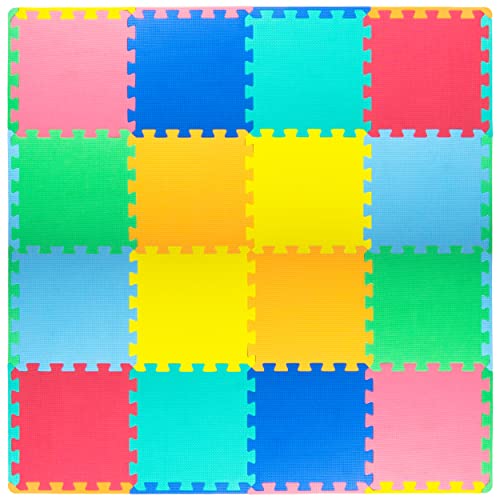
Best for large, modular layouts. This option uses interlocking EVA puzzle tiles to create a 16-tile, 4×4-foot area, with border pieces to finish edges. The interlocking design allows quick assembly and disassembly for storage and cleaning. It is ideal for play areas that require reconfiguration or temporary setups. The description emphasizes protective surface and easy maintenance, though it does not specify thickness, so buyers prioritizing a specific cushion level should compare with other options.
Infantino Foldable Soft Foam Play Mat

Best for flexible use in small spaces. This 57×57 inch reversible mat doubles as a soft play area and a portable gate-like boundary with four fold-out walls, creating a contained space. The 2-in-1 design supports sitting, crawling, and ball play, with quick, tool-free setup. It’s suitable for families who need a ready-made play space that can be popped up for travel or storage. A limitation is that exact thickness isn’t specified, which can affect comfort against very hard floors for longer sessions.
Huloo Sleep Ultra Soft Play Mat
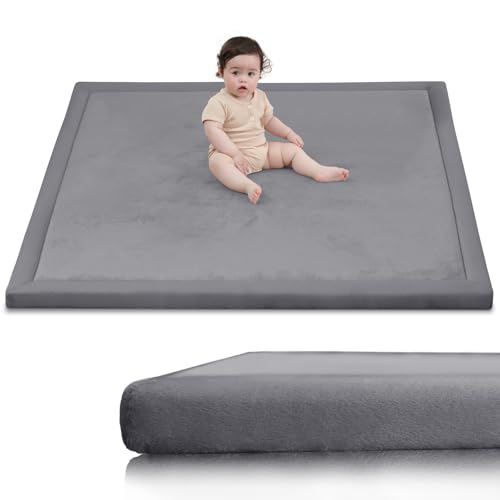
Best for maximum cushioning and quiet floors. This mat offers a thick 1.3-inch slow-rebound memory foam in a 50×50 inch format. It is designed to provide plush, cushioned support for crawling, tummy time, and early walking. The mat features a non-shedding fabric surface and anti-slip backing to protect hardwood floors. It is well suited for babies who need extra padding or households with active toddlers. A potential drawback is heavier weight due to extra thickness, which can affect portability.
MioTetto Baby Play Mat
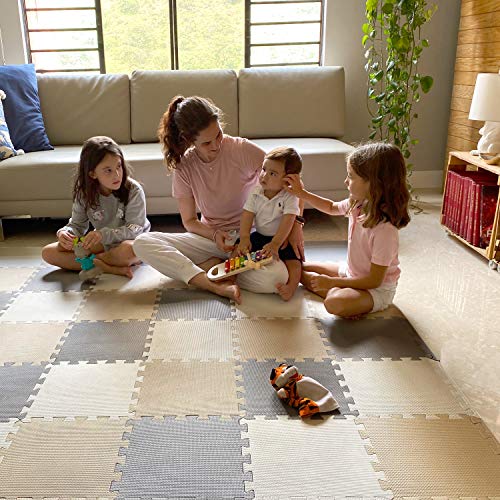
Best for modular, scalable layouts. MioTetto offers interlocking foam tiles that create a customizable playing area. The tiles are 0.4 inches thick and designed to be non-toxic and waterproof for easy cleaning. The product supports various tile counts (9, 16, or 36 pieces) to tailor the space to your room size and play needs. Choose this if you want a flexible setup that grows with your child. A limitation is that exact overall dimensions depend on tile configuration, so measure before buying.
Buying Guide
How thick should a baby play mat be? If you expect frequent falls or active crawling, thicker mats (around 1 inch or more) provide more cushioning, while 0.4-inch mats are lighter and easier to move. Consider the space available and whether you need a portable option.
Are interlocking tiles better than a single mat? Interlocking tiles offer modularity and easy storage, enabling you to customize the area. They can be expanded or reconfigured as your child grows or the layout changes. A single mat provides a seamless surface but less adaptability.
What materials matter most? Look for non-toxic, BPA-free EVA or XPE foam with a closed-cell structure to resist moisture. A non-slip backing or textured surface improves safety on hardwood or tile floors.
How care should be handled? Spills should be wiped promptly. Some mats are machine washable or easy to spot-clean. Always follow manufacturer care instructions to extend the mat’s life and color integrity.
Which features help with development? Double-sided designs with different patterns can stimulate curiosity. Bright, contrasting colors support visual development, while ample space supports gross motor skills from crawling to cruising.
FAQ
- Q: Is a thicker mat always better for babies? A: Thicker mats provide more cushion, but weight and storage may increase. Choose based on space and portability needs.
- Q: Can these mats be used outdoors? A: Many are designed for indoor use; check the product details for water resistance and weather suitability.
- Q: Are the materials safe for extended baby contact? A: Look for non-toxic, BPA-free foams and OEKO-TEX or CPSIA/ASTM certifications in product details.
- Q: Do interlocking tiles require special tools? A: No, they typically snap together by hand and disconnect easily for storage.
- Q: How should I measure my space? A: Measure the play area inside your playpen or room. Compare to tile counts or mat dimensions to ensure a proper fit.
- Q: Which mat is best for a busy toddler? A: A thicker mat with a large surface area and a non-slip backing offers both safety and enough room for movement.