Looking for a safe, self-feeding option for your baby’s solid foods and teething needs? This guide reviews the top food pacifier feeders designed to reduce choking risk, soothe gums, and support early self-feeding. Each product targets different feeding stages and safety preferences, from multi-size sacs to BPA-free materials. Whether you’re a busy parent or a caregiver seeking easy cleaning, these picks cover varied budgets and lifestyles.
| Product | Best For | Key Benefit | Material Safety |
|---|---|---|---|
| WAJIAYON Baby Fruit Feeder | Weaning infants | Multiple sizes for growth | BPA-free silicone |
| POIKSHARK Silicone Baby Fruit Feeder | Self-feeding beginners | Dishwasher/microwave safe | Free from BPA, PVC, phthalates |
| Munchkin Baby Feeder | Solid foods and purees | Choking risk reduction | BPA-free |
| Frida Baby Push Pop Feeder | Teething and soft foods | Stand-up cap for mess control | BPA-free |
| NatureBond Baby Feeder | Value-conscious buyers | All-in-one, easy to clean | BPA-free, lead-free |
The following sections compare five top options. Each entry explains who should consider the product, why it was selected, and a practical caveat to help you decide.
WAJIAYON Baby Fruit Feeder Pacifier Pack

Best for: Parents introducing solids and teething relief in one step. This set includes small, medium, and large sacs to grow with your baby from roughly 4 months onward. The 2 mm holes ensure only small, digestible pieces pass through, minimizing choking risk while letting babies taste a variety of fruits, vegetables, meats, or breast milk popsicles. The soft silicone pouch doubles as a teether during the teething phase.
Why selected: The multi-size option supports developmental progression and provides teething relief with frozen treats, offering a combined feeding and soothing solution in a single purchase.
Caution: Ensure all components are thoroughly cleaned between uses, especially when introducing new foods to prevent residue buildup.
POIKSHARK 2 Pack Silicone Baby Fruit Feeder

Best for: Parents seeking a safe, easy-to-clean self-feeding option. The design uses a one-piece silicone handle to reduce choking hazards and a soft pouch with tiny holes that only allow small bites, supporting independent feeding as babies grow.
Why selected: It emphasizes safety with a simple, integrated design and easy cleaning—dishwasher and microwave safe—great for busy households.
Caution: While dishwasher safe, ensure the pitcher’s seal remains intact after repeated cycles to avoid leaks.
Munchkin Baby Feeder for Fresh Food and Fruit
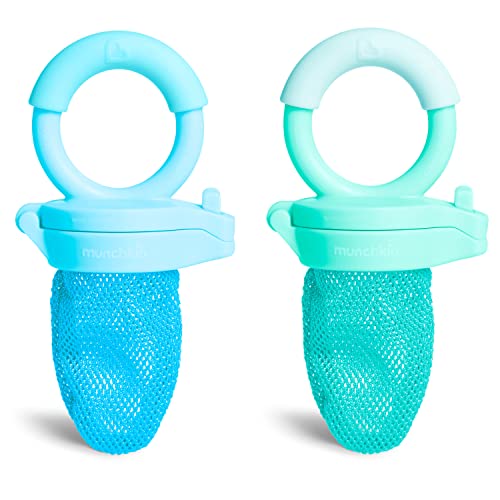
Best for: Families introducing solids to boys and girls 6 months and up. This 2-pack feeder helps reduce choking risk by allowing only small, digestible pieces to pass through, making it suitable for purees, frozen breastmilk, bananas, and more.
Why selected: The product focuses on choking risk reduction while supporting a broad range of foods, making it versatile for BLW and traditional feeding styles.
Caution: Check the size of holes when introducing new textures to ensure the piece size remains manageable for baby’s chewing stage.
Frida Baby Push Pop Silicone Feeder

Best for: Parents seeking a mess-minimizing feeder that doubles as a teether. The stand-up cap simplifies filling and reduces table-top mess, while the feeder supports safe introduction of fresh and frozen foods.
Why selected: The design reduces spills during feeding and teething sessions, helping maintain a cleaner feeding environment.
Caution: The compact design may require careful handling to prevent accidental drops, especially when used with bright-colored foods that stain silicone.
NatureBond Baby Feeder Pack
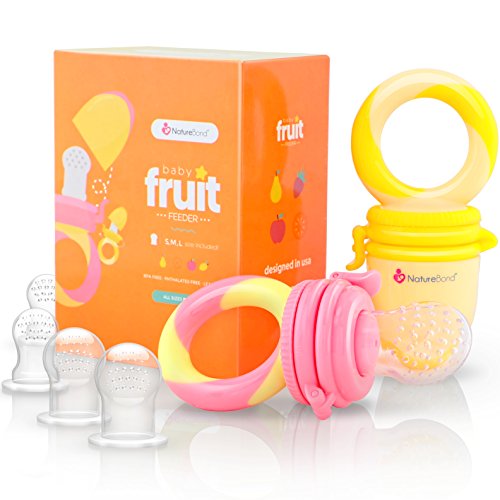
Best for: Value-conscious families seeking a reassuring option with multiple silicone sacs. NatureBond feeders are designed to be fully dismantled for thorough cleaning, and the product is certified BPA-free and phthalate-free.
Why selected: It emphasizes safety through comprehensive dismantling for cleaning and is known for its all-in-one design that grows with a baby’s feeding needs.
Caution: Some parents may prefer lighter, thinner silicone pouches for younger babies; ensure the firmness of the pouch when filled with frozen items.
Buying Guide: How To Choose A Baby Food Feeder Pacifier
What stage is best for a feeder pacifier?
Most feeders are designed for babies starting solids (around 4–6 months) and for ongoing teething and self-feeding as they grow. Choose a product with size options or multiple sacs to match your baby’s age and chewing ability.
What materials matter?
Look for BPA-free, phthalate-free silicone or similar food-grade materials. Ensure the pouch has small holes that prevent large chunks, reducing choking risk while allowing a safe taste experience.
Is cleaning important?
Yes. Seek products that disassemble easily and are dishwasher safe or boil-cleanable. Clear instructions help maintain hygiene and prevent bacterial buildup.
What about safety and choking hazards?
Better products have integrated designs that minimize loose components and choking risks. One-piece handles or fixed pouches with micro-holes help ensure safe self-feeding.
What features improve usability for teething?
Blocks or textures on the pouch and the option to chill or freeze foods can soothe sore gums. Some models include attached clips to prevent drops, which is helpful for active babies.
FAQ
Q: At what age can I start using a food feeder pacifier?
A: Typically around 4–6 months when babies begin solids, but follow your pediatrician’s guidance for your child’s readiness.
Q: Can these feeders be used with frozen foods?
A: Yes. Many feeders are designed for frozen fruit, breast milk popsicles, or chilled foods to help with teething relief.
Q: Are these safe for breast milk?
A: Most options are designed for breast milk and purees; always ensure materials are non-toxic and free from harmful chemicals.
Q: How do I clean a feeder properly?
A: Disassemble all parts, rinse, wash with warm soap, and allow to air dry. Some models are dishwasher or boil-cleanable for deeper sanitization.
Q: Which feeder is best for travel?
A: Look for compact designs with clip options to attach to clothing and fewer detachable parts to manage on the go.
Choosing the right food pacifier feeder involves balancing safety, ease of cleaning, and how your baby feeds now and as they grow. The options listed above emphasize safe feeding, teething relief, and practical cleaning, helping you find a solution tailored to your family’s needs.